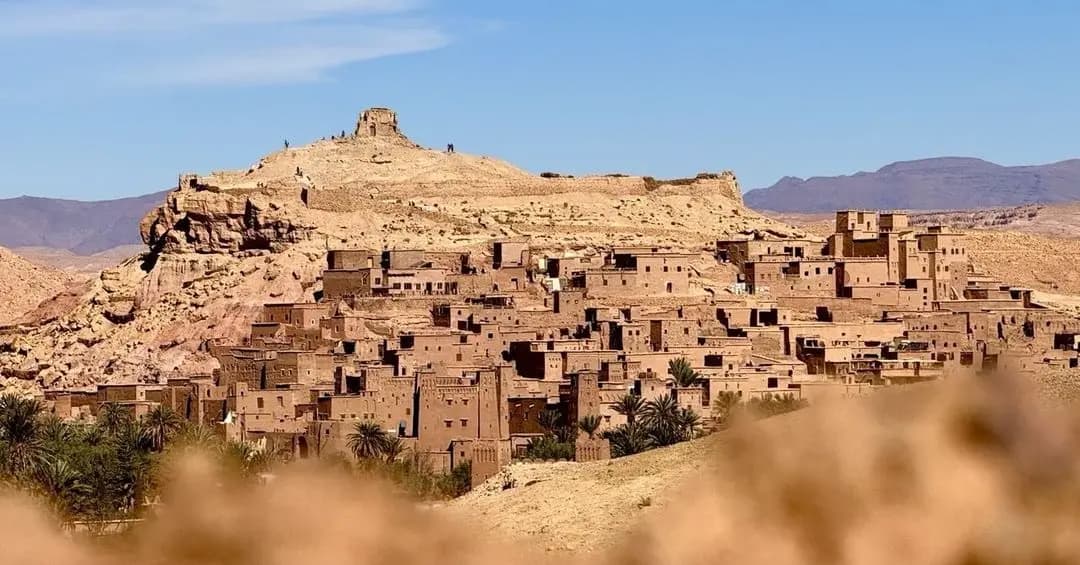
Aït Ben Haddouis a fortified earthen ksar, perched on a hill in the province of Ouarzazate, which has been a UNESCO World Heritage site since 1987. A former stopover on the caravan route between Marrakech and the Sahara, it has become one of the world's most famous film sets, from Lawrence of Arabia to Gladiator and Game of Thrones. But from Marrakech, it has to be earned: allow 180 to 190 kilometers and a 3h30 to 4h drive over the Tizi n'Tichka pass. Here's our honest guide to how and when to visit it, what to see, and whether it's worth the trip.
Infos pratiques
A day trip from Marrakech to Aït Ben Haddou: good or bad idea?
Aït Ben Haddou is well worth a visit, but not necessarily in one day. From Marrakech, allow around 180 to 190 km and a 3h30 to 4h drive over the Tizi n'Tichka pass (2,260 m), or 7 to 8 hours by car there and back, for 1h30 to 2h on site. The visit to the ksar, free of charge, is superb, but a day trip is mostly about driving. Our recommendation: only make the day trip there and back if you're in a hurry; otherwise, sleep one night opposite the ksar to see it at sunrise without the crowds, or continue on to the desert over two or three days to make the trip worthwhile. The round-trip day trip offers the worst road/visit ratio of the three options.
Round trip: 8-hour drive for 2 hours on site
This is the formula most sold by agencies, and the most frustrating. Departure around 7 a.m., arrival around 11 a.m.-12 p.m., two hours on site with lunch, and return to Marrakech at night. We spend the day by car on a winding mountain road, often in very hot weather, for a visit that's rushed at the worst possible time of day (midday). This option is only justified if you really only have a day to spare and absolutely must see the ksar. Many day trips add a stop at the studios of Ouarzazate or the kasbah of Telouet, making the visit even longer.
Sleeping in front of the ksar: for whom it's worth it
The new village, opposite the ksar on the other side of the wadi, has several guesthouses and kasbahs with views, to suit all budgets. Spending a night here changes everything: you visit the ksar in the late afternoon when the groups leave, you see it again at sunrise when the light gilds the adobe and you almost have it to yourself, and you cut the road in half. In the evening, the illuminated ksar facing the terrace of a riad is a spectacle that no day trip allows you to experience. It's the ideal option for photo enthusiasts and anyone who wants to feel the place rather than check it off a list. Many addresses offer dinner, which is practical as the restaurant options are concentrated around the ksar.
Continuing on to the desert: the best option over 2 to 3 days
If you have two or three days, the smartest thing to do is to include Aït Ben Haddou in a tour of the desert: Ouarzazate, the Drâa valley, the Dades gorges, then the Erg Chebbi dunes at Merzouga or Zagora. The ksar then becomes a logical stopover on the road to the South, rather than an empty round trip. This is by far the best use of the long hours on the road, and the formula chosen by most travellers who want to see the Sahara. Over three days, you typically combine the ksar on the first day, a night's bivouac under the stars in Merzouga on the second, and the return through the gorges on the third: one of Morocco's most beautiful itineraries, with Aït Ben Haddou as the natural gateway from Marrakech.
How to get to Aït Ben Haddou (distance, route and Tizi n'Tichka pass)
The ksar lies about 30 km northwest of Ouarzazate, on the old caravan route. From Marrakech, there's only one route: the national road over the High Atlas.
By excursion, rental car or transport
You have three options:
- Organized excursions: the simplest, with driver, often a day trip or a desert tour lasting several days. The comfort of not driving over the pass counts.
- Rental car: the freest way to stop off at viewpoints on the Tizi n'Tichka and manage your time on the trail; expect a driver who is comfortable in the mountains.
- Public transport: bus or large cab to Ouarzazate, then local cab to the ksar. Inexpensive but time-consuming and impractical for a day trip.
The Tizi n'Tichka route: what you need to know
The Tizi n'Tichka pass, at 2,260 metres, is the highest road crossing in North Africa, and the road is splendid but winding. It is being widened, with sections split into two, but remains a mountain road: don't count on a freeway journey time. Count on 3h30 to 4h non-stop, more with photo breaks and depending on the progress of the work. The twists and turns can be hard on sensitive stomachs, so take plenty of food and water to prevent motion sickness. The road passes through beautiful Berber villages, and the landscape changes radically once over the pass, shifting from the holm oak forests of the northern slopes to the arid, ochre valleys of the south. There are several lookouts where you can stop to photograph the winding roads and snow-covered peaks in winter. Plan to refuel in Marrakech or Ouarzazate, as filling stations are scarce on some stretches.
What is the Aït Ben Haddou ksar (UNESCO, kasbahs and adobe)
A ksar (plural ksour) is a collective fortified village, typical of southern Morocco. The ksar at Aït Ben Haddou is one of the most beautiful and well-preserved: a group of houses and kasbahs built in pisé, a type of raw earth mixed with straw and dried in the sun, squeezed behind a wall on the side of a hill overlooking the wadi. The kasbahs, fortified houses with corner towers decorated with geometric motifs, bear witness to the wealth of the families who once controlled the caravan trade between Marrakech and Timbuktu in gold, salt and spices.
A UNESCO World Heritage site since 1987, the ksar is a remarkable example of pre-Saharan earthen architecture. Its very fragility is its beauty: the adobe must be constantly maintained, and every heavy rain threatens it. A few families still live here, while most of the inhabitants have moved to the new village opposite. This discreet human presence distinguishes the site from a mere archaeological setting.
The history of this place is reflected in its geography: situated on the road that once linked Marrakech to Timbuktu via the Telouet pass and the Drâa valley, the ksar was a strategic stopover where caravans stopped, paid taxes and found refuge. The corner towers and loopholes of the kasbahs were not decorative: they protected goods and families. As trans-Saharan trade declined and modern roads bypassed the village, the ksar gradually emptied out, paradoxically preserving it in its original state.
What to see: the ksar, the kasbahs and the collective granary
The tour takes you across the wadi, then up through the narrow streets to the top of the hill. Along the way, you'll discover :
- Kasbahs and their adobe facades decorated with relief motifs, some of which have been transformed into craft stores or small private museums.
- The narrow streets and covered passageways are reminiscent of film sets.
- A few inhabited houses and the studios of painters who work with fire (burning sugar and heating it to reveal drawings).
- The collective granary (agadir) at the summit is the highlight of the climb, offering a panoramic view of the ksar, wadi and surrounding mountains.
Allow 1h30 to 2h30 for a gentle climb up to the attic and back down again. The climb is easy, but steep and sunny: hat, water and good shoes are a must. Take your time to take a different route back down: the alleyways are full of surprises and offer different views of the wadi and palm grove below.
Aït Ben Haddou at the movies: Gladiator, Game of Thrones and others
If the ksar looks familiar, that's understandable: more than eighty productions have been filmed here, taking advantage of its unspoilt scenery and southern light. Among the most famous: Lawrence of Arabia (1962), The Man Who Wanted to be King (1975), Gladiator (2000), Kingdom of Heaven (2005), Prince of Persia (2010) and the Game of Thrones series, where Aït Ben Haddou plays the city of Yunkaï in season 3. The whole region lives from the cinema: Ouarzazate, 30 km away, nicknamed Morocco's "Ouallywood", is home to major studios (Atlas, CLA) and a film museum. A Maison du Cinéma, at the foot of the ksar, retraces these film shoots for film buffs. Recognizing a film passage as you climb the narrow streets is part of the pleasure of the visit: the great square where Maximus fights in Gladiator, the ramparts of Yunkaï, the gates of the ancient city are all now familiar settings. A few stalls sell costumes and accessories left over from the filming.
Practical tips for your visit
A few pointers will help you avoid unpleasant surprises on site.
Do I have to pay to enter Aït Ben Haddou?
Walking around the ksar is free: there is no official entrance ticket. Beware, however, of a common scam: an official-looking "entrance", in reality the courtyard of a private house, where you are charged around 20 dirhams and led to believe that this is the only way in. The real access is via the bridge or ford opposite the village. On the other hand, some families charge a few dirhams to visit their kasbah or terrace, and parking is not free (around 5 to 10 dirhams): these small charges are legitimate. Keep your change, and politely decline fake guides.
How long to stay in Aït Ben Haddou and when to come
On site, allow 1h30 to 2h30 to fully enjoy the climb to the attic. As for the season, spring (March to May) and autumn (September to November) are ideal: summer is scorching hot and winter cool, with the occasional flooded wadi complicating the crossing. As for the time of day, aim for sunrise or sunset, when the low-angled light makes the adobe blaze; avoid the middle of the day, which is both the hottest and busiest. It's precisely to take advantage of this light that it makes sense to sleep on site.
What to see and do
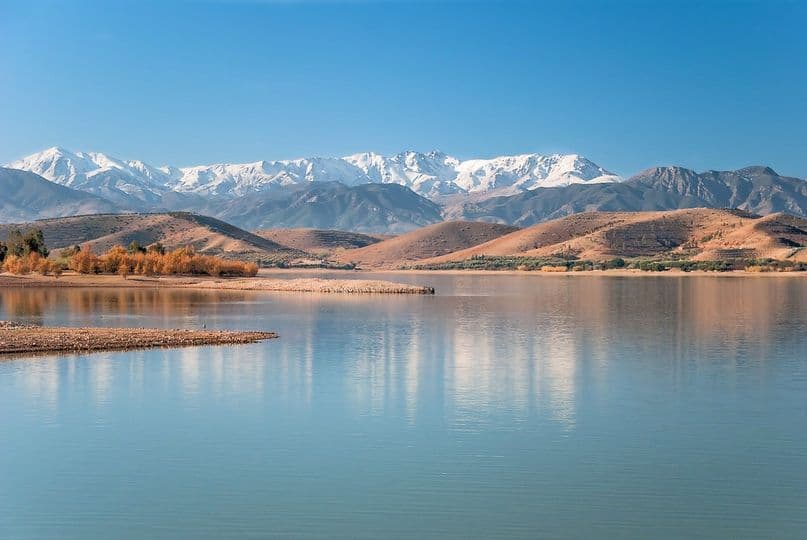
Aït Ben Haddou is part of a wider itinerary to the south. Nearby, the kasbah of Telouet, former stronghold of the Glaoui family, is well worth a detour on the way back. Further on, the Drâa valley, the Dades gorges and the desert road begin.
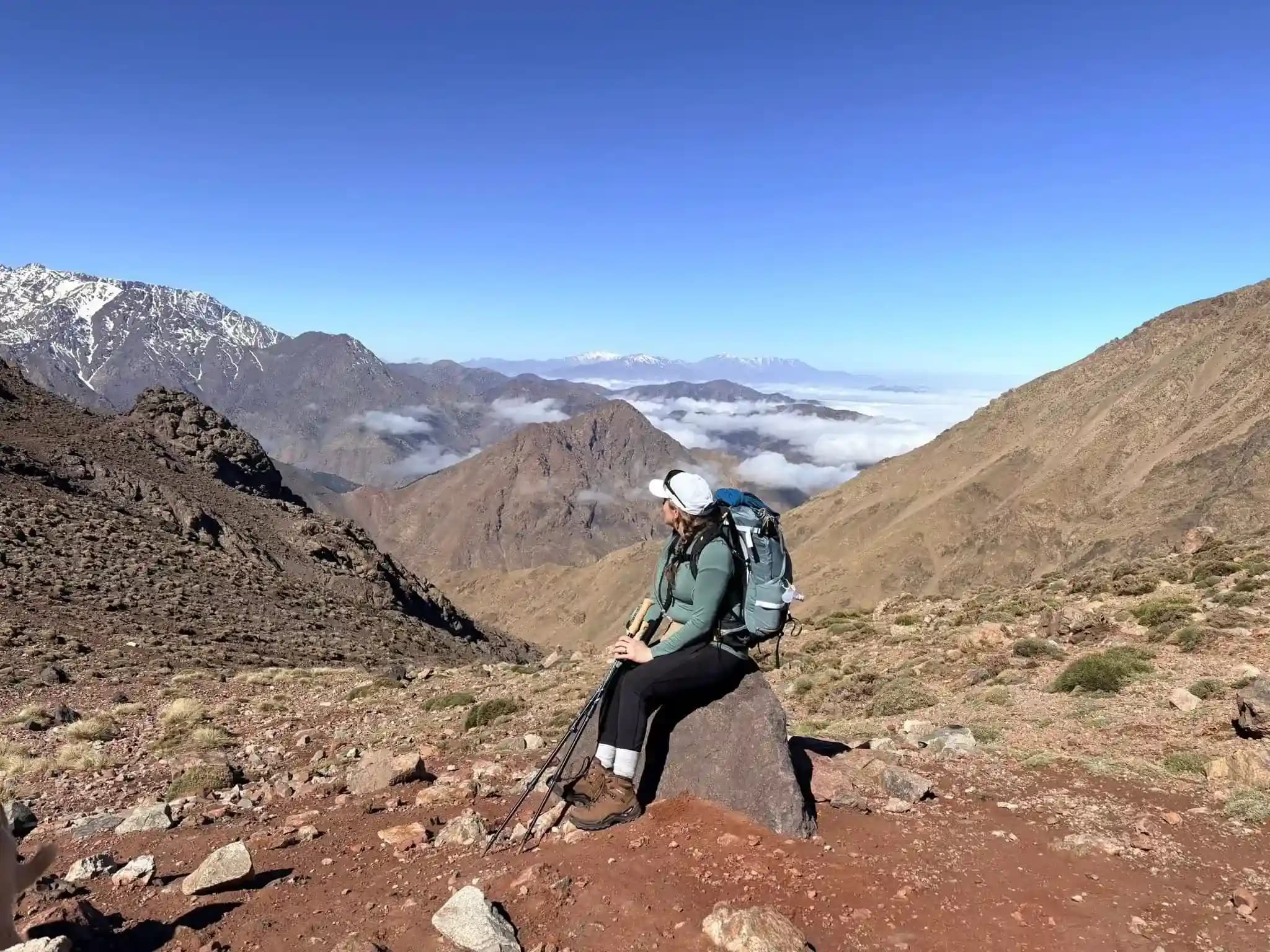
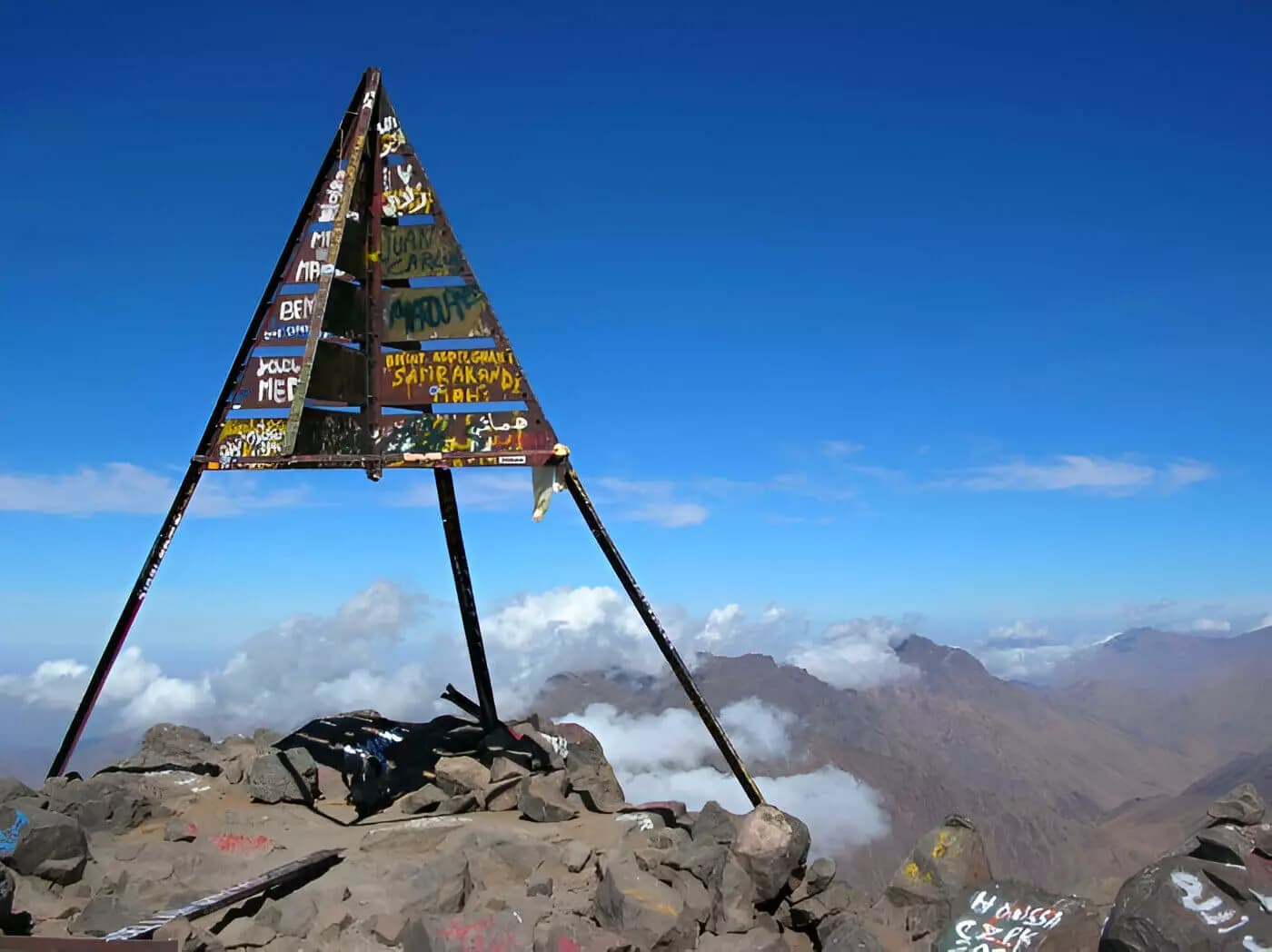
To organize the rest of your stay, see our guidewhat to do in Marrakechand theMarrakech city page. If you're looking for getaways closer to the city, theOurika valleythe Lac deLalla Takerkoustand the summits of theOukaïmedenor theMount Toubkalare available on a half-day or full-day basis. And before you hit the road, ahalf-day in the souksor apottery workshopcomplete the discovery of the region.