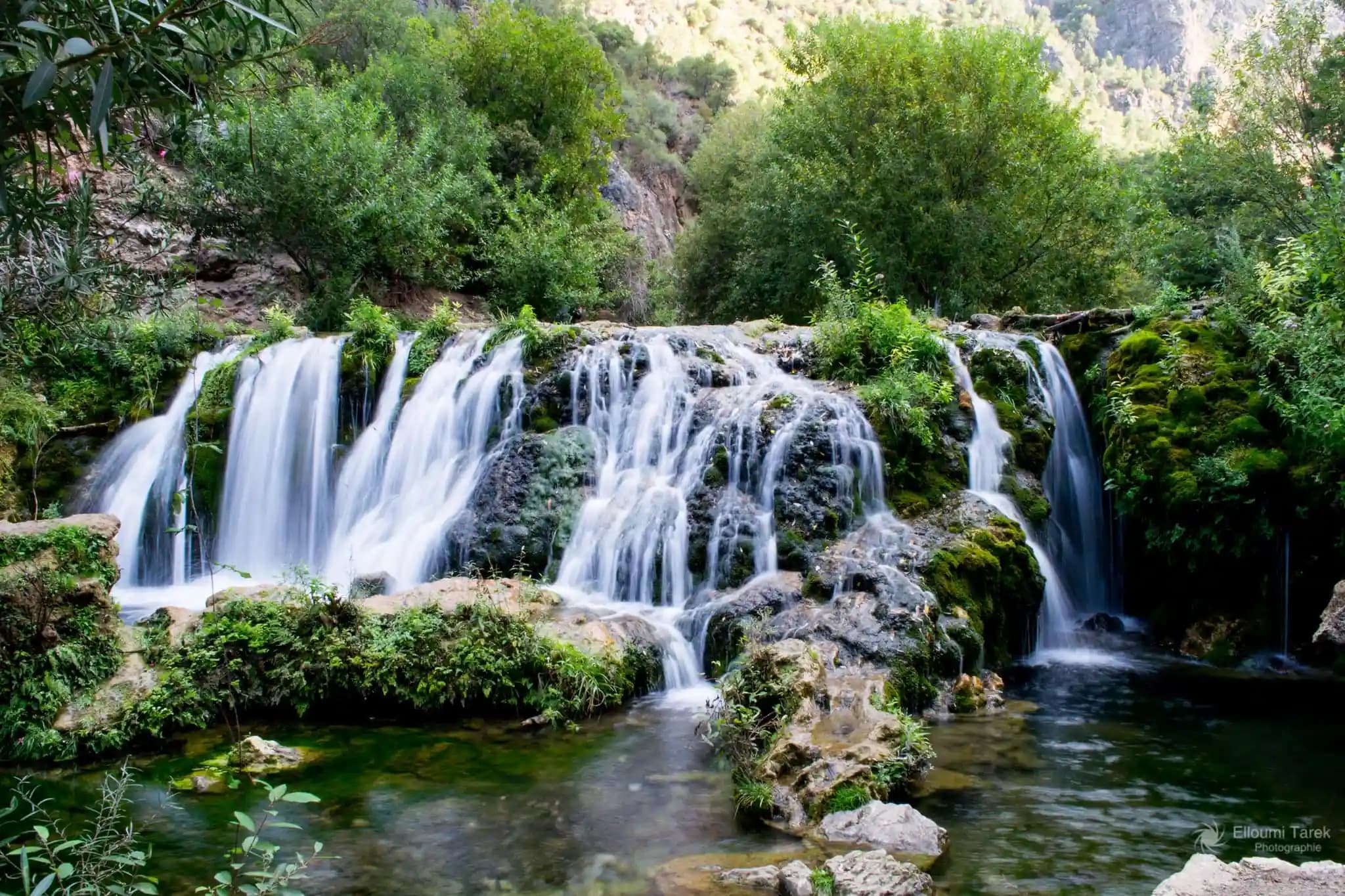
A natural site in the heart of Talassemtane National Park
Akchour is a village tucked away in the limestone gorges of the Rif, 30 km northeast of Chefchaouen, at the bottom of the Talembote valley.It's not a tourist resort: it's a starting point for two hikes along the Oued Farda through gorges covered with fir and cork oak trees.
The site is part of the Talassemtane National Park, created in 2004 and covering 58,950 hectares in the central-western Rif. The park is home to one of the last remaining forests ofAbies maroccanaMorocco's endemic fir tree, found nowhere else on the planet. Barbary macaques also live in these forests - you may come across a few on the trail. The park has been on UNESCO's Tentative List of World Heritage Sites since 1998.
The two walking tours from the village
From the village parking lot, two paths lead down to the gorge. They share the same start, then diverge after a 20-minute walk. Both are accessible without a guide, but the terrain is rocky and sometimes slippery near water.
The Pont de Dieu trail
The Pont de Dieu is a natural rock arch formed by the erosion of limestone over the centuries. The path to it runs along the Oued Farda on a relatively flat track, with a few balcony sections above the river. Allow around 2 hours round trip. Along the way, you'll pass through shady areas where the coolness of the water can be felt even in midsummer.
On arrival, natural pools form under the arch. Some visitors bathe here in fine weather. The water is cold and clear, and the sound of the river echoes against the limestone walls.
The road to the Grande Cascade d'Akchour
The second circuit leads to the Grande Cascade, with a greater difference in altitude and a more demanding trail. It takes around 3 to 4 hours round trip, depending on your pace. The path climbs steadily into the gorge, alternating between forest passages and rocky areas, and offering views of the valley below.
On arrival, the waterfall flows over the rock in several levels. A natural pool forms below, large enough for summer bathing. The vegetation is denser here than elsewhere on the route: the soil retains moisture all year round.
What you'll see and feel in the gorge
The Oued Farda gorges offer a landscape quite different from the rest of northern Morocco. The limestone walls fall straight into the river, fir trees grow steeply on the slopes, and the sound of water accompanies the entire hike.
In June, the air smells of fir resin and wet rock. In autumn, the leaves of the ash and poplar trees turn yellow along the banks. In winter, the wadi's flow increases and the waterfalls are more imposing, but some passages may be impassable.
On higher ground, it's not uncommon to spot Barbary macaques in the branches of the fir trees - medium-sized monkeys with expressive eyes, who live in family groups in this forest. They're part of the park, so don't feed them.
Akchour in practice: when to go, how to get there
The best season for hiking in the Akchour Gorge
April, May and September are the most pleasant months: temperatures remain cool in the gorges, vegetation is dense and the waterfalls still have water. Summer (July-August) attracts more people - the heat is bearable at altitude, but weekends can be crowded.
In winter (December to February), rainfall is frequent in the Rif - the park receives more than 2,000 mm per year on the summits. Some trails become slippery, but the gorges take on an intense green color not seen in summer.
How to reach the site from Chefchaouen
From Chefchaouen, the route takes around 45 minutes by car. It follows the Oued Laou valley northwards before climbing up to the gorges. There are shared cabs from Chefchaouen in the morning - they leave from the main square when they are full, usually before 9am. The return journey can be more uncertain in the late afternoon if the cabs are full.
Practical tip: set off early in the morning from Chefchaouen. Arriving before 9.30am means that the trails are almost deserted for the first two hours. Groups often arrive between 10 and 11 am.
Waterfront dining
On the way back from the trails, several small restaurants set up along the river in the village. Their terraces are built directly over the water - literally, their feet in the current. They serve vegetable tagines, grilled chicken and mint tea. The flavors are simple, the portions generous, and the shade of the trees makes for a pleasant break after hours of walking.
There's also a small local market in the heart of the village, where vendors sell Rif honey, dried herbs and seasonal fruits. It's a good opportunity to exchange a few words with the locals before heading back to Chefchaouen.
Tips for organizing your day
Here's what you need for a well-organized day in the gorges:
- Closed-toe walking shoesThe ground is uneven and the edges of the wadi are slippery. Sandals are not suitable.
- Water and snacksWater: allow at least 1.5 liters of water per person for the day. Restaurants don't open until you arrive in the village.
- SwimsuitIf you plan to take a dip in the pools, slip it into your bag. The water is cold even in summer.
- Cash in dirhamsNo cash dispensers on site. Be sure to bring enough money to pay for collective cabs and meals in the village.
- Plan to return before 5 p.m.Cabs: shared cabs become scarce in the late afternoon. If you're coming without a car, don't dawdle.
- Respecting the park's wildlifeDon't feed the macaques, don't leave garbage on the trails, and avoid going off the marked paths.
Akchour and beyond: from the gorges of the Rif to the waterfalls of the South
If you combine your stay in the north with a stopover in southern Morocco, you'll find a similar experience in Agadir. VisitParadise Valley hikeoffers the same type of environment: gorges, natural basins and swimming in pools created by waterfalls. This is a half-day trip organized by Immersi Travel, accessible from Agadir.
If your departure base is Marrakech, ourguide to the Ourika valleywill introduce you to another site of gorges and waterfalls in the Atlas mountains - same idea, different scenery. For activities and excursions from Marrakech, see ourpage what to do in Marrakech.
Things to remember before you leave
Two circuits, two atmospheres: the Pont de Dieu for a 2-hour walk, and the Grande Cascade for a longer, more physical hike. Either way, the Oued Farda gorges are well worth the detour, especially if you're already in Chefchaouen.
For lovers of gorge hiking in southern Morocco, see also our guide to theAgadir Paradise Valley- a good point of comparison if you're planning an itinerary covering several regions of Morocco.