Azrou, a Berber town in the heart of the Middle Atlas mountains
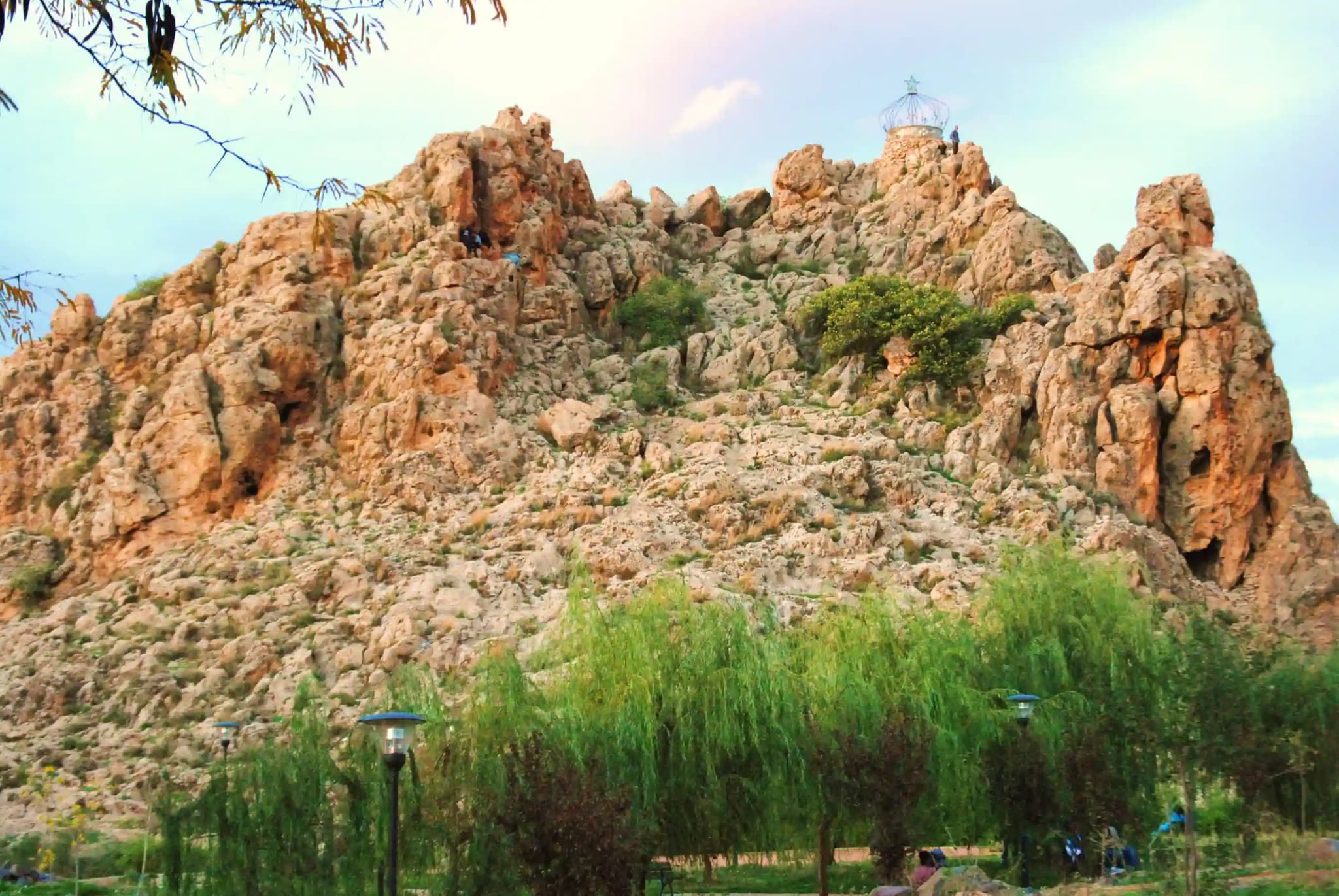
Azrou is a town in the province of Ifrane, in the Fès-Meknès region, perched at an altitude of 1,330 meters.Its name comes from the Amazigh word for "stone" or "rock" - a reference to the rocky outcrop that marks the center of the town. With around 85,000 inhabitants (2020 census), it is an active stopover on the road between Meknes and the deep Middle Atlas.
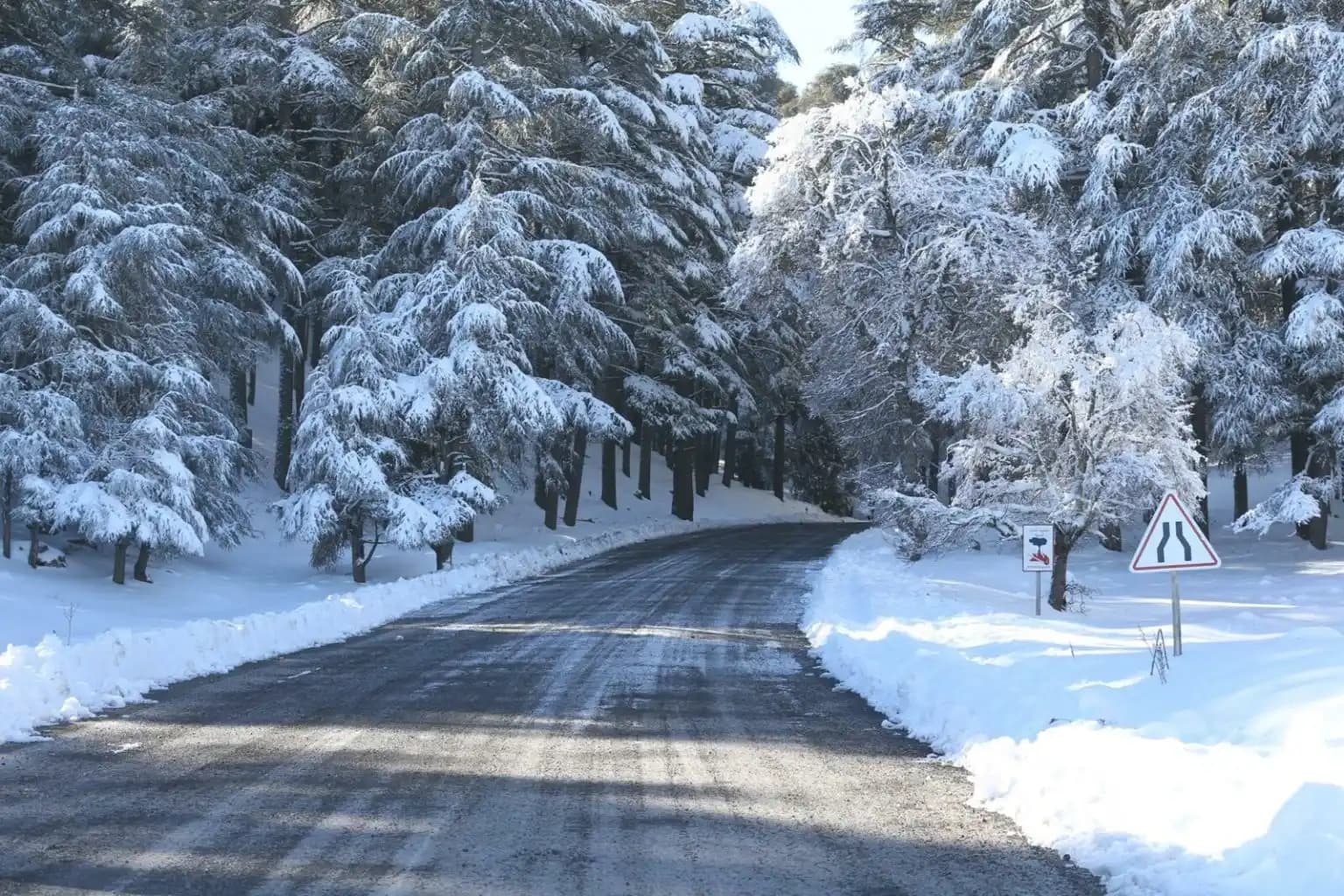
The climate is continental: winters are cold, with snow falling regularly between December and February, and summers remain temperate thanks to the altitude. The area is covered by holm oak and cedar forests, which extend right down to the city gates. It is this forest, and the colony of macaques that inhabit it, that attracts most of the visitors.
Azrou cedar forest: what you'll see
The cedar forest of the Middle Atlas is one of the most extensive in Morocco: the Atlas cedar (Cedrus atlantica) occupies some 133,000 hectares of Moroccan territory, concentrated in the Middle Atlas, the Rif and the eastern High Atlas. Around Azrou, the trees reach 30 to 40 meters in height. The oldest specimens can exceed 500 years.
Light filters through the trees, the air smells of resin and the ground is carpeted with dry needles and cones. In the right season - spring or early autumn - the site is quiet on weekdays: a few Moroccan families, groups of European hikers, and the macaques moving at their own pace without a care for observers.
The Gouraud Cedar, an emblematic tree of the Azrou region
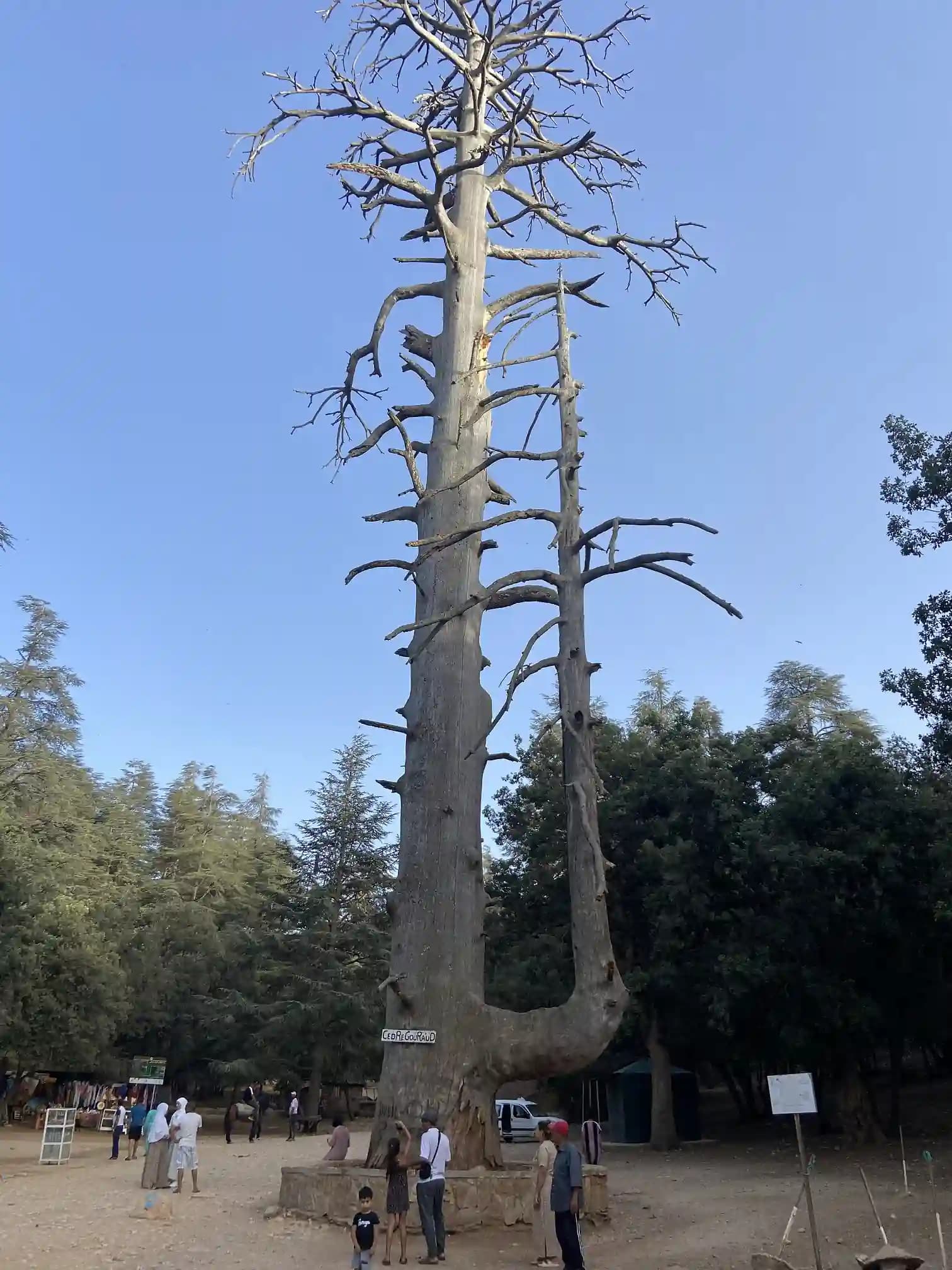
The Gouraud Cedar is the best-known tree in the area. This specimen, estimated to be around 800 years old, can be found near Ifrane, a few kilometers from Azrou. It has been in decline for several years due to drought and human pressure - the site remains accessible, but the tree is in poor condition. Forest rangers regularly report it as a species under surveillance.
The Atlas cedar is classified as Endangered by the IUCN. Deforestation and repeated droughts have significantly reduced its range in recent decades. Visiting the forest also means becoming aware of an ecosystem under pressure.
Barbary macaques: observing without disturbing
The Barbary macaque (Macaca sylvanus) is Morocco's only wild primate. The species has been classified as "Endangered" by the IUCN since 2008: between 1977 and 2005, the population fell from 22,000 to around 10,000 individuals, a loss of over 50% in less than thirty years. Today, between 10,000 and 12,000 remain in Morocco.
In the cedar forest on the outskirts of Azrou, groups generally number between 12 and 59 individuals. Depending on the season, they feed on acorns, cedar needles, mushrooms and insects. It's not uncommon to come across them on the forest roadside, where visitors have got into the habit of feeding them - a practice to be avoided at all costs: it alters their natural behavior and exposes them to road accidents.
Rules of conduct for macaques in the Azrou forest
A few simple rules make it possible to observe macaques without harming them:
- Do not feed themhuman food disrupts their natural diet and makes them dependent on the road.
- Keeping a distanceAdult males weigh up to 17 kg and can be aggressive if you get too close to the young.
- No photo flashbright light stresses them, especially young individuals.
- Staying on the trailVenturing off the marked paths disturbs the group's resting and feeding areas.
- Do not leave wasteFood packaging attracts monkeys to the road, multiplying the risk of collision.
Azrou crafts: cedar wood and Berber carpets
The town is known for two types of craft production: cedar wood carving and Berber carpet weaving. The workshops are concentrated in the medina and around the market. They produce boxes, trays, frames and small objects in cedar, whose light wood and lingering scent are characteristic.
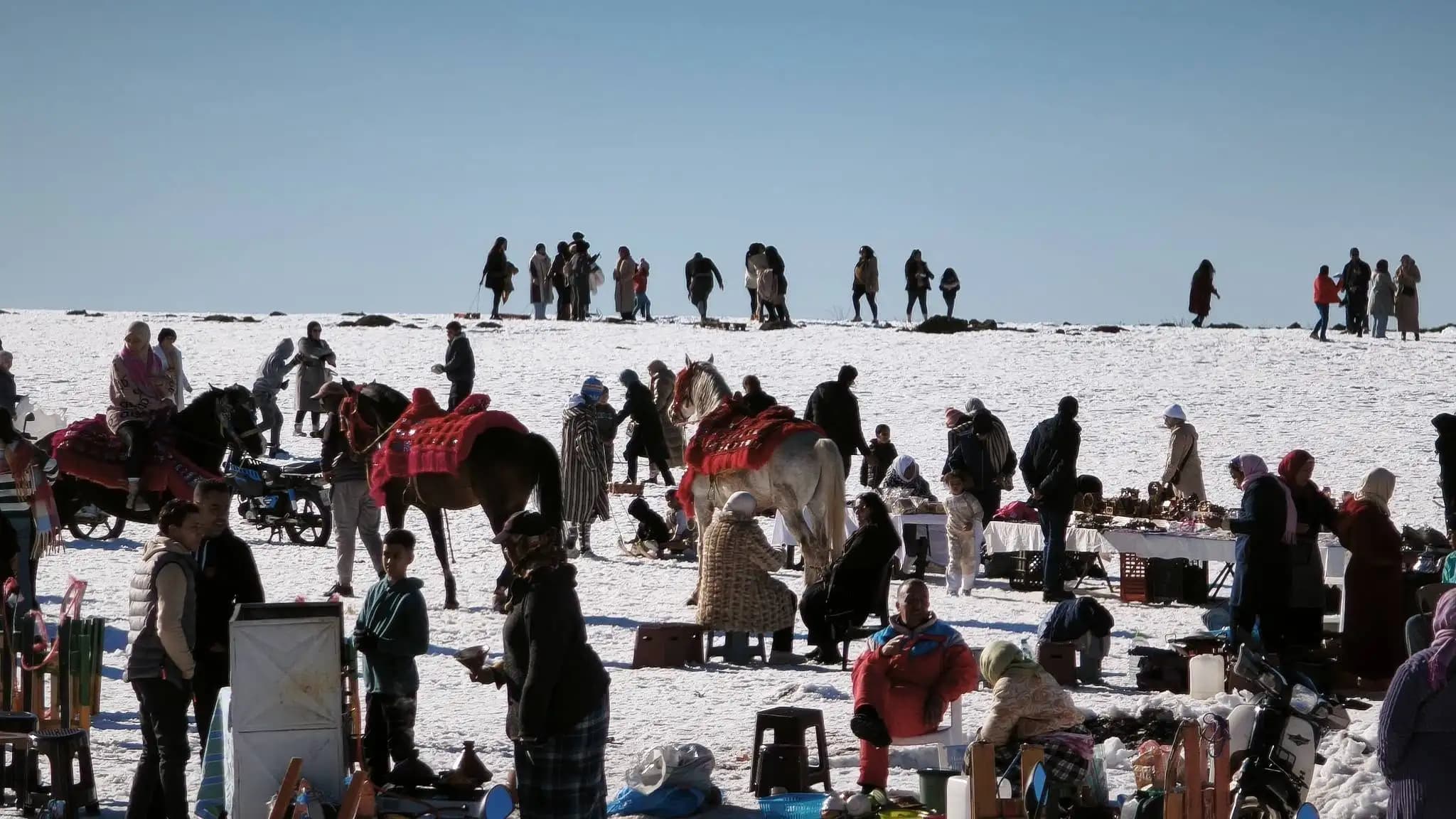
The weekly souk is the best time to see the town in its ordinary activity. Producers from the surrounding villages descend with vegetables, cheeses, raw wool and ceramic objects. The atmosphere is that of a local market, with no tourist staging - prices are charged to locals, not to passing visitors.
Azrou Berber College and the town's history
The town has a singular colonial past. The Collège d'Azrou, founded in 1927, was one of the instruments used to implement the Berber dahir: it trained Moroccan managers and administrators from Amazigh communities, in line with the separation of Arabic-speaking and Berber-speaking populations inherited from the protectorate. Today, the building is the Lycée Tarik Ibn Ziad. This story is little told in tourist guides, but it's part of the fabric of the city.
Practical tips for visiting Azrou
Access and distances from major cities
Azrou is about 80 km from Fès and 60 km from Meknès by road. The N8 is the main access road from Fès. By car, allow 1h15 to 1h30 from Fès, depending on traffic. Shared cabs and buses regularly serve the Meknès-Azrou-Ifrane route. From Marrakech, the distance is around 350 km via Beni Mellal - 4 to 5 hours' drive depending on the route chosen.
What's the right season to visit Azrou?
Spring (April-May) and early autumn (September-October) offer the most pleasant conditions: daytime temperatures between 15 and 25°C, dense vegetation, open roads. Summer is bearable thanks to the altitude - July averages 22°C. Winter is cold: snow can make forest roads impassable between December and February, but the forest under the snow has a special atmosphere if you're equipped for it.
Hiking in the Middle Atlas around Azrou
The area around Azrou is ideal for hiking. The forest trails start from the town center or from the edge of the forest and go deep under the cedars on relatively accessible terrain. The starting altitude (1,330 m) and modest gradients make these outings suitable for walkers of ordinary ability, without any special technical equipment.
If you're looking for a more structured hiking itinerary in the Moroccan Atlas, theMount Toubkalin the High Atlas offers climbs on a completely different scale. For gorges and waterfalls accessible from Agadir, theAkchour hike in the Riffollows the same type of forest and mountain environment.
Azrou and Immersi Travel tours: what you need to know
Immersi Travel is based in Agadir and covers southern Morocco - Agadir, Essaouira, Marrakech and surrounding areas. Azrou is in the Fès-Meknès region, about 5 hours' drive from Agadir: we do not offer direct excursions to this site.
If you're looking for contact with the Atlas Mountains from the south, ourMarrakech excursion from Agadirbrings you closer to the High Atlas - the classic starting point for a tour of the country's central mountain ranges. Marrakech is also the closest Immersi town to the Middle Atlas to organize the rest of a tour. See ourguide what to do in Marrakechfor activities and excursions available from this city.