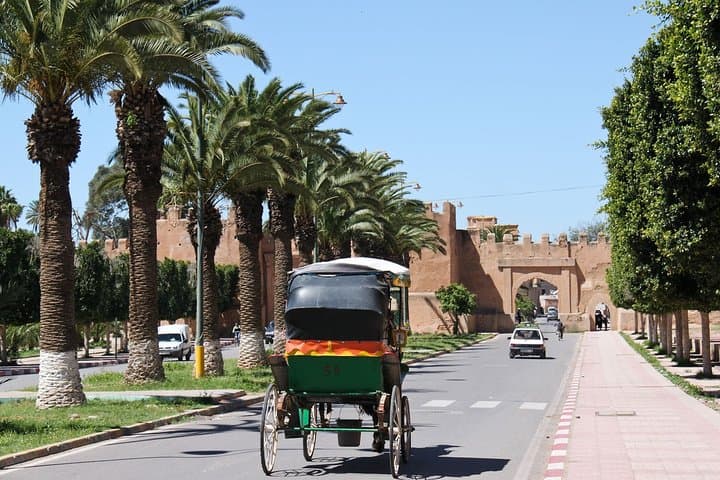
Agadir

Things to Do in Agadir in 2026: Activities, Attractions and Day Trips

Updated 22 October 2026By Mehdi, founder of Immersi Travel, in Agadir

The best things to do in Agadir: watch potters and weavers at work in Kasbat Souss, haggle in Souk El Had, ride the cable car up to the Kasbah Oufella, walk the seafront at sunset and take a day trip to Paradise Valley. Below, 11 places in the city and 12 day trips, with opening hours and prices.

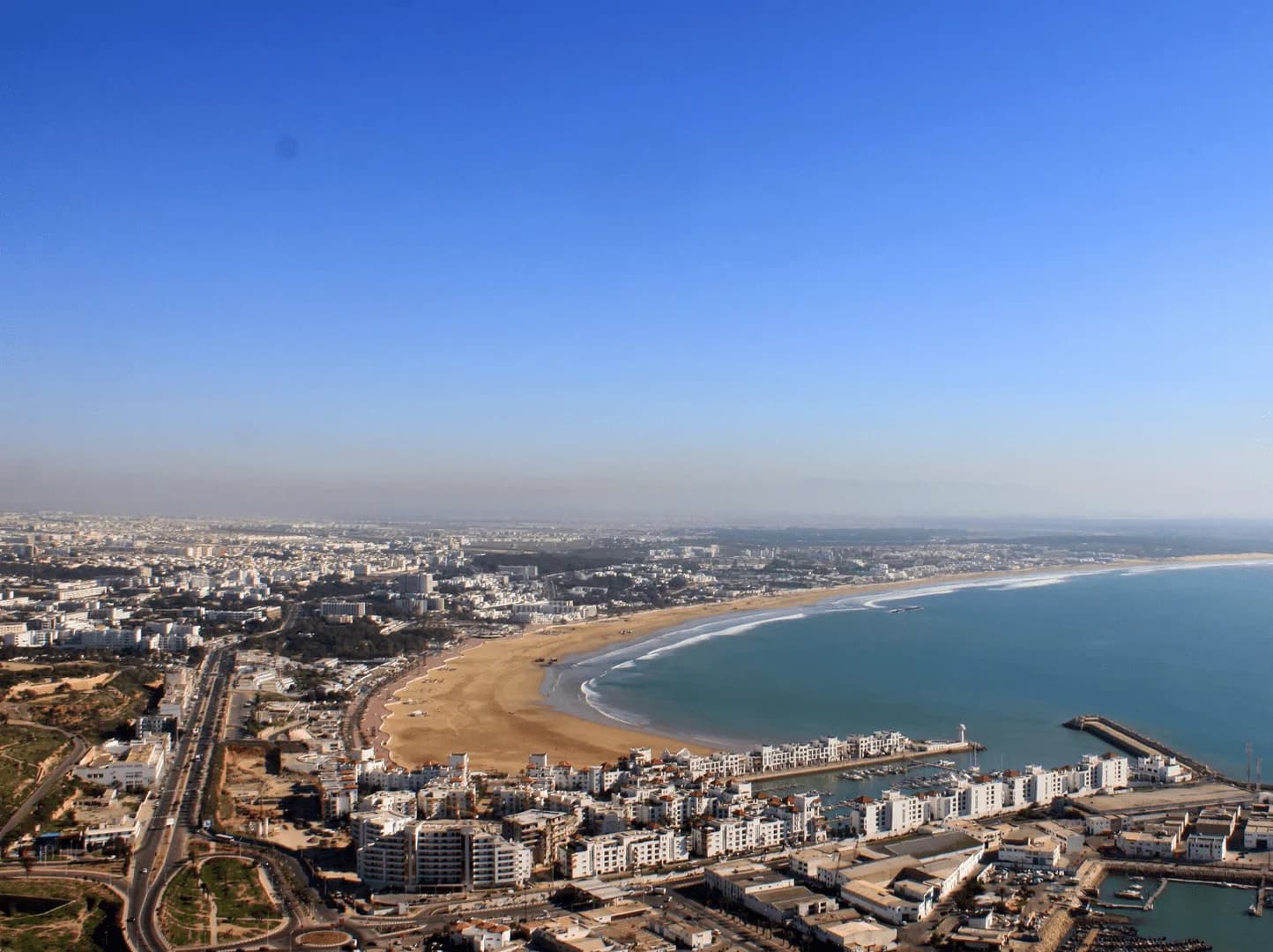
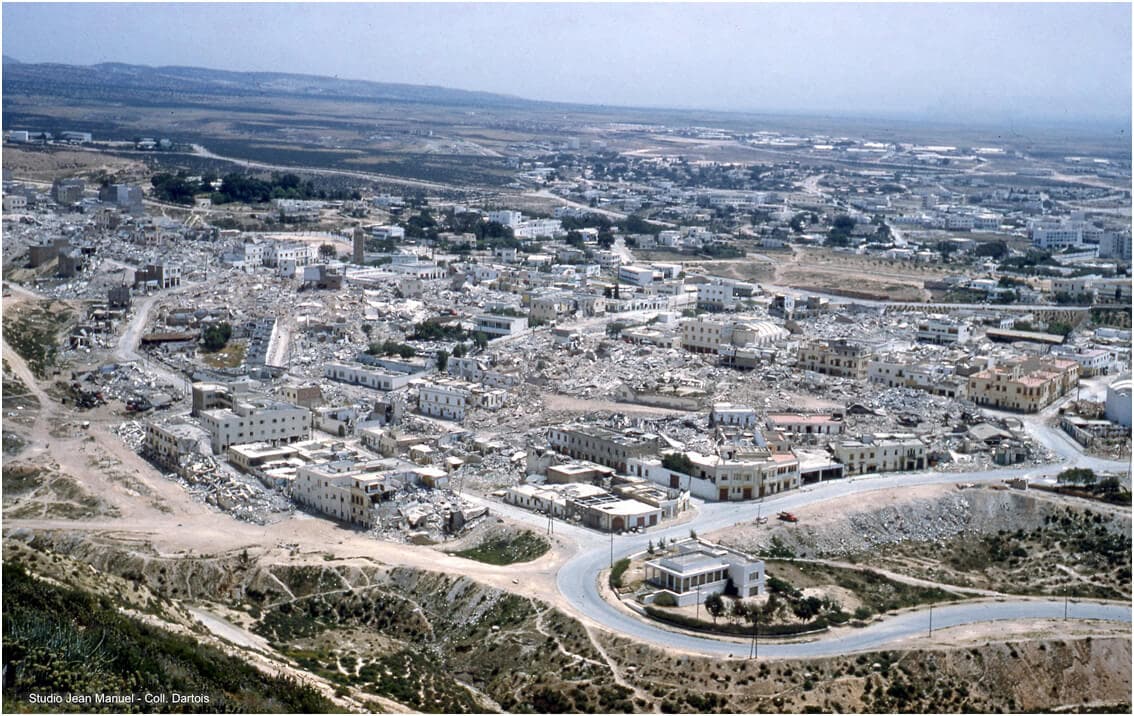
Agadir is a modern beach city, rebuilt after the 1960 earthquake, with a 10 km sandy bay and around 300 days of sunshine a year. Most visitors come for the beach and the winter sun. What many miss is everything around it: Amazigh craftspeople still working by hand, one of the largest markets in southern Morocco, and mountains, oases and surf villages within a few hours’ drive. Prices below are in Moroccan dirhams (MAD); £1 buys roughly 12.5 to 13 MAD.

Plan my Agadir stay (free)
Contents

What are the best things to do in Agadir?

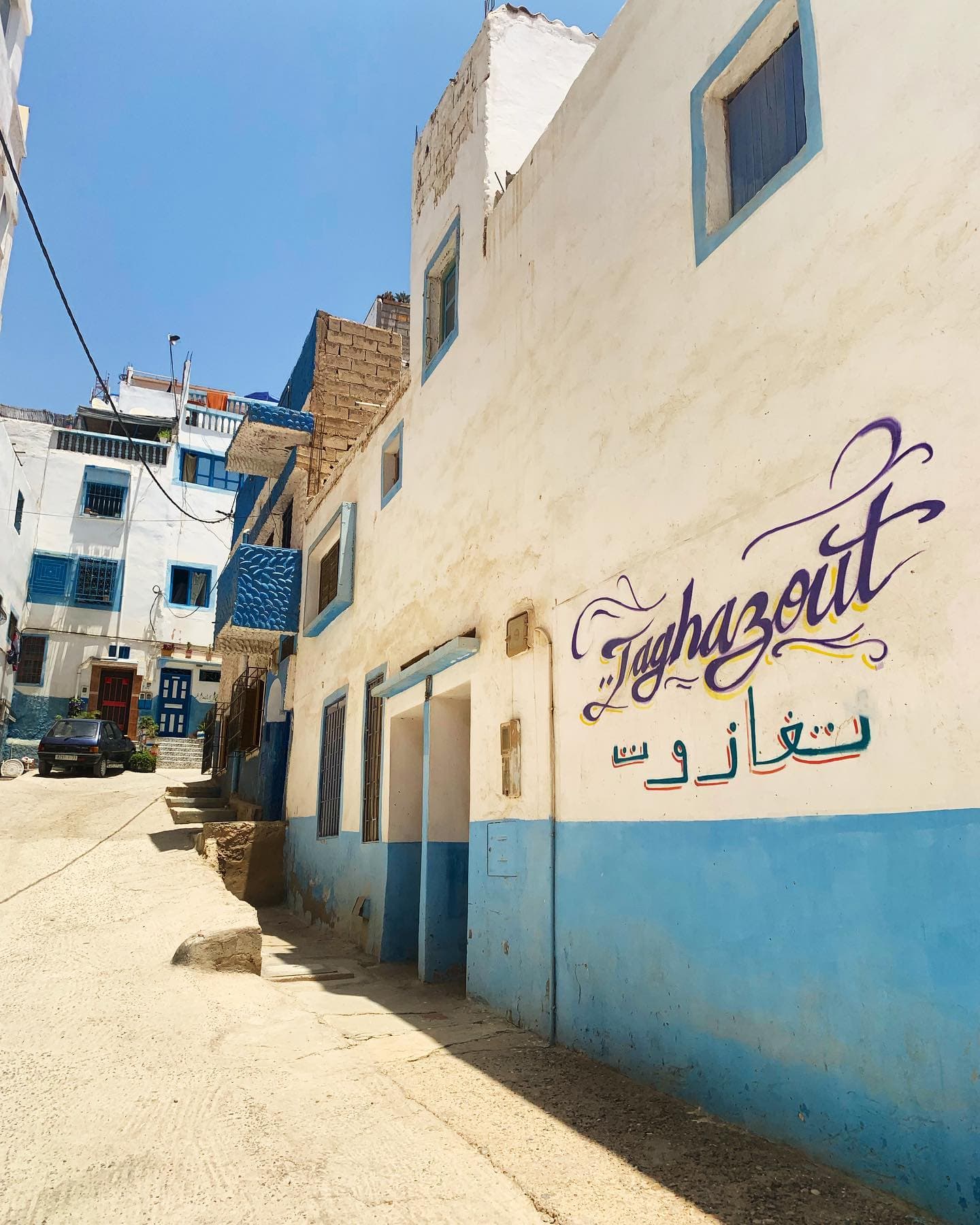
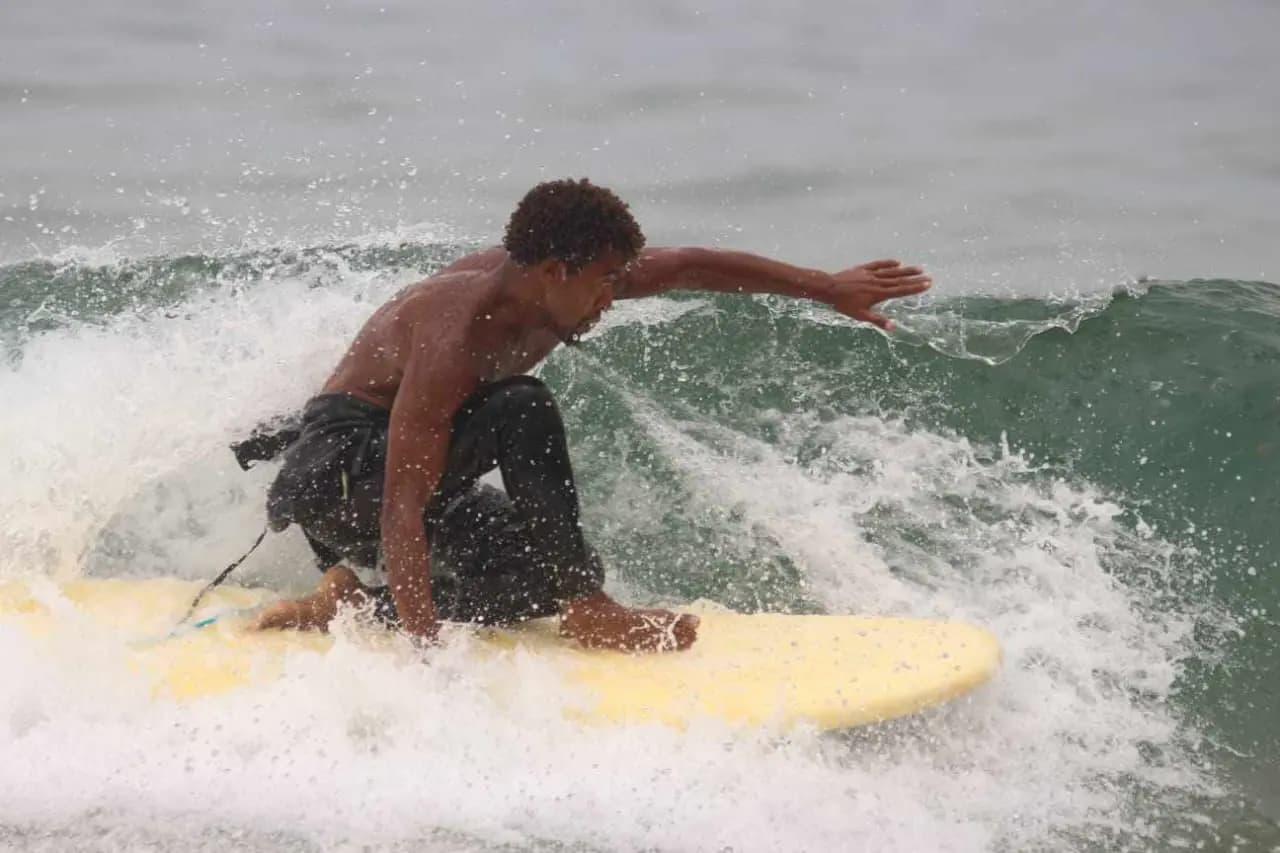
With one or two days, start with Souk El Had in the morning (it is closed on Mondays), then Kasbat Souss to see craftspeople at work. Go up to the Kasbah Oufella by cable car or on foot for the view over the bay, and end the day on the seafront promenade at sunset. With three days or more, add a half-day trip to Paradise Valley, a quad bike or camel ride in the dunes north of the city, a cooking class or a hammam. Surfers should spend a day or two in Taghazout, 20 km north.

Agadir at a glance

  • Best for: winter sun, the beach, crafts and day trips.
  • Time needed: 2 to 3 days for the city, a week with day trips.
  • Best months: March to May and October to November. Winter highs stay around 20°C.
  • Getting there: Al Massira Airport (AGA), about 25 km from the centre.
  • Money: Moroccan dirham, £1 ≈ 12.5 to 13 MAD. Carry cash for the souk.
  • Closed days: Souk El Had on Mondays, the Amazigh Heritage Museum on Tuesdays.

This page covers the places to visit in the city, the best day trips, ideas for children, evenings, rainy days and free days out, and the activities we run with local hosts, from craft workshops to deep-sea fishing.

What to see in Agadir

The 11 must-see places to visit

Everything worth seeing in Agadir, in the order we suggest you discover it. Each place has its own detailed guide: opening hours, prices and how to get there.

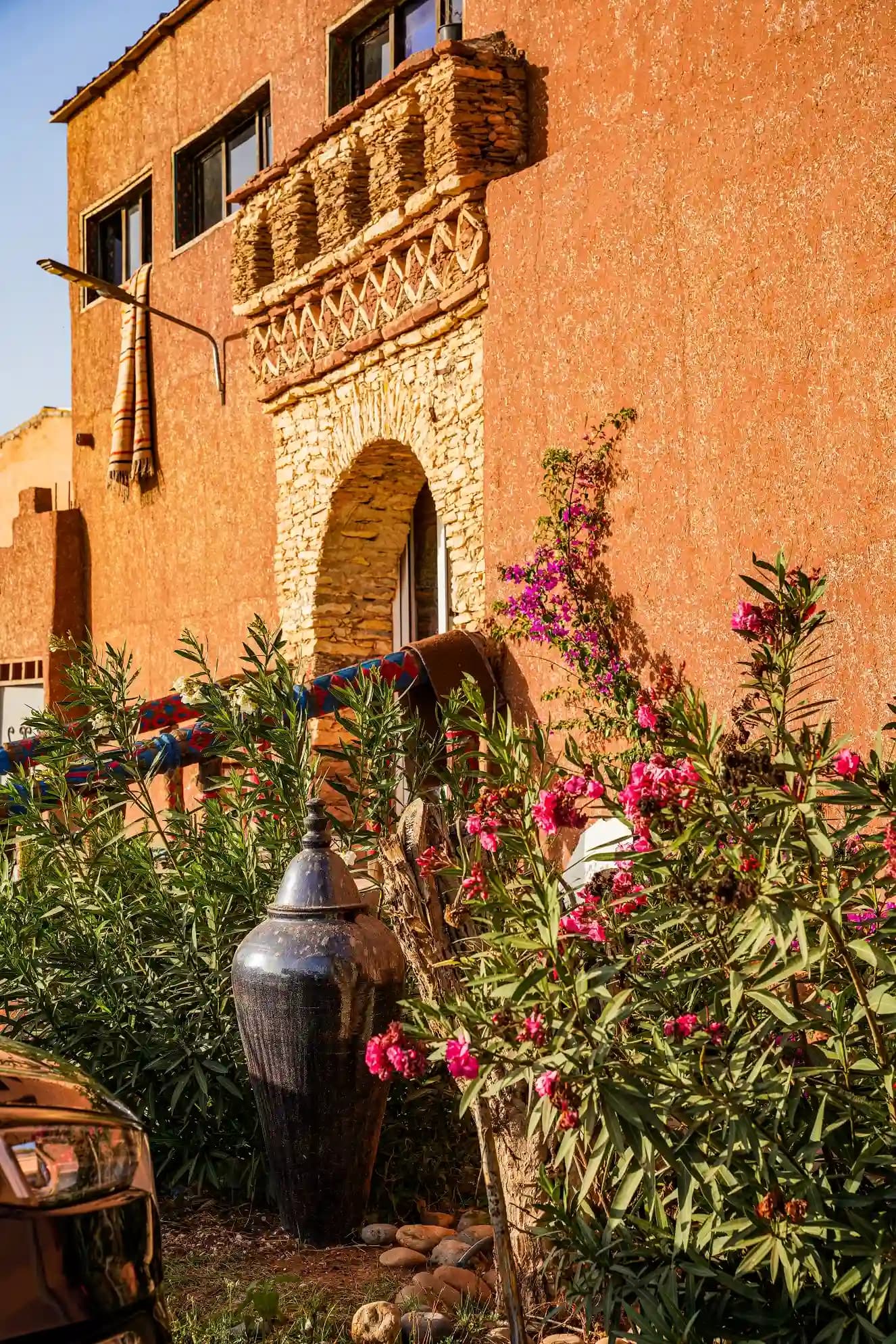
Ochre façade with carved woodwork at Kasbat Souss, the craft village in Agadir

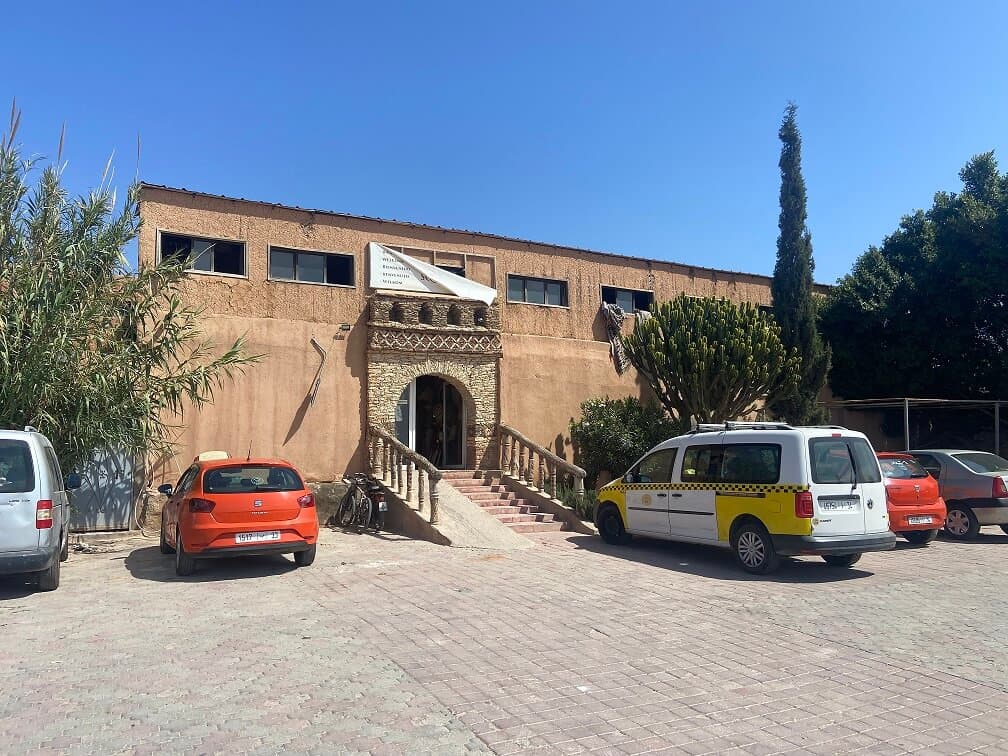
Kasbat Souss is a craft village built like a small medina, with lanes, courtyards, fountains and workshops that open straight onto the street. Nearly 70 craftspeople work here: Amazigh potters, weavers, leatherworkers and jewellers. You can watch them at the wheel or the loom and ask them about their work. There is also a small Amazigh museum on site.

When a British couple came for our pottery workshop, the craftspeople did not speak English, so Mehdi translated at the start. After that the lesson carried on with gestures and a lot of laughter, and four days later he was still helping them arrange to collect their pieces.

It is in the Ben Sergao district, 5 km south of the city centre: about ten minutes by petit taxi (30 to 50 MAD, roughly £2.50 to £4), with free parking at the entrance. Entry is free, daily from 10am to 7pm (8pm in summer). Allow 1½ to 2 hours. Two restaurants serve Moroccan food for 90 to 180 MAD a head (£7 to £14).

  • Distance 5 km from the centre
  • Admission free
  • Time needed 1½ to 2 hours
Read the full guide
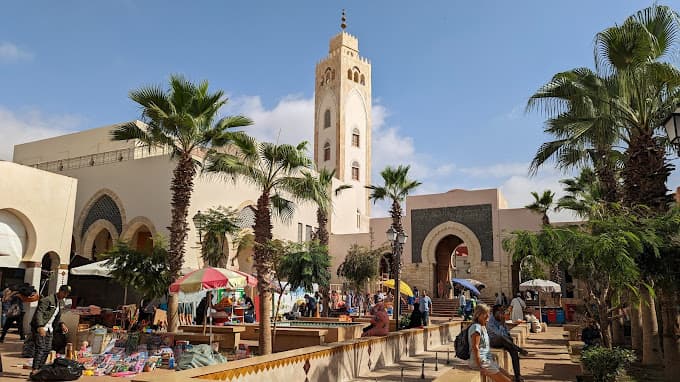
Entrance to Souk El Had in Agadir, with its minaret and palm trees

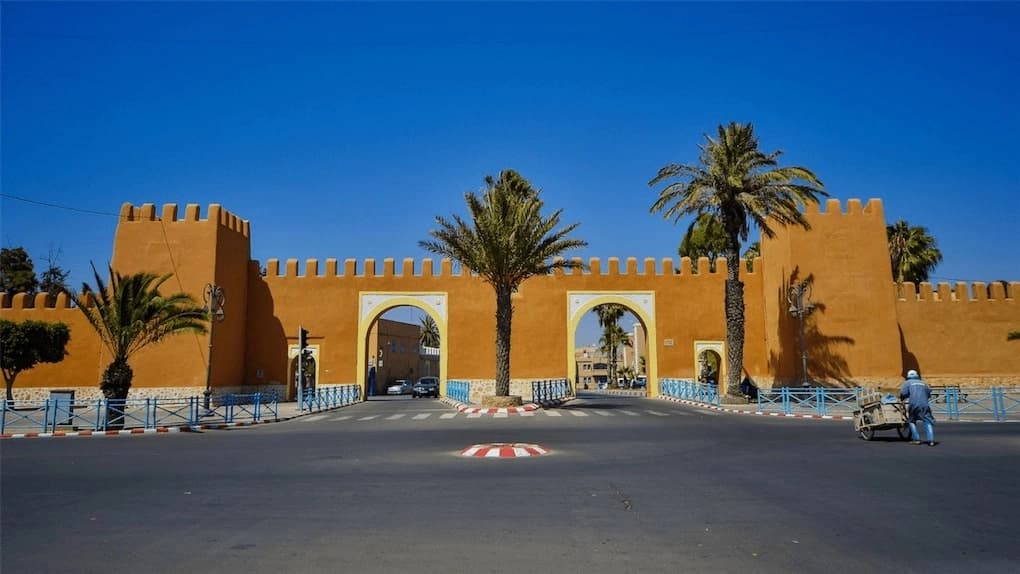
Souk El Had is where Agadir does its own shopping. It covers 13 hectares inside a 6-metre wall with 13 gates, and holds several thousand stalls: spices, argan oil, Amazigh rugs, fresh fish and leather babouches. The name comes from the Arabic for Sunday, the day of the old weekly market. It was rebuilt in the 1960s after the earthquake and now trades all week.

Entry is free. It is open Tuesday to Sunday, 9am to 8pm, and closed on Mondays. For a first visit, go on a Tuesday, Wednesday or Thursday between 9.30 and 11am, when the alleys are quieter. Allow two hours, or half a day if you want to haggle properly and stay for lunch. Bring cash in small notes, as few stalls take cards.

  • Open Tuesday to Sunday, 9am to 8pm
  • Closed Mondays
  • Admission free
Read the full guide
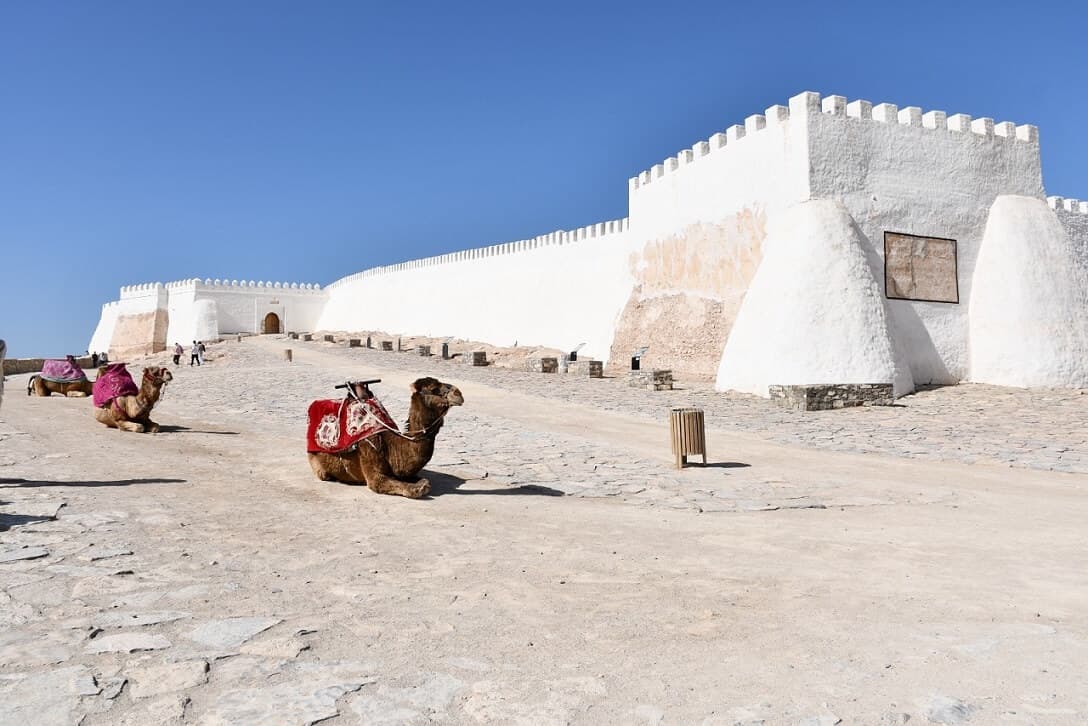
White walls of Kasbah Oufella in Agadir, with camels on the esplanade

The Kasbah Oufella stands 236 metres above the bay and is the only part of pre-1960 Agadir still standing. It was built in 1540 by the Saadian sultan Mohammed ech-Cheikh, 95% destroyed in the earthquake of 29 February 1960, and reopened in February 2024 after restoration. People come for the 360° view over the bay and to remember the city that was lost: the Saadian gateway, the original south wall, walkways, memorial panels and an audio guide in five languages.

The viewing esplanade is free. The restored enclosure costs 90 MAD (about £7) for foreign adults and 65 MAD for foreign children aged 7 to 17. It is open daily from 10am to 7pm. Go up by cable car, by taxi or on foot: the free footpath takes 30 to 45 minutes.

  • Esplanade free
  • Enclosure 90 MAD (about £7) for foreign adults
  • Time needed 1½ to 2 hours
Read the full guide
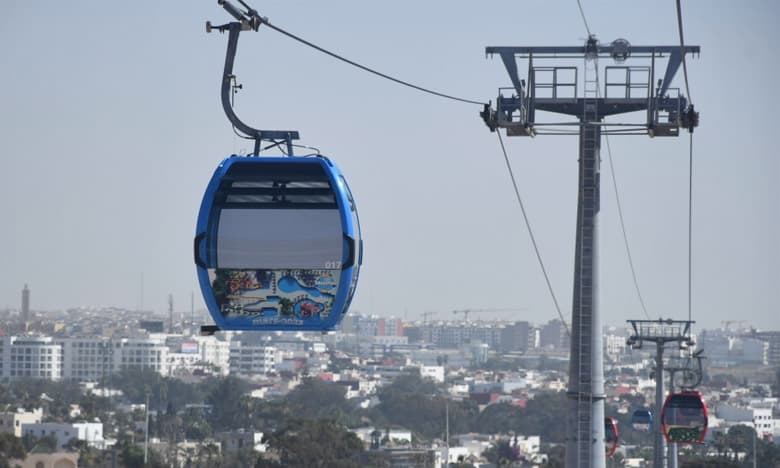
Agadir cable car cabin above the city

Opened on 16 July 2022, this was Morocco’s first urban cable car. Glass cabins run from Tildi Bridge to the Kasbah Oufella esplanade in 6 minutes, covering 1,700 metres and climbing 164 metres, with views straight down onto the fishing port, the marina and the bay.

It runs daily from 10am to 10pm. In 2026 a tourist return costs 130 MAD (about £10) for adults, 90 MAD one way, and 100 MAD for children under 140 cm; children under 80 cm ride free. Prices can change. You don’t need it, since the walk up is free, but the ride is worth it for the view, especially at sunset. Our tip: buy a one-way ticket and walk back down in about 40 minutes. Allow 1½ to 2½ hours in all.

  • Ride 6 minutes, 1,700 m
  • Price 130 MAD (about £10) adult return, 2026
  • Open daily, 10am to 10pm
Read the full guide
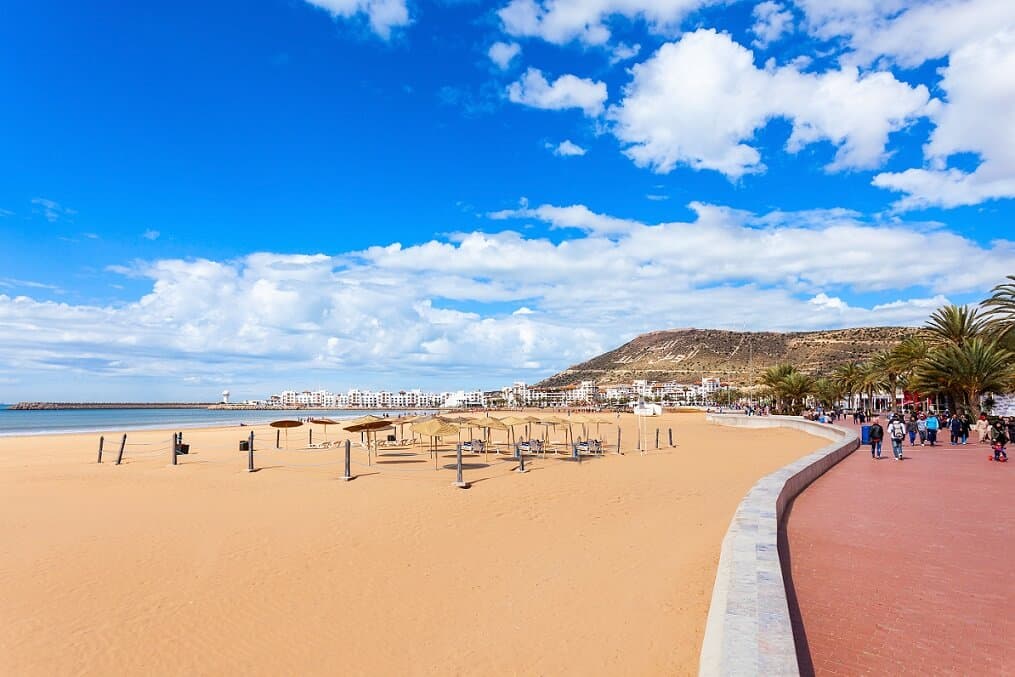
Agadir's sandy beach and pedestrian Corniche, with Agadir Oufella hill in the background

The seafront promenade, opened in September 2007, is 6 km long and entirely pedestrian. It follows the bay beside almost 10 km of sand, from the marina in the north to the Founty district and the mouth of the Oued Souss in the south. It is free and open day and night. Walk, run or cycle it, have a go at surfing or paddleboarding, or take a sunbed at a beach club (around 100 to 200 MAD a day, £8 to £16).

Lifeguards are on duty from June to September, when the water reaches 20 to 22°C. Avoid the southern end near the Oued Souss after heavy rain. The best moment is sunset, seen from the marina or the central stretch: around 6.40pm in December and 8.40pm in late June. Some sections are being redeveloped and may be closed off.

  • Length 6 km (12 km there and back)
  • Access free, open 24 hours
  • Sunset about 6.40pm (Dec) to 8.40pm (June)
Read the full guide
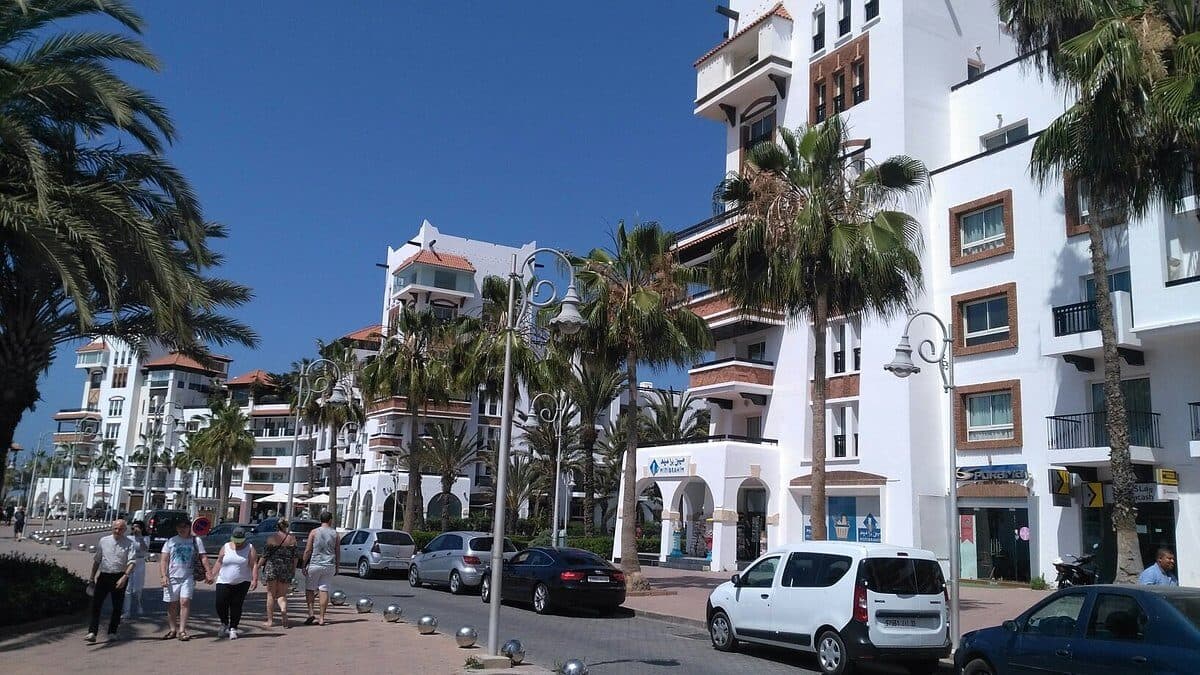
White buildings and palm trees at Agadir Marina

The marina sits at the northern end of the bay. It has 300 berths for boats up to 30 metres and is open all year, with a bar-restaurant, a fuel station, a dry dock and a repair yard. Visitors come to stroll along the quays, have an ice cream or a drink on a terrace, browse the shops and eat in one of the restaurants facing the sea.

It is also where you head out on the water: hire a small boat or a sailing yacht for a few hours and see the bay from the sea. The marina is a recent addition, part of the rebuilding and modernisation of Agadir after the 1960 earthquake.

  • Moorings 300 berths
  • Boats up to 30 metres
  • Open all year
Read the full guide
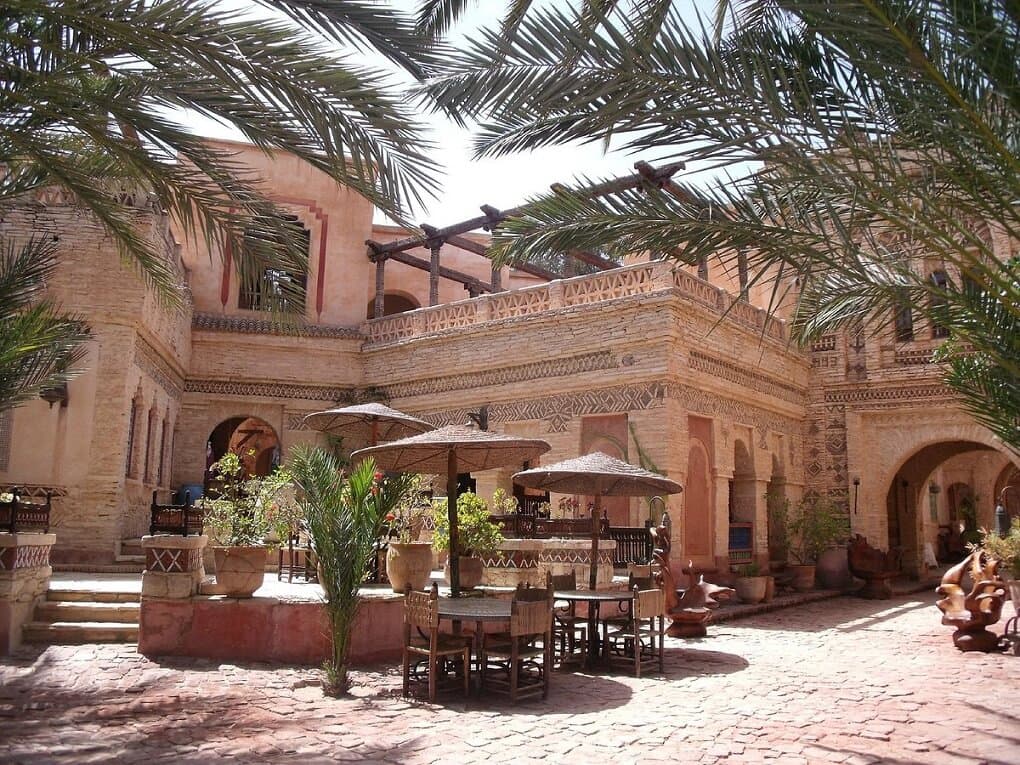
Courtyard of the Agadir medina with palm trees and a terrace

Agadir’s medina is not a historic old town: the 1960 earthquake flattened the old city in fifteen seconds. This is a 4.6-hectare ‘museum medina’, built from 1992 onwards by the artist Coco Polizzi in rammed earth and Souss stone, in the Ben Sergao district. Its shaded lanes, fountains and courtyards house workshops run by master craftsmen (pottery, thuya wood, weaving, jewellery and leather), an art gallery, a small museum of Amazigh art and a restaurant in a riad.

It is calm, and prices are marked and fixed, so there is no haggling. Entry is 40 MAD (about £3) for adults and 20 MAD for children aged 4 to 12, cash only. It is open daily from 9am to 6pm, about 4 km south of the centre. Allow 60 to 90 minutes.

  • Admission 40 MAD (about £3) adults, 20 MAD children
  • Open daily, 9am to 6pm
  • Time needed 60 to 90 minutes
Read the full guide
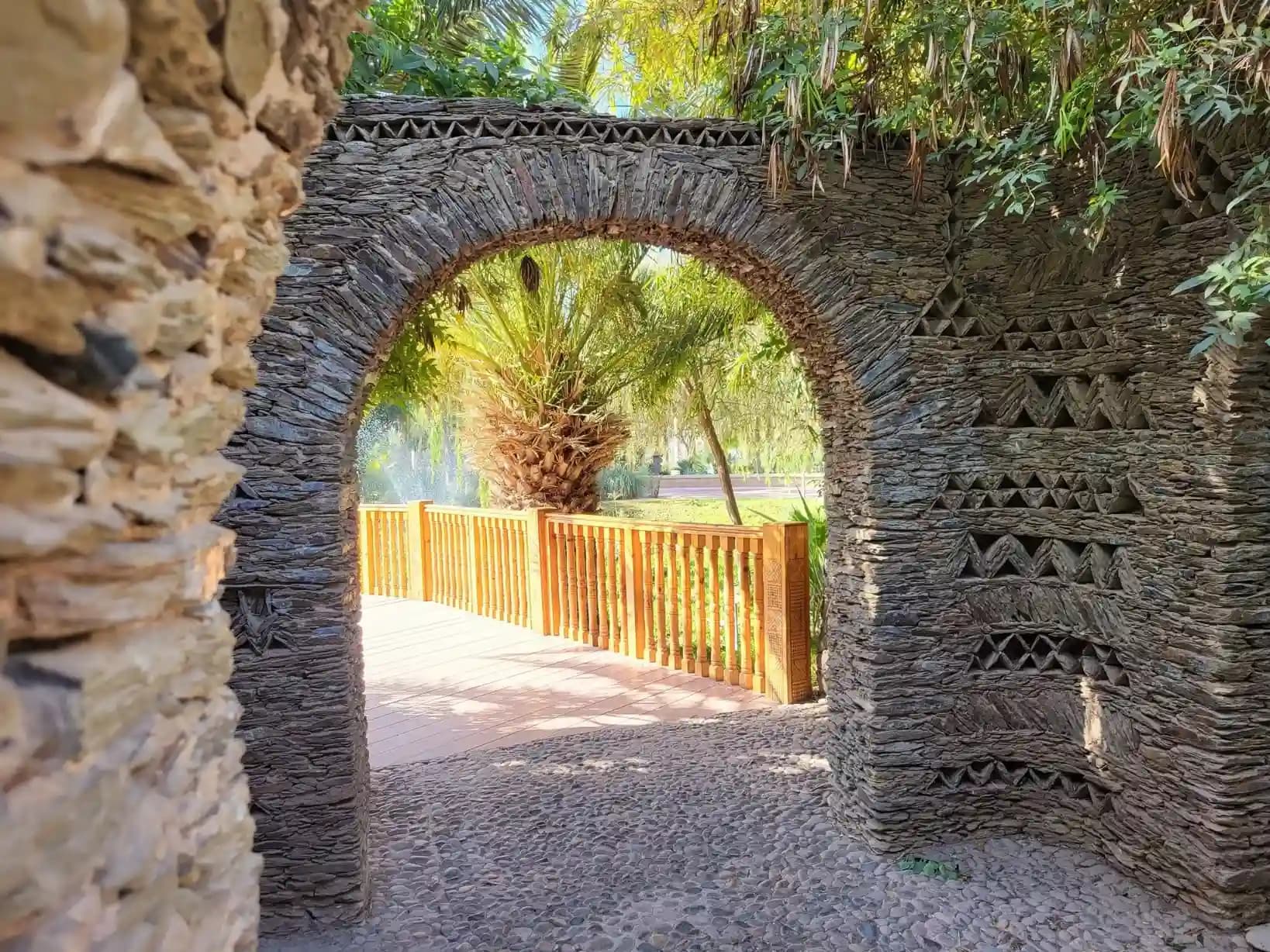
Dry-stone archway in the Olhão Garden, in the centre of Agadir

Opened on 2 March 1992, the Olhão Garden is a free 2.4-hectare public park in Nouveau Talborjt, right in the centre of Agadir. It marks the city’s 1987 twinning with Olhão, a fishing port in Portugal’s Algarve: whitewashed kiosks, azulejo tiles, pergolas covered in bougainvillea, fountains and pools. It reopened on 25 June 2023 after eighteen months of work and now mixes Amazigh patterns from the Souss with the original Portuguese features.

By the south-east entrance, the Mémoire d’Agadir museum tells the story of the 29 February 1960 earthquake: the city before, the disaster and the international aid that followed, including Portugal’s. The garden is open daily from 8am to 7pm. The museum opens 9.30am to 12.30pm and 2.30pm to 6.30pm, is closed on Mondays and costs about 10 MAD.

  • Garden free, 8am to 7pm
  • Museum about 10 MAD, closed on Mondays
  • Time needed 20 to 30 minutes, 1½ hours with the museum
Read the full guide
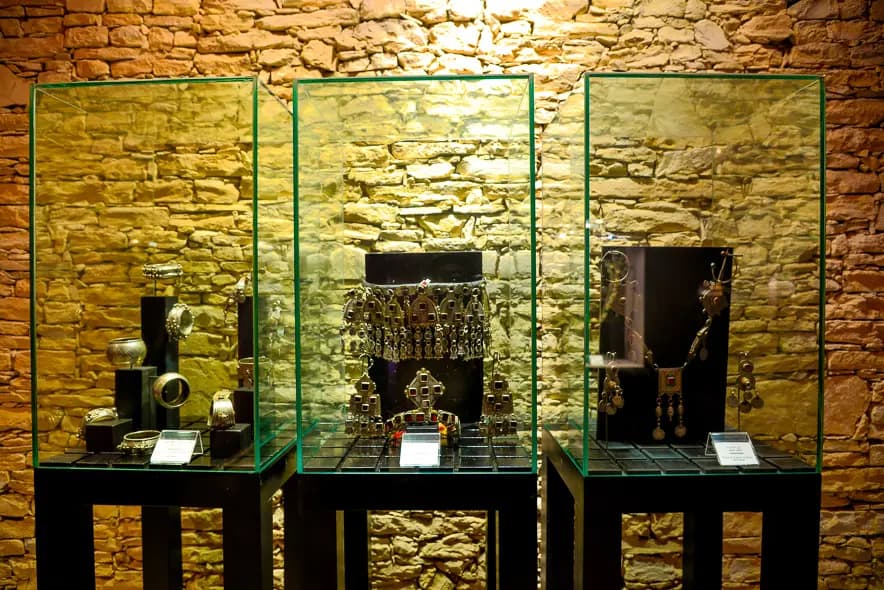
Display cases of Amazigh jewellery at the Amazigh Heritage Museum in Agadir

This is one of the few museums in Morocco devoted entirely to the Amazigh (Berber) people of the Souss. Founded in 2000 and run by the city council, it holds several hundred objects from the region: silver jewellery set with coral and amber, rugs, pottery, instruments such as the ribab and the loutar, and manuscripts in Arabic and Tifinagh script. Panels explain the Amazigh calendar and how to read a few Tifinagh letters.

It is small, on two floors, and takes 45 minutes to 1½ hours. You’ll find it on Passage Aït Souss in the city centre, a 10 to 15-minute walk from the seafront. It is open from 10am to 6pm, closed on Tuesdays, and entry is around 20 MAD. The shop at the exit sells contemporary crafts and books on Amazigh culture. A good choice on one of Agadir’s rare rainy days.

  • Open 10am to 6pm, closed on Tuesdays
  • Admission around 20 MAD
  • Time needed 45 minutes to 1½ hours
Read the full guide
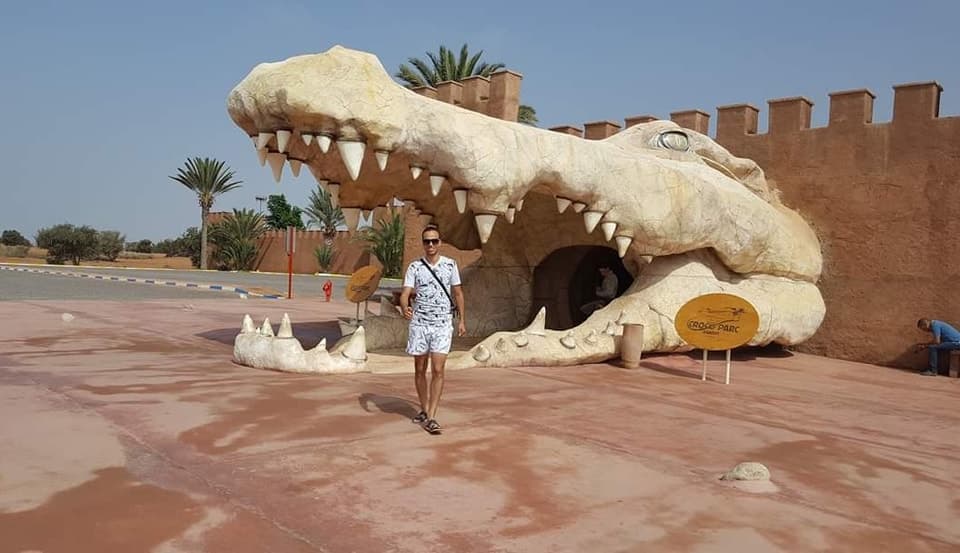
Entrance to Crocoparc Agadir, shaped like a giant crocodile's open jaws

Morocco’s first crocodile park opened in 2015 at Drarga, 16 km from central Agadir on the N8 (20 to 30 minutes by car). Around 325 Nile crocodiles live in a 4-hectare botanical garden with more than 300 plant species, giant water lilies and a grove of argan trees. There is also a terrarium, a marmoset house and two playgrounds, and the paths are pushchair-friendly.

The crocodiles spend most of the day perfectly still. Feeding, when they come to life, depends on the season: up to five times a day in summer, while in winter they can go more than three months without food, so check the times at the entrance. It is open daily from 10am to 6pm; entry is 95 MAD (about £7.50) for adults and 65 MAD for children aged 3 to 12. Allow 2 to 3 hours.

  • Distance 16 km from Agadir (Drarga)
  • Admission 95 MAD (about £7.50) adults, 65 MAD children
  • Open daily, 10am to 6pm
Read the full guide
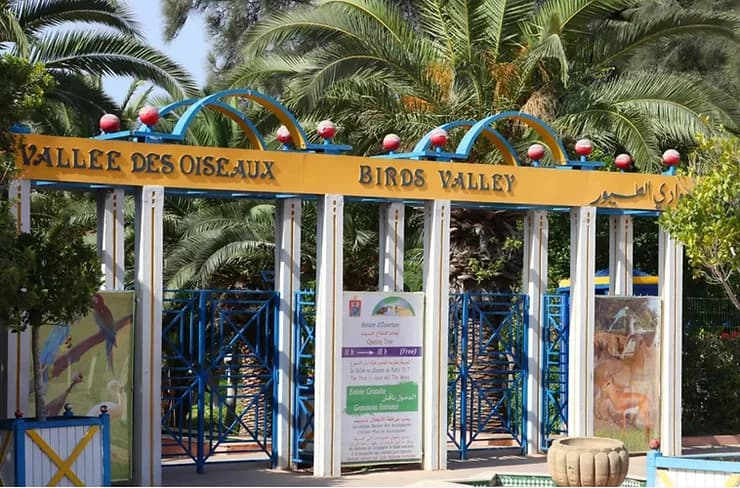
Entrance to the Valley of Birds in Agadir, a colourful gateway beneath palm trees

11.The Valley of the Birds

Closed since 2021

The Valley of the Birds, a small free wildlife park in central Agadir, has been closed since 2021 for a complete rebuild. As of October 2026 no reopening date has been announced, and several earlier targets (late 2024, early 2025, before the Africa Cup of Nations in December 2025) have passed. Leave it out of your plans for now.

The project is a 2.5 to 3-hectare immersive zoo with around 69 species and 500 animals in four zones (Africa, Asia, South America and Australia), and two large aviaries joined by a wooden walkway. For animals in the meantime, Crocoparc at Drarga, 16 km away, is open (paid entry).

  • Status closed since 2021
  • Reopening no date announced
  • Instead Crocoparc, 16 km away
Read the full guide

Around Agadir

What to do around Agadir: 12 day trips

The Souss region packs in a rare density of landscapes: less than two hours from Agadir, the scenery changes completely. Each place has its own detailed guide: how to get there, driving time and best season.

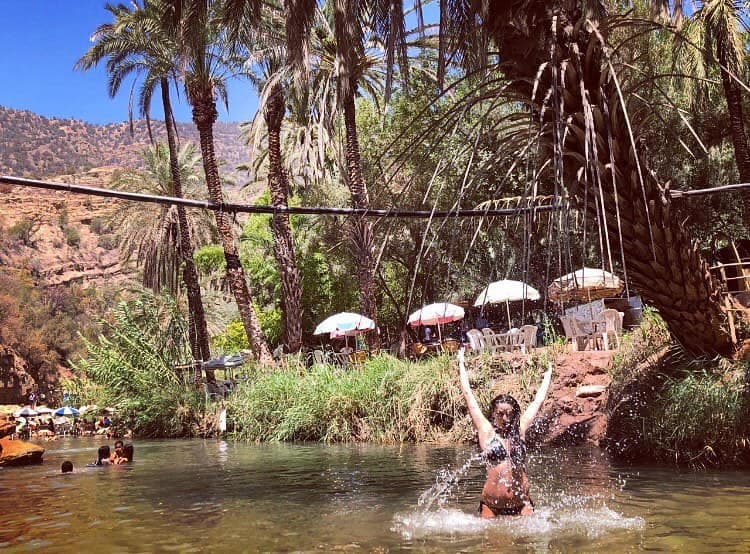
Swimming and restaurant parasols beneath the palm trees in Paradise Valley, near Agadir

Paradise Valley

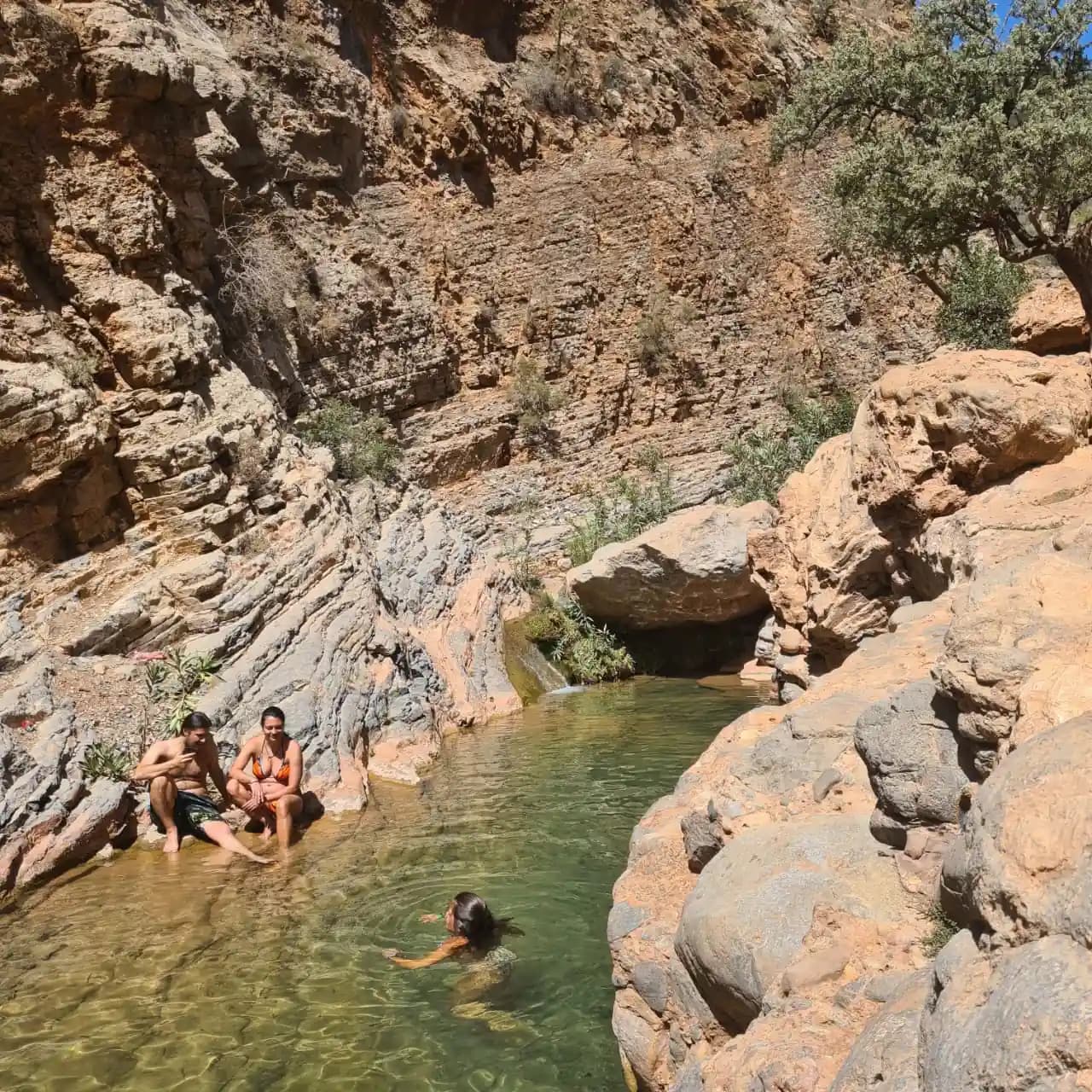
Paradise Valley is a gorge of pink rock 35 km north-east of Agadir, with turquoise pools fed by the river. The drive takes about 45 minutes, and the last stretch of track needs a 4x4 or a high-clearance car. From the car park it is around 30 minutes’ easy walk to the pools, where you can swim for part of the year. It is the most popular day trip from Agadir and fits easily into a morning. Our half-day tour leaves at 8.30am and is back by 1.30pm, with transport and a local guide included.

Read the full guide
Red rock arch over Legzira beach

Legzira Beach

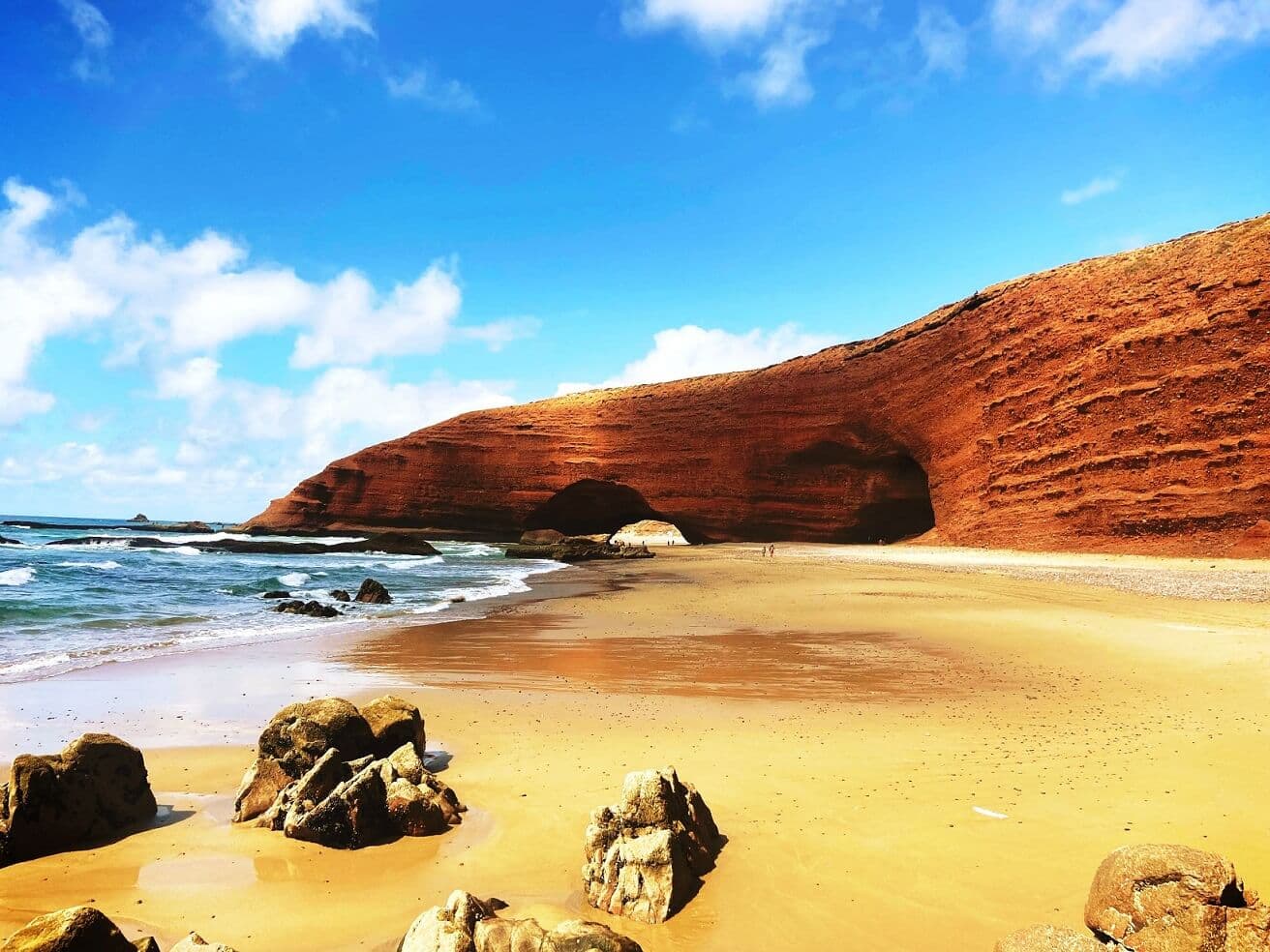
Legzira is a beach closed in by red cliffs and rock arches carved by the Atlantic, between Mirleft and Sidi Ifni, about three hours’ drive south of Agadir. One of the arches collapsed in 2016, but the cliffs and the arch still standing make it one of the most striking stretches of coast in Morocco. Make a full day of it and combine it with Mirleft, a few kilometres away. Go at low tide, when you can walk along the foot of the cliffs.

Read the full guide
Sandstone cliffs carved by the ocean at Timlaline, near Tamri, north of Agadir

Timlaline and Tamri

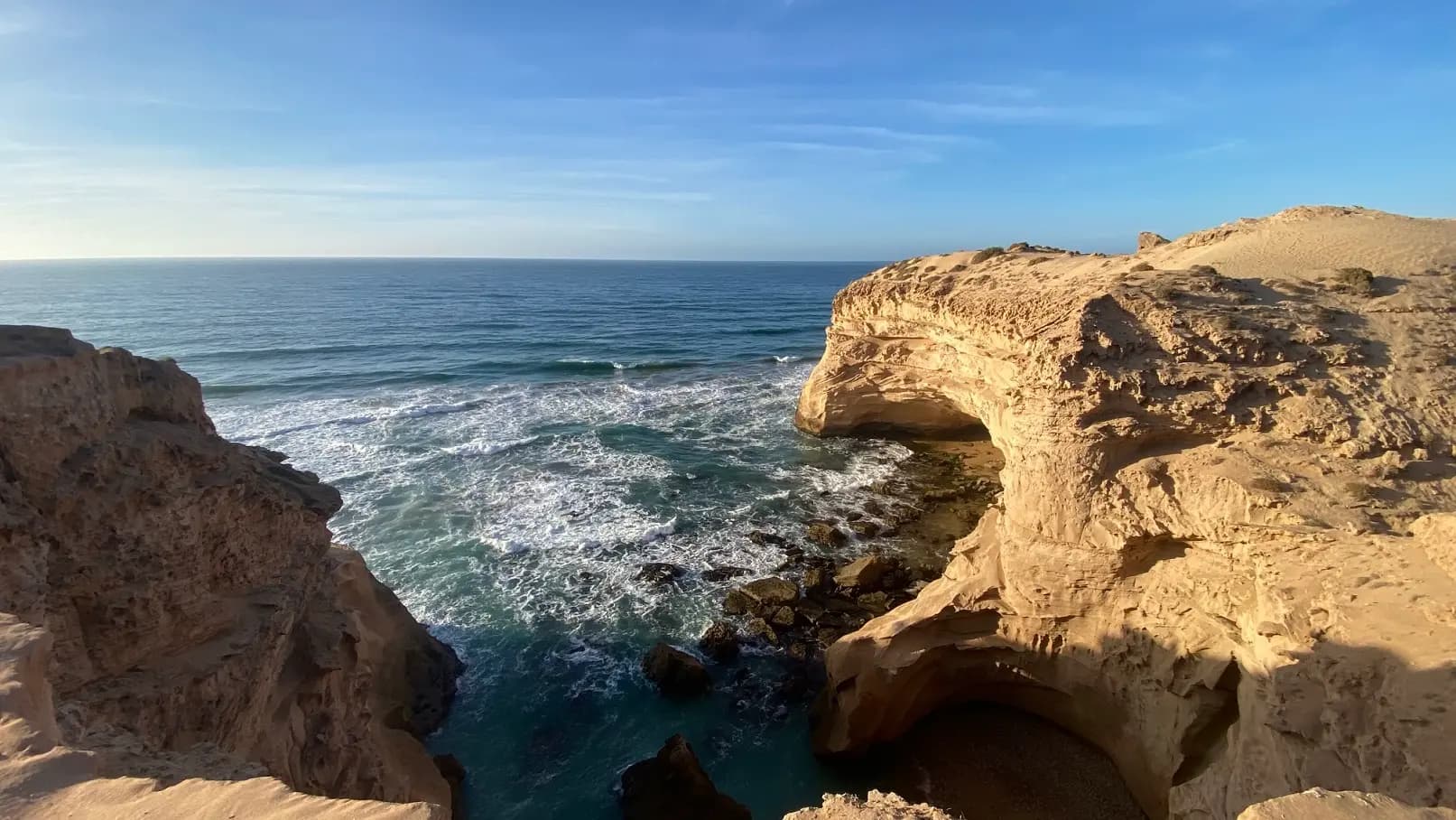
At Timlaline, golden dunes run down to the Atlantic, about 1¼ hours’ drive north of Agadir on the coast road. You can sandboard down the ridges, ride a camel and drink tea on the sand, then stop at Tamri to see the fishing boats. Come in the two hours before sunset, when the light is at its best. On a tour with our guide Abdel, Anissa and her family took Taghazout, Aghroud and the dunes at their own pace; the moment she chose to tell us about afterwards was a glass of tea at sunset, facing the dunes. Our private 4x4 tour combines Taghazout, Aghroud and Timlaline in four hours, with hotel pick-up.

Read the full guide

Get your bearings

Agadir and its surroundings, on the map

Every place worth seeing, at a glance. Check opening hours, explore each place and add your favourites to your itinerary.

  1. Haggle in Souk El Had

    Tuesday to Sunday, 9am to 9pm

  2. Explore Coco Polizzi’s Medina

    Daily, 9am to 6pm

  3. Climb to the Kasbah Oufella for the View

    Daily, 10am to 7pm (8pm in summer)

  4. Walk Agadir Beach and Seafront at Sunset

    Open 24 hours a day

  5. Watch Artisans at Work in Kasbat Souss

    Daily, 10am to 7pm

  6. Visit the Amazigh Heritage Museum

    10am to 6pm, closed on Tuesdays

  7. See the Nile Crocodiles at Crocoparc

    Daily, 10am to 6pm

  8. Ride the Agadir Cable Car

    Daily, 10am to 10pm

  9. Relax in the Olhão Garden

    Garden open daily, 8am to 7pm

  10. The Valley of the Birds

    Closed since 2021

Our experiences in Agadir

Curated workshops, excursions and encounters crafted with our local artisans and guides.

See all 38 activities in Agadir

Partners we've met one by one

Every workshop and every excursion you find here is led by artisans and guides we chose personally. No automatic listings, no mass partnerships: we live each experience before putting it online.

01

Selected on the ground

We test every experience ourselves before featuring it. What you read here, we've lived.

02

Reliable and serious

Punctuality, safety, equipment, hospitality. The basics that make the difference between a great moment and a bad surprise.

03

Human connection first

Behind every activity, artisans and guides who love what they do and welcome you like a close friend.

Planning Your Trip to Agadir

When is the best time to visit Agadir?

Agadir has one of the steadiest climates in Morocco: around 300 days of sunshine a year and no real cold season.

Spring (March to May) is the best balance, with daytime highs of 21 to 23°C, a sea that is cool but swimmable and moderate crowds. It is also the best time for trips inland, when the countryside is green after the winter rain.

Summer (June to September) brings highs of 23 to 27°C, sometimes more in August. The beach is at its busiest and the sea at its warmest, around 20 to 22°C.

Autumn (October and November) feels much like spring: bright, mild and ideal for day trips.

Winter (December to February) is the season for British visitors chasing the sun. Daytime highs stay around 20°C, but nights can fall below 10°C and the sea, at 16 to 17°C, is too cold for most swimmers. Pack a jumper for the evenings.

How many days do you need in Agadir?

Two to three days cover the city itself: the beach, the souk, the Kasbah Oufella, Kasbat Souss, the Amazigh museum and the marina. Distances are short and the main sights combine easily.

Add a day for each trip out of town: Paradise Valley and Taghazout on one day, Taroudant and the Tiout oasis on another, Legzira or Tiznit on a third. A week lets you see Agadir and the region without rushing. To get to know the Souss properly, its crafts, Amazigh villages and culture and landscapes, allow one to two weeks. For a ready-made plan, see our 3-day Agadir itinerary.

Where to Stay in Agadir: the Main Neighbourhoods

Founty and the beachfront

The main hotel area, right on the seafront promenade. The big hotels, beach clubs and tourist restaurants are here. Handy for the beach, but busier and noisier.

City centre and Talborjt

Talborjt is the residential district closest to the centre. Flats and small hotels are usually cheaper, and it feels more local than resort. Petits taxis to the souk and the Kasbah leave from here.

The marina

Newer, quieter and more residential, with pricier restaurants. Good for boat trips, less handy for walking into the centre.

Anza

A working-class district north of the centre with few tourist facilities, facing a less developed beach. Worth considering if you want to get away from the resort feel.

Taghazout

20 km north, the alternative base for a surf trip or a village atmosphere. Less accommodation, and a slower pace.

Things to Do in Agadir with Kids

Agadir works well with children: the beach is wide, the bay is sheltered and the sights are close together.

  • Crocoparc: around 325 Nile crocodiles, a botanical garden, two playgrounds and pushchair-friendly paths. Ask about feeding times at the entrance.
  • The cable car: six minutes up to the Kasbah Oufella in a glass cabin, fine for all ages. Children under 80 cm ride free.
  • The beach: wide and sheltered, with lifeguards from June to September.
  • The Olhão Garden: free and shaded, a good break between sights.
  • Kasbat Souss: flat lanes and open workshops, one of the few places in Agadir where children can watch a potter or weaver at work and see how an object is made. Free entry. Our pottery workshop there welcomes children from 8.
  • Souk El Had: spices, fruit and crafts, lively without being overwhelming.
  • Dunes and day trips: for older children, a camel ride in the dunes or a 4x4 trip to Paradise Valley.

Things to Do in Agadir at Night

Evenings in Agadir happen by the sea, and some places stay busy until late. These are the addresses we send our own guests to.

  • Sunset at the Kasbah Oufella: take a light jacket, it gets windy up there. The cable car runs until 10pm, so you can go up for sunset and come down after dark.
  • The seafront promenade: lit at night and busy until late.
  • LOV, on Chemin des Dunes: a dinner show with a fire-breather and a contortionist, and food from an exceptional chef.
  • Le Nil Bleu: a fixture of Agadir beach, right on the promenade, with good food and live music, from Gnawa bands to singers.
  • Zanzibar, in the tourist zone: a restaurant and bar with a terrace, live music and beautiful decor.
  • Riad Villa Blanche, in Founty: a beautiful setting and refined cooking.
  • Pure Passion, at the marina: upscale cooking with the boats in front of you.
  • Blue Note, on Boulevard du 20 Août: live music most nights.
  • The Salam district, near Café Rayane: snack bars, pizza and grills, open through the night.
  • Our fantasia evening: our fantasia dinner show combines a Moroccan dinner in a tent with Gnawa musicians, acrobats and Tbourida horsemen, with hotel transport included.
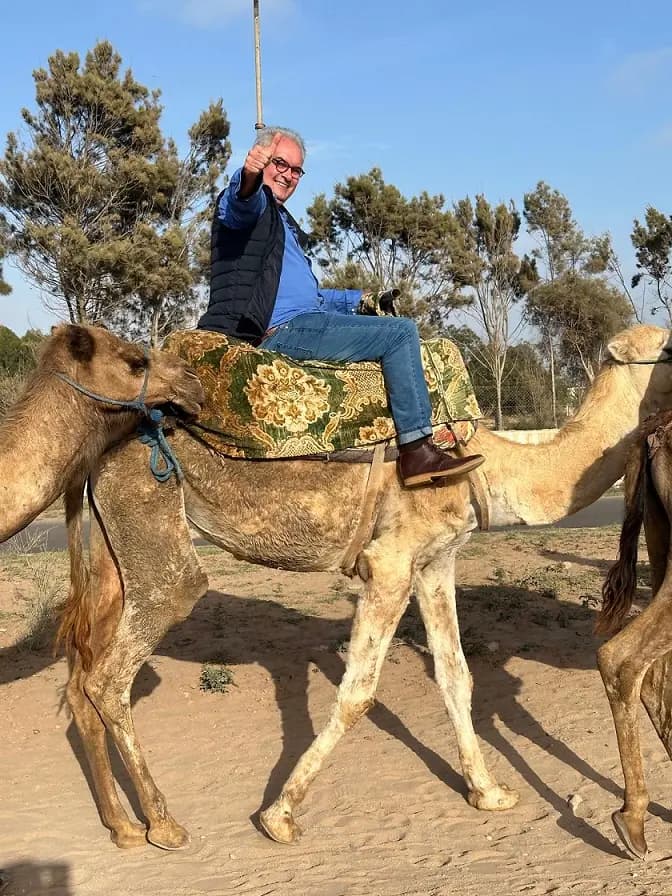
  • Our sunset camel ride: the camel ride ends with a Moroccan dinner in a Berber-style lounge, with transport from your accommodation.

Free Things to Do in Agadir

Much of Agadir costs nothing: the beach, the seafront, the public gardens, the markets and the walk up to the kasbah are all free.

  • The beach: 10 km of sand, free along its whole length. Beach club sunbeds are optional. Before 9am it belongs to fishermen and joggers.
  • The seafront promenade: 6 km on foot or by bike, from the marina to the south of the bay, lit at night.
  • The walk up to the Kasbah Oufella: 30 to 45 minutes on the footpath from the bottom of the hill, for the same 360° view you would pay for on the cable car.
  • The Olhão Garden: free, shaded, 20 to 30 minutes.
  • Souk El Had: free to wander with no obligation to buy. 13 hectares and 13 gates, one of the largest markets in southern Morocco.
  • Kasbat Souss: free entry to this village of nearly 70 craftspeople, 5 km from the centre, daily from 10am to 7pm, with free parking.
  • Talborjt market: a neighbourhood market with no tourist sales pressure, where locals do their shopping.
  • The Oued Souss estuary: reachable on foot from the southern end of the beach, with migrating birds, including flamingos in winter.
  • The fishing port at dawn: the boats come in early and the fish auction starts straight away.
  • Sunset from the kasbah or the seafront, every evening.

The Valley of the Birds, long listed as the free garden in the city centre, has been closed since 2021. It is due to reopen as an immersive zoo, with no date announced.

Things to Do in Agadir When It Rains

Rain is rare in Agadir and falls mostly in winter. When it does, head indoors.

  • The Amazigh Heritage Museum, in the city centre (closed on Tuesdays).
  • The Mémoire d’Agadir museum in the Olhão Garden, on the 1960 earthquake (closed on Mondays).
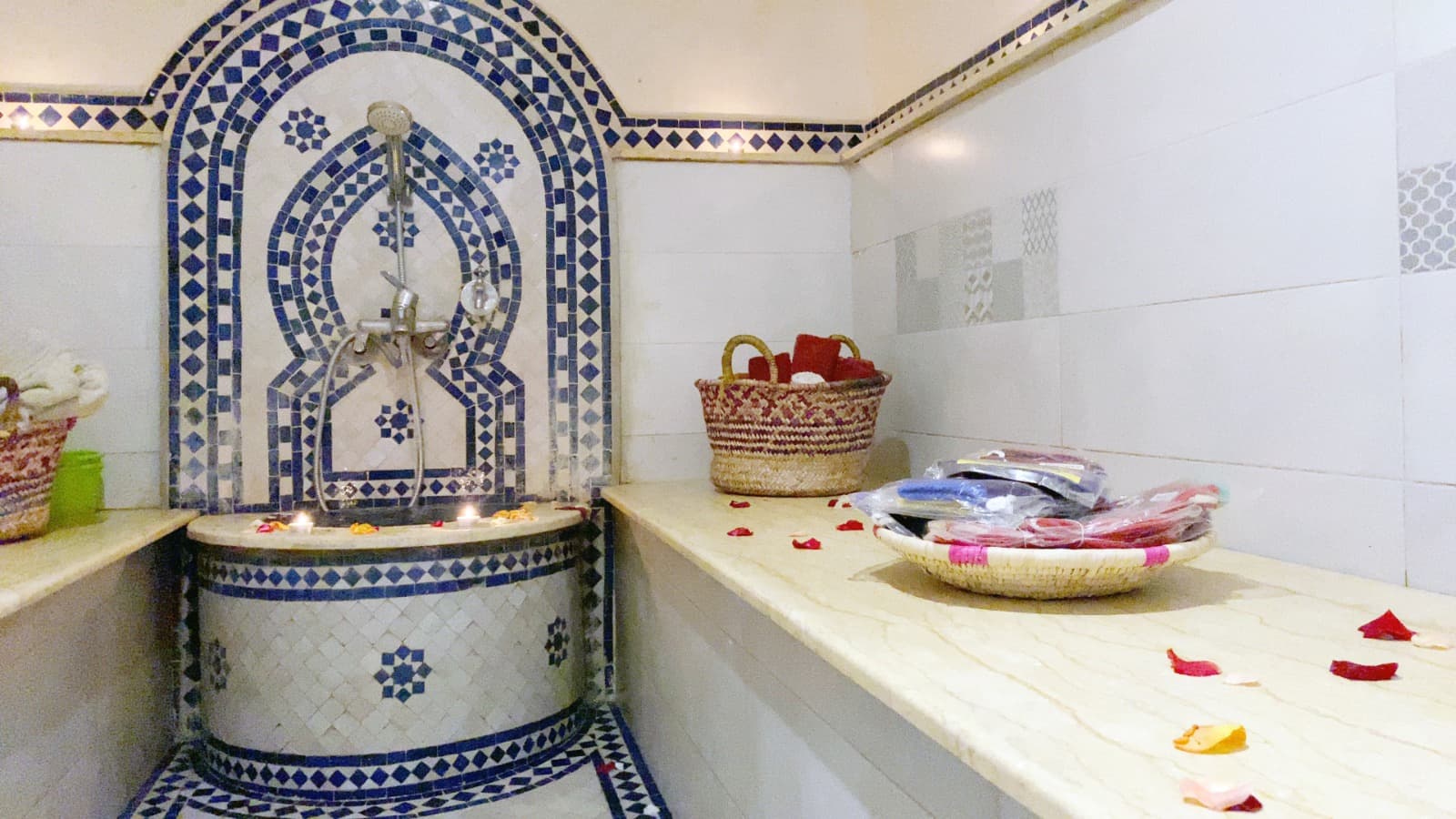
  • A hammam: our hammam and massage in central Agadir includes transport.
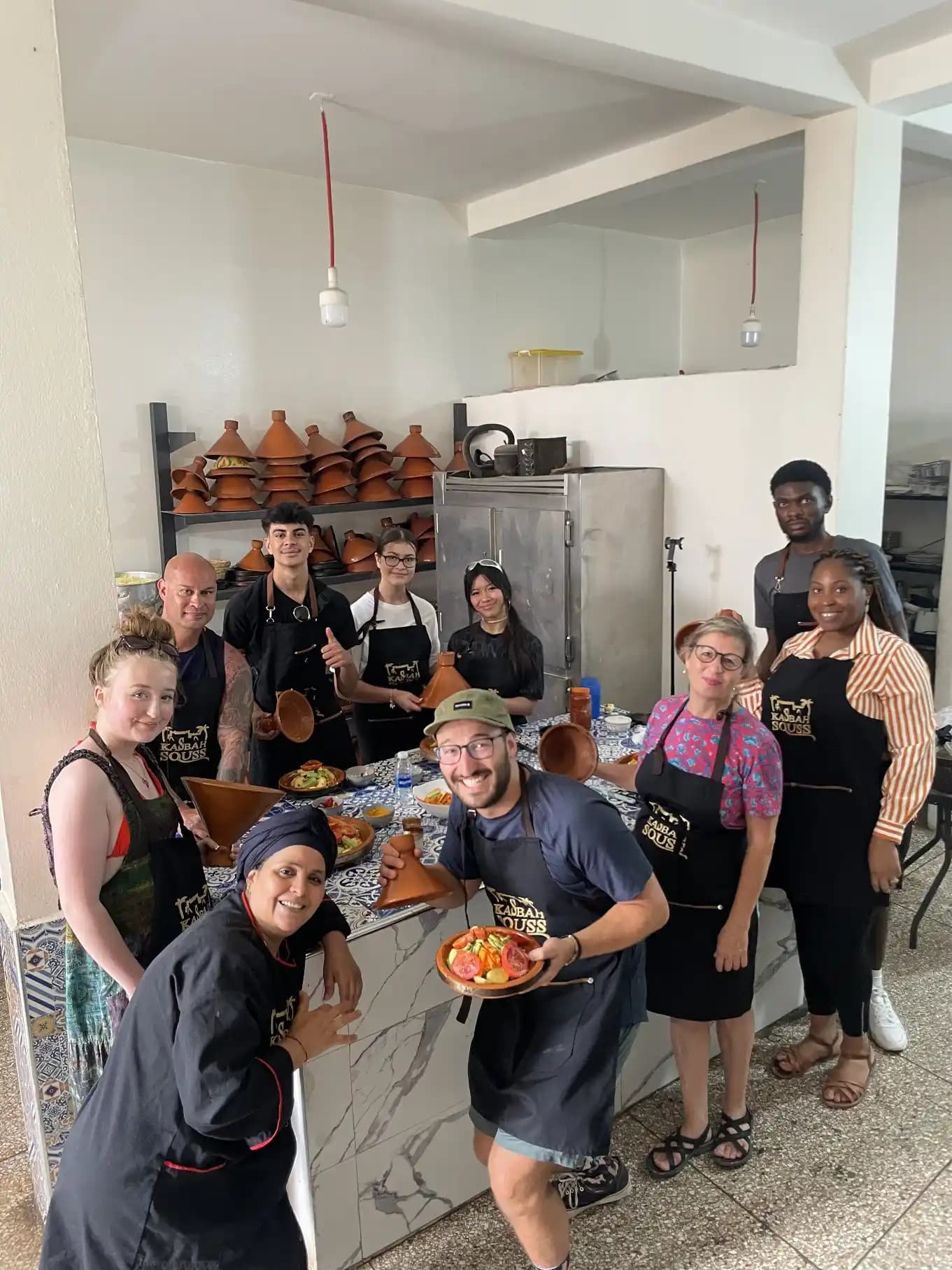
  • A cooking class: cook a tagine or couscous with a local cook in one of our cooking classes, and stay for the meal.
  • A craft workshop at Kasbat Souss: pottery, leather or jewellery with one of our artisans.

What to Watch Out For in Agadir

  • Money: you can only get dirhams in Morocco. Change money or use a cash machine on arrival, and keep small notes: most souk stalls don’t take cards.
  • Closing days: Souk El Had shuts on Mondays, the Amazigh Heritage Museum on Tuesdays and the Mémoire d’Agadir museum on Mondays.
  • Haggling: expected in the souk, but not in Coco Polizzi’s Medina, where prices are fixed.
  • The Valley of the Birds is still closed, whatever older guides say.
  • Swimming: swim where there are lifeguards (June to September) and avoid the southern end of the beach near the Oued Souss after heavy rain.
  • Ramadan: Morocco puts its clocks back an hour, and some cafés and restaurants change their hours.

Experience Agadir Differently: Artisans, Locals and Hands-on Experiences

Some of the best days in Agadir happen away from the sights: at a potter’s wheel, in a kitchen, on a dawn fishing trip, or talking with craftspeople whose families have worked leather, clay or raffia for generations.

That is what we do at Immersi Travel. We are based in Agadir and work with local people who practise their trade: cooking classes with local cooks, craft workshops at Kasbat Souss, and day trips from Agadir to Taghazout, Paradise Valley or Taroudant, with guides who know the back roads and the families of the hinterland.

What our guests tell us afterwards is often about a small moment. Bernadette came to learn to make a tagine: after a walk round the market with Imrane, she cooked with chef Salma at Kasbat Souss and went home knowing how to preserve lemons in salt as well. Olivier came to the pottery workshop to keep his wife company, without much conviction; the potter’s kindness won him over, and in his review he calls it an unforgettable session. After her hammam and massage, Myriam wrote that she loved what the ritual did for her skin, and that she was so relaxed she nearly fell asleep.

We have met every host in person and tried every experience before listing it. Each listing states the level needed, the duration and what is included. In Agadir we offer craft workshops, cooking classes, private 4x4 and buggy trips, deep-sea fishing, camel rides and massages.

Frequently asked questions

Is Agadir worth visiting?
Yes, if you want winter sun with more to do than lie on the beach. Agadir has a 10 km sandy bay, winter highs around 20°C and direct flights from the UK. It is a modern city, rebuilt after 1960, so don’t expect an old medina like Marrakech’s. Its interest lies in the souk, the craft villages and the day trips into the Souss and the Anti-Atlas.
What can you do in Agadir in one day?
Souk El Had in the morning (not on a Monday), lunch at Kasbat Souss, the cable car up to the Kasbah Oufella in the late afternoon, then the seafront promenade at sunset. That covers the main sights at an easy pace. Our 3-day itinerary spreads them out and adds a day trip.
When is the best time to visit Agadir?
March to May and October to November, with highs of 21 to 25°C and fewer crowds than in summer. Winter is the season for winter sun, with highs around 20°C but cool nights and a sea too cold for most swimmers.
How many days do you need in Agadir?
Two to three days for the city, five to seven to add day trips to Paradise Valley, Taghazout and Taroudant. A week balances beach time with seeing the Souss region.
What are the best free things to do in Agadir?
The beach, the seafront promenade, the walk up to the Kasbah Oufella, Souk El Had, Kasbat Souss, the Olhão Garden and the Oued Souss estuary are all free. Paid sights are cheap: the cable car is 130 MAD (about £10) return and Crocoparc 95 MAD.
What is there to do in Agadir with kids?
Crocoparc, the cable car, the beach and the Olhão Garden are the easy wins. At Kasbat Souss children can watch potters and weavers at work, and our pottery workshop there welcomes children from 8. Older children enjoy a camel ride in the dunes or a trip to Paradise Valley.
What can you do in Agadir when it rains?
Rain is rare, but when it comes, visit the Amazigh Heritage Museum or the Mémoire d’Agadir museum, or book a hammam, a cooking class or a craft workshop at Kasbat Souss. Crocoparc is mostly outdoors, so keep it for a dry day.
What is there to do in Agadir at night?
Watch the sunset from the Kasbah Oufella (bring a light jacket, it is windy), then walk the lit seafront promenade. For dinner with live music, try Le Nil Bleu on the beach or Zanzibar; for live music most nights, Blue Note. The Salam district serves grills and pizza through the night. For a full evening out, book a fantasia dinner show or a sunset camel ride with dinner.
Is Agadir safe for tourists?
Agadir is a relaxed resort city and most visits are trouble-free. Take the usual precautions: keep valuables out of sight in crowded places such as the souk, check the fare before a taxi ride, and swim where there are lifeguards. Read the UK government’s (FCDO) travel advice for Morocco before you go.
What is the best beach in Agadir?
The main beach runs for almost 10 km, and the central stretch facing the promenade has the most facilities. For a wilder setting, try the beaches around Taghazout (Anchor Point, Panoramas, Hash Point), or Mirleft further south.
How do you get to Agadir and get around?
Al Massira Airport (AGA) is about 25 km from the centre, with direct flights from the UK and other European cities. Our private airport transfer starts at €25. In town, petits taxis are the easiest way around, and grands taxis serve towns such as Taroudant and Tiznit. Hire a car or book a tour for Paradise Valley, Legzira or Tafraoute.
Build your Agadir journey

Book your experiences in a few clicks. Free cancellation up to 24h before.

See all experiences
Plan your stay