What You Need to Know About Healthcare in Agadir Before You Go
Healthcare in Agadir is more developed than in many other Moroccan tourist cities. The city welcomes several hundred thousand visitors each year, and its healthcare infrastructure has kept pace with this growth.
Modern private clinics, public hospitals, pharmacies open in the evening, traditional herbalists: healthcare options cover a wide range. This guide provides the essential information you need to enjoy your stay with peace of mind, without having to play doctor. For everything related to life in Agadir, see our Agadir page.
Important: This article is for informational purposes only. It is not a substitute for the advice of a healthcare professional. If you have any concerns about your health, consult a doctor.
Preparing for Your Health Before Travel: Vaccinations and Insurance
No vaccinations are required to enter Morocco from Europe. However, some booster shots are recommended - the specific list depends on your personal situation and your primary care physician. Consult a healthcare professional or an international vaccination center several weeks before departure.
Health Insurance: Essential for Receiving Medical Care in Agadir Without Surprises
Private clinics in Agadir often require immediate payment or proof of insurance before providing any treatment. Medical care in Morocco is not reimbursed by the French Social Security system. Check your coverage before departure: a premium credit card, annual travel insurance, or your health insurance plan’s coverage for stays abroad.
Keep your insurance assistance number (often available 24 hours a day) and a copy of your insurance certificate with you. A basic first-aid kit - pain relievers, anti-diarrheal medication, antiseptic, and bandages - can help you avoid having to see a doctor for minor injuries.
Private Clinics and Healthcare in Agadir for Non-Residents
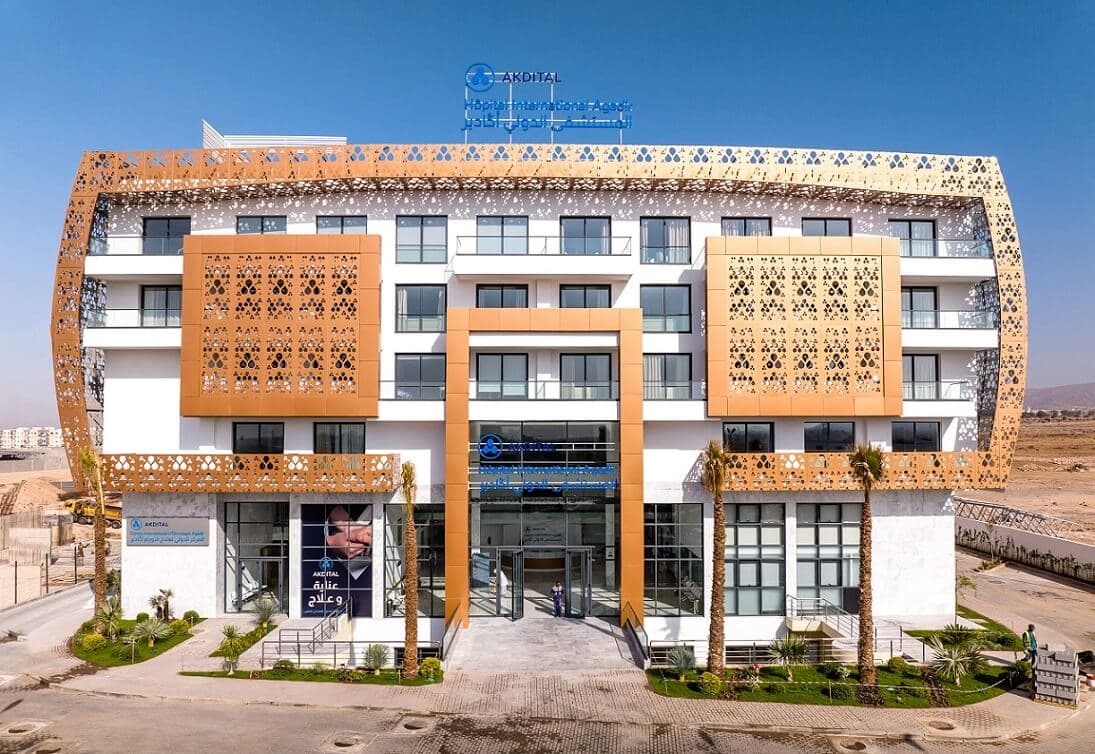
For travelers, private clinics are often the most convenient option: shorter wait times, staff who often speak French, and modern facilities. Agadir has several private clinics located in neighborhoods easily accessible from the hotel district.
When choosing a clinic, check recent Google reviews and ask for recommendations at your hotel’s front desk - hotel staff are familiar with local facilities and can sometimes contact a doctor on call. Don’t rely solely on online listings, as they aren’t always up to date.
Healthcare and Medicine in Agadir: What Private Clinics Cover
Private clinics in Agadir cover travelers’ common needs: general medicine, minor emergencies, radiology, and lab tests. Some offer specialties such as cardiology, orthopedics, or gynecology. For major surgical procedures, medical repatriation arranged by your insurance provider is generally preferable.
Public Hospitals in Agadir: The Free Option for Emergencies
The city has several public hospitals. They treat life-threatening emergencies regardless of nationality. Wait times can be long and material resources may vary by department, but these facilities remain a viable option for serious situations.
- The Agadir University Hospital (CHU) is the main public hospital in the Souss-Massa region. It has an emergency department, an intensive care unit, and numerous medical and surgical specialties.
- Hassan II Hospital, located in the Charaf neighborhood, provides care in pediatrics, gynecology, cardiology, and neurology, and has an intensive care unit.
- The Moulay Abdellah Hospital offers services in general medicine, surgery, orthopedics, and cardiology.
- Alkhansaa Hospital, in the Tikiouine neighborhood, provides internal medicine, pediatrics, and gynecology services for residents of the city’s eastern sector.
For a serious emergency, ask your hotel or a taxi to take you directly to the CHU’s emergency room. If you’re unsure about the severity, don’t delay: it’s better to go for no reason than the other way around.
Pharmacies in Agadir: Finding Medications and Pharmacies on Duty
Agadir has numerous pharmacies spread throughout all neighborhoods. Most are open during the day from 9am to 1pm and from 3pm to 9pm or so. In the evenings, on weekends, and on holidays, a system of on-call pharmacies ensures continuous service.
To find the nearest on-call pharmacy, there are two simple options: ask at the front desk of your lodging, or look at the small sign posted on the window of any closed pharmacy - by law, it must indicate the on-call pharmacy for that area.
What medications should you bring, and what medications can you find in Agadir?
Pharmacies in Agadir are well-stocked with common medications. European generic drugs often have Moroccan equivalents. If you’re on long-term medication, bring your prescription and a supply to last the entire duration of your stay - dosages and packaging may differ. For very specific or hard-to-find medications, don’t expect to find them locally.
Amazigh herbal medicine: traditional medicine in Agadir
Before modern clinics existed, the people of Souss-Massa treated their ailments with plants found in the Anti-Atlas Mountains. This ancestral knowledge is still very much alive. When you step through the door of a herbalist’s shop in Agadir, you enter a space where crumpled canvas bags overflow with dried thyme, raw argan, and roots - all immediately recognizable thanks to the air heavy with aromatic scents.
Medicine in Agadir and herbalism: what you need to know before consulting a practitioner
Herbalists use local medicinal plants to treat common ailments: fatigue, digestive issues, stress, and mild joint pain. They do not make medical diagnoses and are not a substitute for a doctor. Herbal medicine in Morocco is not regulated as a healthcare profession - training levels vary from one practitioner to another.
If you’re curious about this approach, choose a herbalist who is accredited or part of a structured cultural framework. At Kasbat Souss, Meziane welcomes visitors in a space dedicated to Amazigh health and well-being - it’s a way to discover this tradition in a trustworthy setting with a certified professional. Always disclose any current treatments and allergies before agreeing to anything.
To learn more about this world, you can book a consultation with Meziane, an herbalist at Kasbat Souss.
Health in Agadir: Good Daily Habits During Your Stay
Most minor health issues while traveling stem from a few predictable causes. Here are the most common ones in the Agadir region and simple ways to prevent them.
- Tap water: Drink bottled or filtered water. The tap water in Agadir is treated, but stomachs unaccustomed to it often react negatively.
- Sun: The Atlantic coast gives a false impression of mild weather. UV radiation remains high even on overcast days. Sunscreen, a hat, and regular hydration are essential.
- Food: Opt for dishes served hot and avoid unwashed raw vegetables from small street stalls. Established restaurants generally meet acceptable standards.
- Mosquitoes: While less prevalent than elsewhere in North Africa, they remain active in the evening near the Souss River. A mild repellent is sufficient.
- Summer heat: Temperatures in July and August can exceed 38°C inland. Plan your excursions for the cooler hours of the day and rest during midday.
In case of a medical emergency in Agadir: what to do
In the event of a serious medical emergency, the first step is to contact your lodging: hotel staff are familiar with local procedures and can call emergency services or arrange transportation quickly. Your travel insurance also has a 24-hour assistance hotline - be sure to save this number separately on your phone.
Morocco has medical emergency services that can be reached by phone. Local emergency numbers are posted in all hotels and provided by receptionists. Ask for them as soon as you arrive and write them down - a few seconds of foresight can make all the difference.
For medical repatriation, your travel insurance takes over: it coordinates medical transport if your condition requires it. Don’t underestimate the value of this coverage.
Healthcare in Agadir shouldn’t be a cause for concern. With the right travel insurance, a few basic precautions, and the right instincts, inconveniences are rare. The healthcare system in Agadir is well-organized enough to handle common situations and genuine emergencies.
With that foundation in place, focus on what makes a stay here so enriching: the Anti-Atlas dunes at sunrise, the restaurants along the Corniche overlooking the Atlantic, and the souks fragrant with cumin and saffron.
To help you plan your days, our guide to activities in Agadir offers a selection of experiences organized by Immersi Travel. And if you’re in the process of planning your itinerary, our practical travel guide to Agadir covers the logistical details - transportation, accommodations, and the best time to visit.