Are you planning a visit to Agadir’s medina and coming across conflicting descriptions - old city, historic district, reconstructed medina? It’s normal to be confused, and that’s exactly what this article sets out to clear up first.
In 2026, here’s what you’ll actually find there: who Coco Polizzi was, the artisans who work there, prices, hours, and a candid answer to the question everyone asks but few guides really address.
Is Agadir’s medina worth a visit? Straight answer
Yes, if you’re visiting Agadir for the culture, crafts, or architecture. The site is an authentic architectural achievement, handcrafted with regional materials, and the 40 DH admission fee remains one of the city’s best cultural deals at that price.
Not so much, if you’re expecting the atmosphere of a truly lively medina. There are no crowds of vendors, no pressure to buy, and no labyrinthine souk alleys. The number of active artisans remains modest. It’s a contemplative, peaceful place, designed for viewing and exploring crafts, not for haggling or immersing yourself in a residential neighborhood.
Who it’s ideal for: travelers curious about architecture, photography enthusiasts, families with children ages 6-7 and up, and anyone who wants to understand Agadir’s history following the 1960 earthquake. Who might be disappointed: those seeking the hustle and bustle of a lively souk. In that case, the Kasbat Souss or the Souk El Had are better options.
Why Agadir No Longer Has a Historic Medina
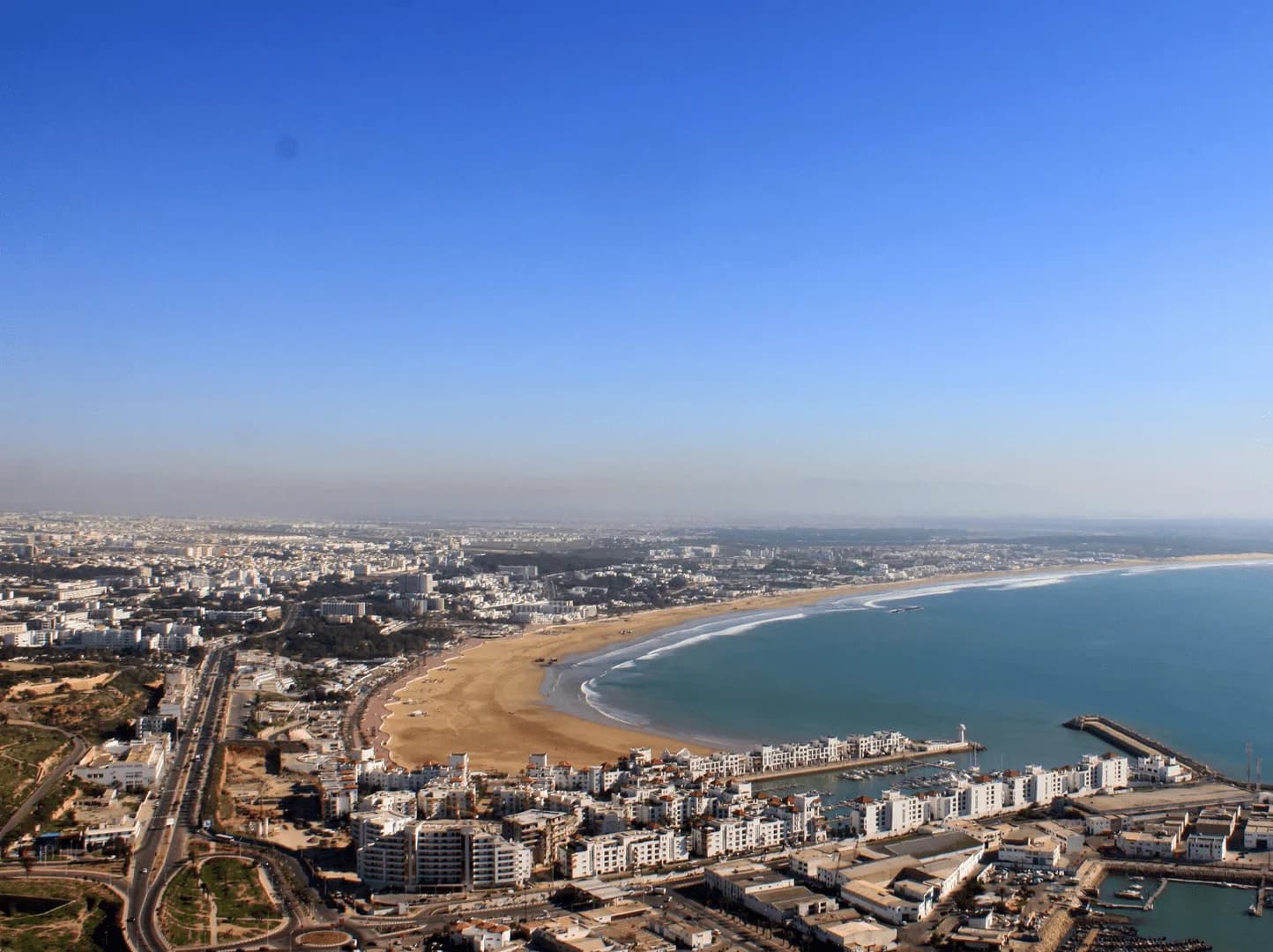
The confusion surrounding Agadir’s medina stems from a fact that few visitors are aware of before arriving: the earthquake on February 29, 1960, leveled the entire old city in fifteen seconds, killing between 12,000 and 15,000 people.
The modern city was rebuilt two kilometers to the south, featuring low-rise, earthquake-resistant architecture. As a result, Agadir - which had become the tourist capital of southern Morocco - had no medina for thirty years.
It was this cultural void that sparked Coco Polizzi’s project. The medina you visit today is neither a historic site nor a theme park: it is a medina-museum deliberately built using materials and techniques from the Souss region to restore to the city what the earthquake had taken away. As soon as you enter, the misunderstanding clears up, and the real appeal of the place begins.
Coco Polizzi, the artist who built the medina of Agadir
Beato Salvatore Polizzi, known as “Coco,” was born in Rabat on September 19, 1941. His family - Sicilian builders who had settled in Morocco as early as 1906 - instilled in him a dual cultural heritage: Italian by blood, Moroccan through daily life. Trained in the fine arts, he became a painter, sculptor, and interior designer, designing hotels, villas, and restaurants throughout the country before settling in Agadir in the early 1970s.
In 1992, he laid the cornerstone of his most ambitious project. His motto, which he repeated until his death, was: “Share your experiences and give everything you have before you go.” Construction spanned several decades, with the site constantly evolving until Coco Polizzi’s death on April 21, 2021. He is buried in the Christian cemetery in Rabat.
Beyond the walls, it was the passing on of knowledge that drove him. He set up workshops on site for master artisans, which also served as training schools for young apprentices: having the elders work in front of the young people, keeping alive a craft that industrial production is erasing elsewhere. The site is now managed by his family and his team, and continues to host film shoots, weddings, and cultural events.
Activity category
Things to do in Agadir
Discover our immersive experiences on this theme, designed with local artisans and guides.

Agadir Raffia Workshop: Hand Weaving with Bouchra
From 30 €
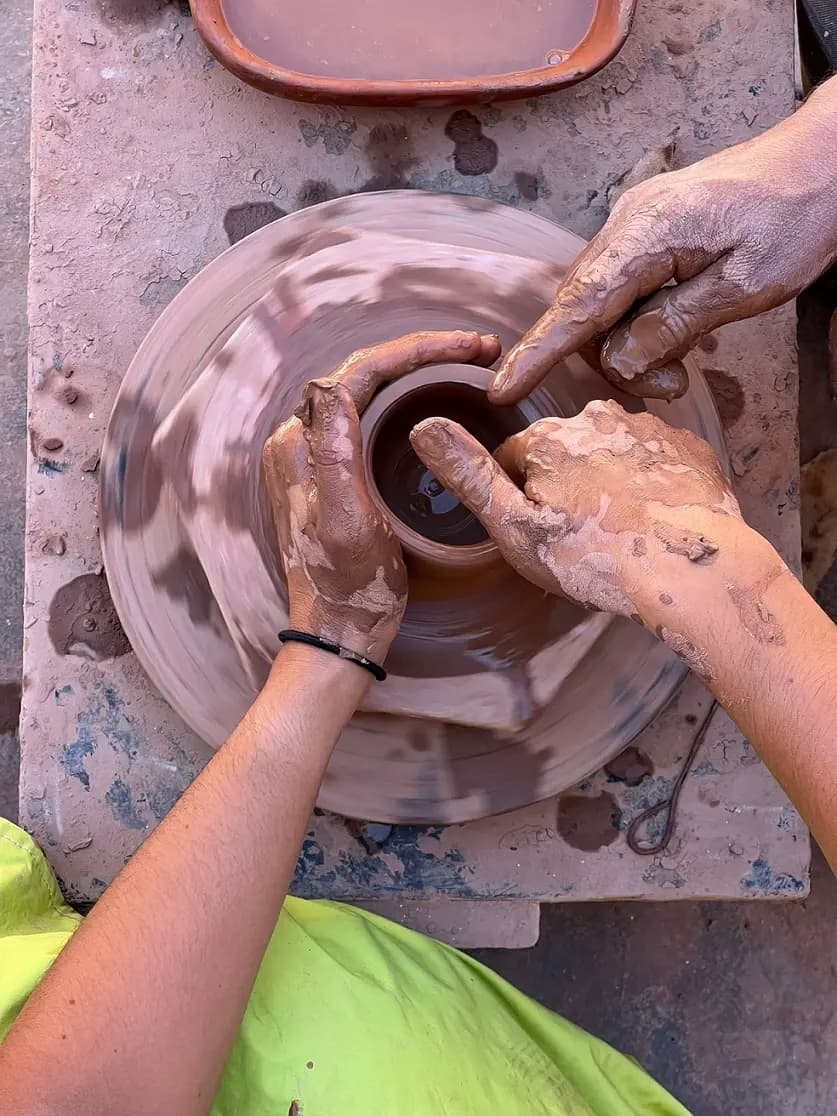
Pottery Workshop in Agadir: Make 3 Pieces with an Artisan
From 35 €
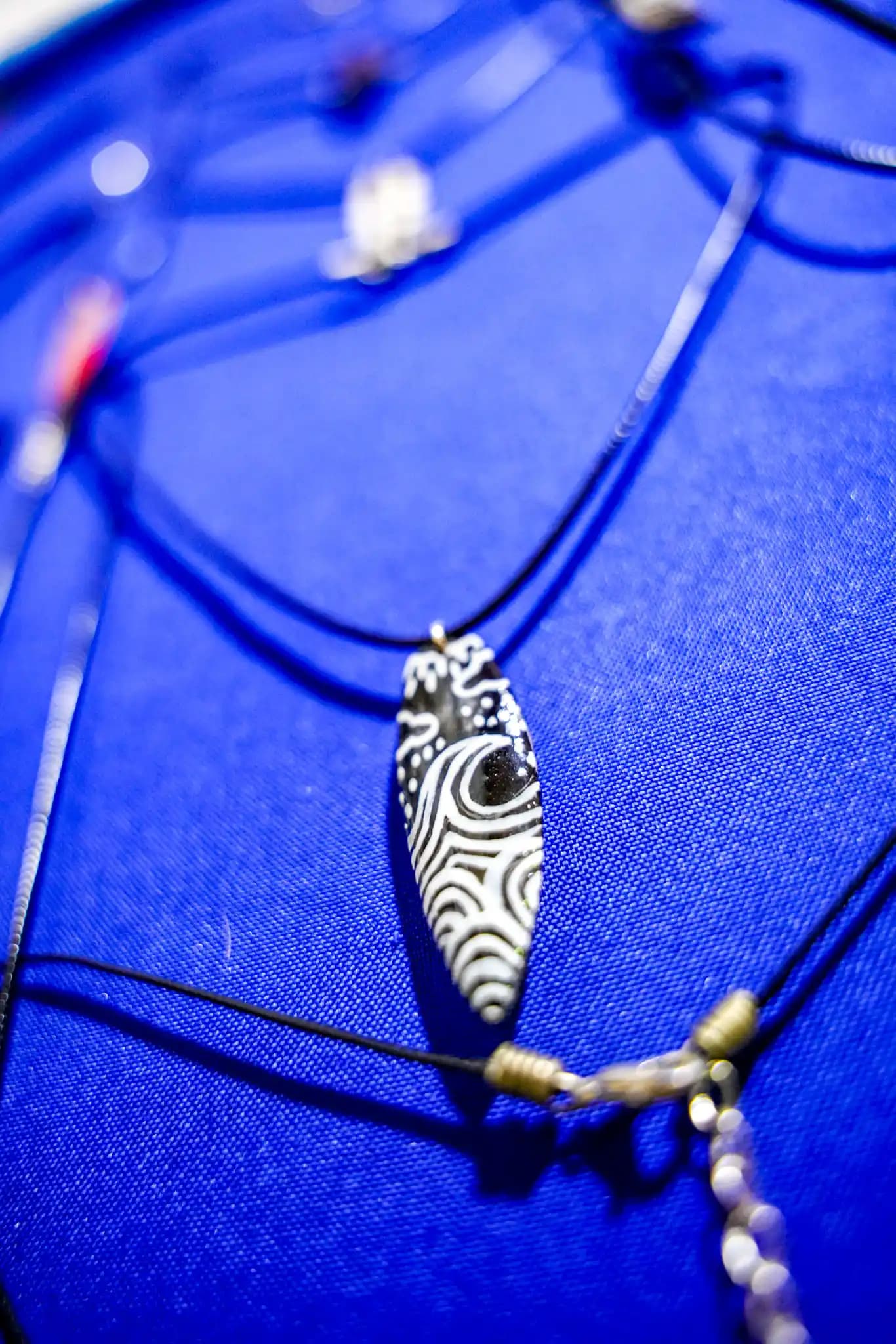
Jewellery Making Workshop in Agadir: Horn Carving with Mohamed Salhi
From 39 €
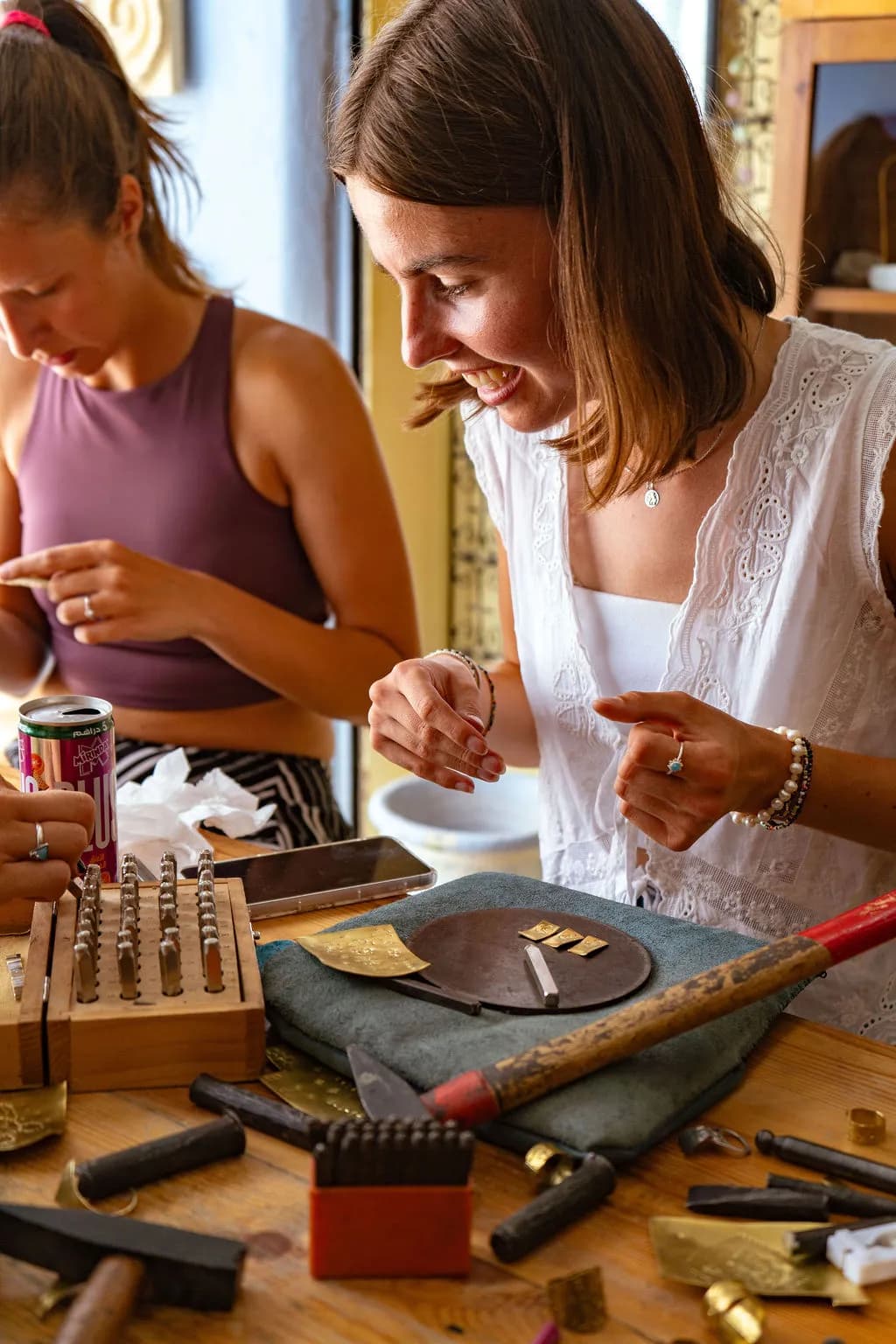
Metal Jewellery Workshop in Agadir: Brass and Copper
From 40 €
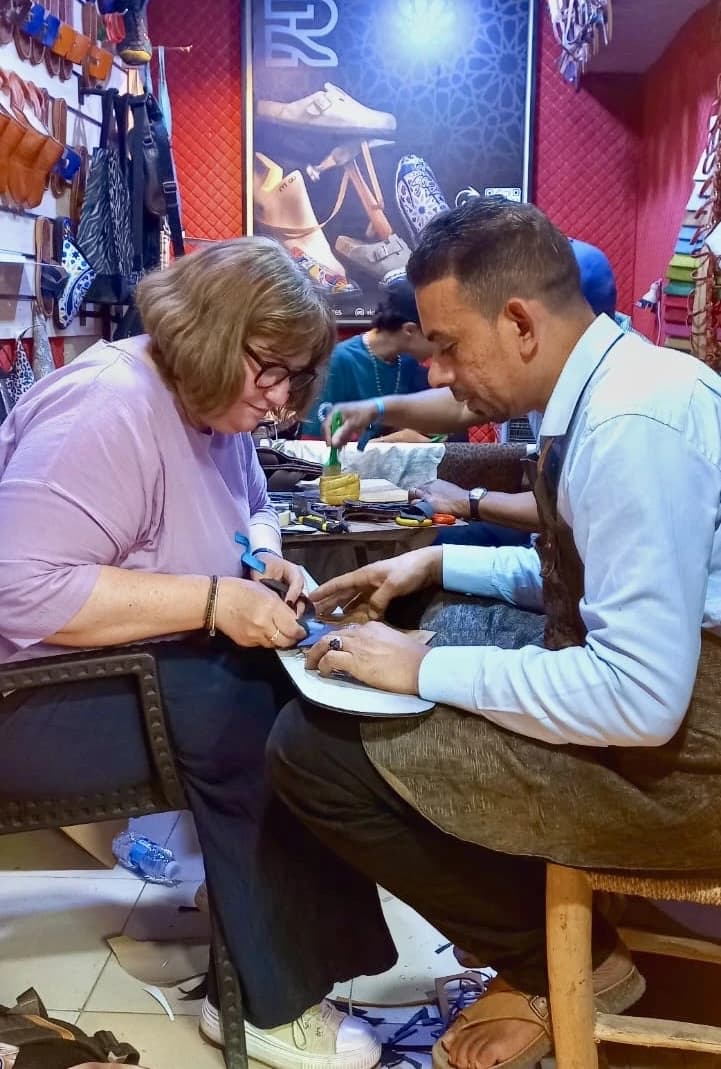
Agadir Sandal Workshop: Custom Leather Sandals with Redouane
From 45 €
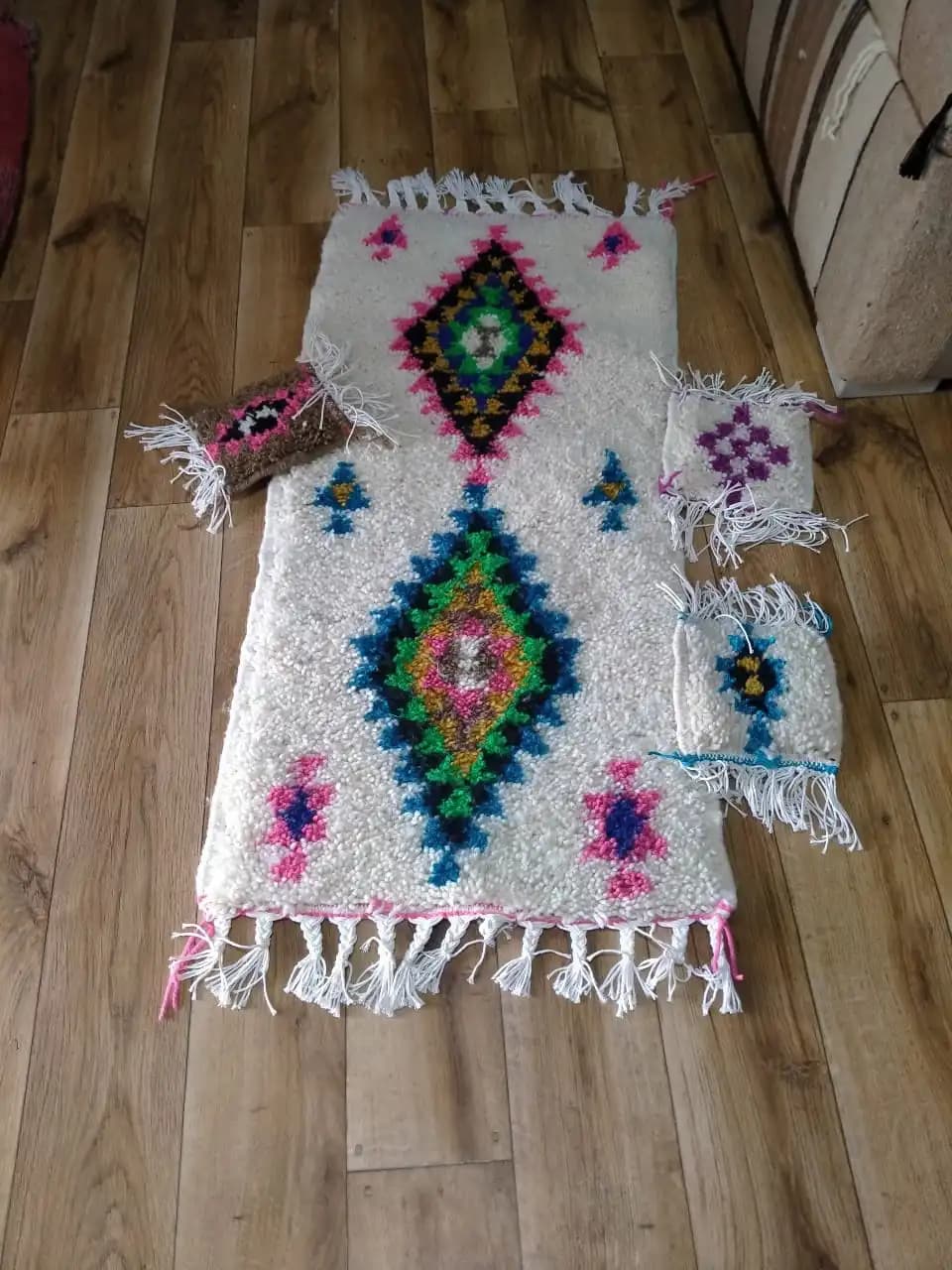
Carpet Weaving Workshop in Agadir with Fatima
From 45 €
Rammed earth and Souss stone: the materials of the medina
What sets the Polizzi medina apart from a painted-concrete reconstruction is the choice of materials. Coco Polizzi avoided using cement wherever possible.
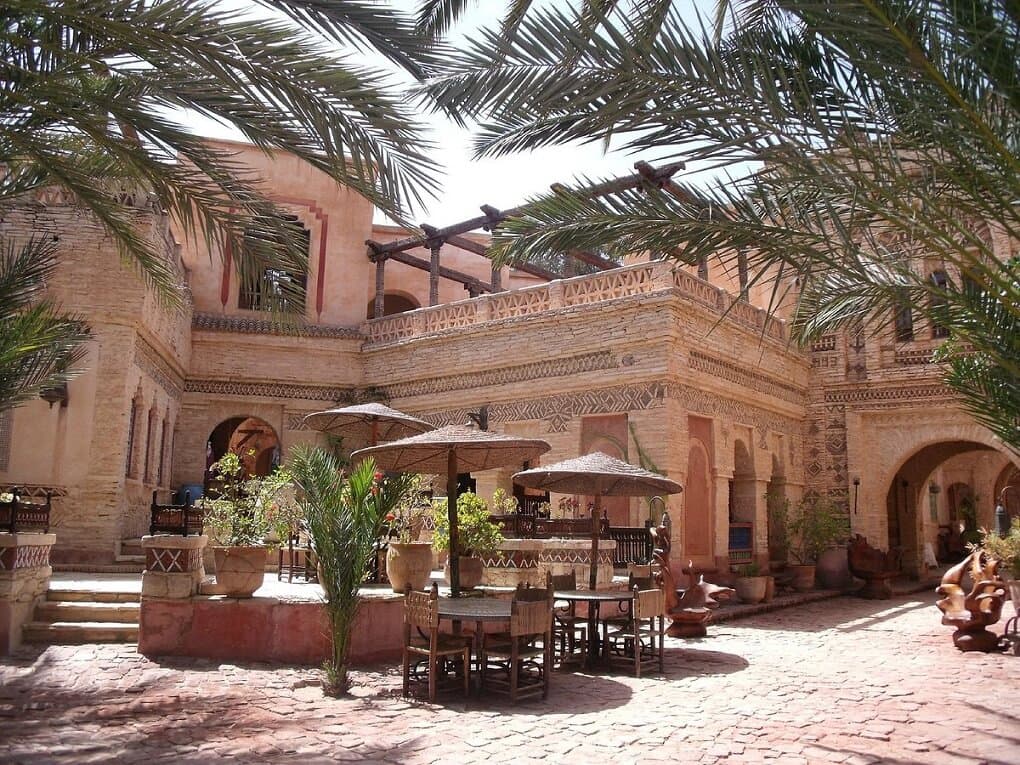
Rammed earth is the dominant material: a mixture of raw earth, chopped straw, and stones, tamped down between two formwork boards. This is the traditional technique used in the kasbahs of the Anti-Atlas Mountains. It gives the walls that deep reddish-ochre color that changes throughout the day depending on the light - pink at sunrise, brick-red at noon, and golden in the late afternoon.
The stones were selected one by one from various regions of southern Morocco: white stone from Agadir, red stone from Argana, green slate from Anzi, and ochre earth from Taliouine. The wood used for the doors, roof trusses, and trellises comes from eucalyptus and laurel, two species resistant to Atlantic humidity.
The decoration involved zellige artisans, mosaic artists, blacksmiths, stucco carvers, and wood painters. The architectural style blends Amazigh influences (motifs from the Souss and the Anti-Atlas), Andalusian influences (arches, courtyards, fountains), and Mediterranean influences (trellises, patios).
What You’ll See and the Artisans of Agadir’s Medina
Atmosphere: narrow streets, sounds, and light
You enter through a large carved gate framed by palm trees. From the very first steps, the city’s clamor fades away, replaced by the gentle sound of artisans’ tools. The alleys are narrow, winding, and shaded. At times, they open onto small squares where a fountain murmurs among the bougainvilleas. Hand-carved, studded wooden doors lead to patios where the workshops are set up.
Sounds: the artisans’ tools, the murmur of fountains, and occasionally birdsong. Scents: freshly cut wood, tanned leather, sun-warmed clay, and at noon, the aroma of tagines from the restaurant inside.
The site also features an art gallery exhibiting the works of Coco Polizzi, a small museum of Berber art, and a traditional restaurant housed in a riad.
The Artisans of Agadir’s Medina and Their Prices
Several workshops are open year-round, with master artisans working in full view of visitors:
- Pottery: bowls, dishes, teapots, and lamps shaped and glazed on-site, ranging from deep green to cobalt blue. Expect to pay 80 to 300 DH for a standard piece. You can also book a pottery workshop in Agadir to craft your own piece.
- Thuja wood: boxes, trays, and chess sets, sometimes inlaid with mother-of-pearl, with a balsamic scent. A small box starts at around 100 DH, while an inlaid tray can cost 500-1,500 DH.
- Weaving: Recycled Boucharouite rugs and weavings made from Souss lamb’s wool, ranging from 600 to 3,000 DH depending on size and material.
- Jewelry and leather goods: rings, necklaces, sandals, slippers, and handbags, all handcrafted.
Unlike at the Souk El Had, prices are posted and fixed. There’s no aggressive haggling: the lack of pressure is appreciated, but the final price is often higher than at the souk.
Medina Polizzi or Kasbah Souss: Which to Choose
Just a five-minute drive away, Kasbat Souss offers a similar yet distinct experience. Here’s how to decide, criterion by criterion:
- Size: The Polizzi Medina covers 4.6 hectares; the Kasbat Souss is larger, with about fifty shops.
- Atmosphere: Polizzi is contemplative, designed as a signature project; Kasbat Souss is more commercial and lively.
- Bargaining: Fixed, posted prices in the Polizzi medina; bargaining is possible at Kasbat Souss.
- Artisans: A modest number of active workshops in Polizzi; a wider selection of shops at Kasbat Souss.
- Who it’s for: architecture and photography at the Polizzi medina; artisanal shopping and variety at Kasbat Souss.
Our recommendation: If you only have time for one site, choose based on your goal - aesthetics for the Polizzi medina, artisanal shopping for the Kasbat Souss. If you have half a day, visit both: 1 hour in the medina, 1.5 hours at Kasbat Souss.
Hours, admission fees, and access to the Agadir medina in 2026
Practical information about the Agadir medina
- Hours: Daily from 9am to 6pm (subject to seasonal changes; check upon arrival)
- Adult admission: 40 DH (about 4 €)
- Child admission (ages 4-12): 20 DH
- Children under 4: free
- Payment: cash at the ticket office (credit cards are rarely accepted)
- Recommended duration: 60 to 90 minutes; 2 to 2.5 hours including lunch and the gallery
Getting to the Agadir Medina
The Agadir medina is located in the Ben Sergao neighborhood, about 4 km south of downtown.
- By taxi: the easiest option. Expect to pay 30 to 50 DH and the ride takes 15 to 20 minutes from downtown or the hotel district. Say “Médina Coco Polizzi” or “Médina Polizzi in Ben Sergao” - all drivers know where it is.
- By car: Head toward Inezgane via the N1, then follow signs for Ben Sergao. Free parking is available near the site.
- On an organized tour: Several tour operators offer half-day tours combining the medina with Kasbat Souss and the Souk El Had.
- By bus: There is no direct bus route convenient for visitors.
To explore further around the medina
The Polizzi medina is easily visited in a half-day trip combined with other nearby sites. 4-5 km to the north, Agadir’s Souk El Had offers a glimpse behind the scenes: a lively, bustling local market where everything is up for sale.
10 km to the north, the Agadir Oufella Kasbah, perched on its historic hill, completes the cultural triangle: from the summit, the ancient city destroyed by the earthquake remains visible, and you’ll better understand why the Polizzi medina was built.
To help you plan your entire stay, our “What to Do in Agadir” guide lists the must-see attractions, the Agadir city page features our recommendations, and our activities in Agadir include guided tours that turn exploring the city’s artisanal heritage into an interactive experience.
In short, the Agadir medina isn’t just a historic old town - it’s a life’s work. Coco Polizzi spent nearly thirty years rebuilding, using adobe and Souss stone, what the 1960 earthquake had taken from Agadir.
Aim for late morning (10am - 12pm) to see the artisans at work, or late afternoon (4.30-5.30pm) for the golden light; shop at fixed prices without any pressure, and head to the Kasbat Souss to round out your day of exploring local crafts.
Before you go, check the Agadir weather forecast: 15-day outlook.
Keep reading
- Things to do in Agadir
- The Olhão Garden in Agadir: Tour, History, and Practical Information
- Souss-Massa National Park: Bald Ibis, Gazelles, and Untouched Beaches South of Agadir
- Timlaline and Tamri: Dunes on the Atlantic Coast, 1 Hour from Agadir
- Tafraoute (Morocco): pink granite and the Anti-Atlas Mountains, 3 hours from Agadir
- Agadir Amazigh Heritage Museum