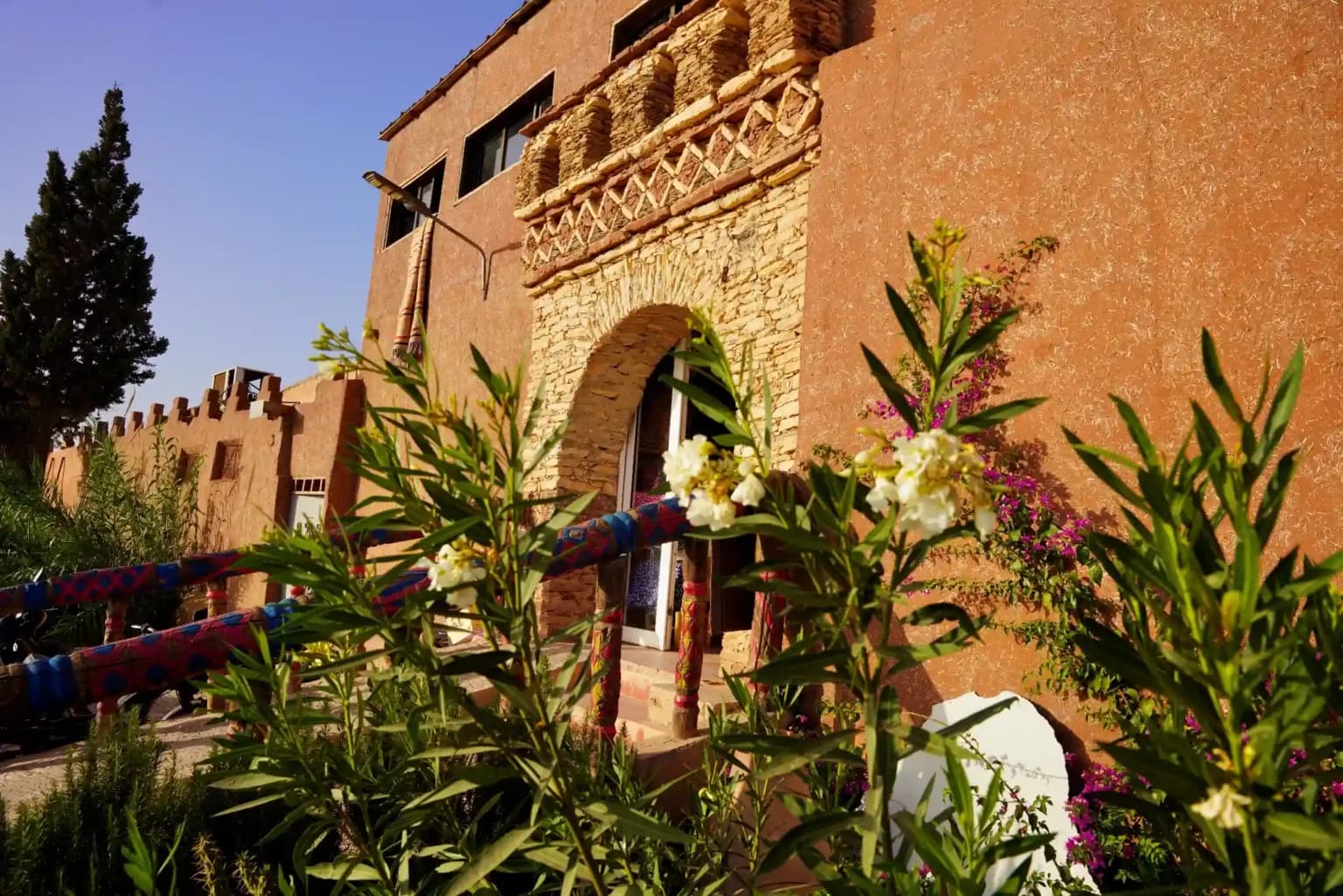
Kasbat Souss, located 5 km south of downtown Agadir, is one of the few artisan villages where craftsmen actually work right in front of you. Located 5 km south of downtown, on the road to Inezgane, Kasbat Souss welcomes you to a crafts village unlike any other in Morocco.
Nearly 70 artisans work there every day, right before your eyes, at the potter’s wheel, the loom, or with a chisel. No soulless souvenir shop here: the potter shapes clay, the weaver interlaces threads, and the leatherworker sews by hand. Here’s everything you need to know before stepping into this artisan village in Agadir.
Why the Kasbat Souss Is Worth a Visit in Agadir
Agadir was rebuilt after the 1960 earthquake. As a direct result, the modern city has no historic medina and no old souk like those in Marrakesh or Fez. The Kasbat Souss was conceived in 1998 to fill this gap by a group of artisans who wanted a permanent place to showcase and pass on their skills.
The result isn't just a shopping mall dressed up to look like something else. It's a genuine little medina, laid out like a traditional kissaria, with its narrow streets, courtyards, fountains, and workshops opening onto the street. The word “kasbat” comes from the Arabic “kasbah,” meaning a fortified village. “Souss” refers to the large region around Agadir, rich in Amazigh Berber traditions.
What sets the Kasbat Souss apart from shopping malls elsewhere in Morocco is the physical presence of the artisans. You won’t see a salesperson behind a counter. You’ll see hands at work, cedar shavings falling, leather being stretched, a potter’s wheel spinning. This direct transmission of craftsmanship is what makes the artisan village of Agadir such a unique destination.
The site also houses a small Amazigh museum, which places the exhibits in their cultural context. You’ll learn where the patterns on Berber rugs come from, why certain pieces of jewelry ward off the evil eye, and how copperwork spread during the Saadian dynasty. The 1.5 to 2 hours spent here are often more rewarding than half a day in a typical tourist souk.
What You'll See When You Arrive at the Agadir Craft Village
As soon as you walk in, the scent of thuja wood hits you first. This warm, balsamic fragrance, unique to the Atlas region, wafts from the marquetry workshops where Ismail and Youssef carve boxes and trays. Further on, the muted scent of tanned leather takes over as you approach the stalls of Hichem, Saïd, and Baghash.
Sound also contributes to the immersive experience. The hammering of a coppersmith on brass, the steady clatter of a loom, the whirring of a drill bit in limestone. No artificial background music: only the tools make their voices heard.
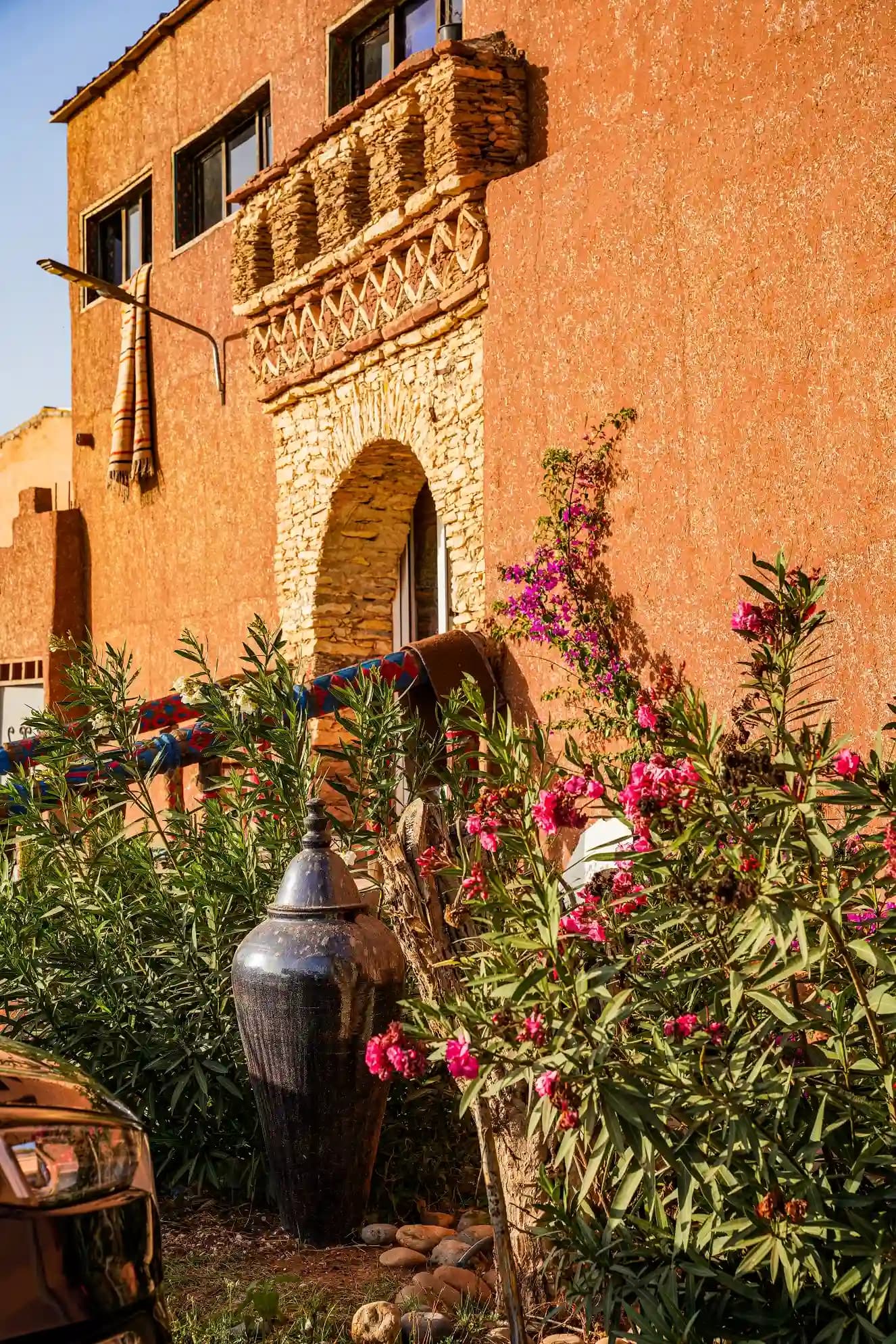
Visually, the village is laid out around shaded alleyways painted with lime and ochre, dotted with bougainvillea and palm trees. The shops open onto arcades, allowing visitors to peek inside without feeling pressured to buy. The colors are vibrant: green-glazed pottery, Berber rugs with ivory and brick-red patterns, and slippers dyed with saffron and indigo.
There are about 60 to 70 workshops open at any given time, plus two restaurants and several women-led cooperatives (argan, henna, traditional clothing). It takes about 1.5 to 2 hours to stroll through the area, or longer if you stop to watch a demonstration.
Meet the artisans who make up the Kasbat Souss
At Kasbah Souss, we are delighted to welcome every visitor, because this place is, above all, a home that showcases Morocco’s cultural heritage. Here, artisans work, sell their creations, craft custom pieces, and-through every gesture-pass on a living legacy that we have a duty to preserve.
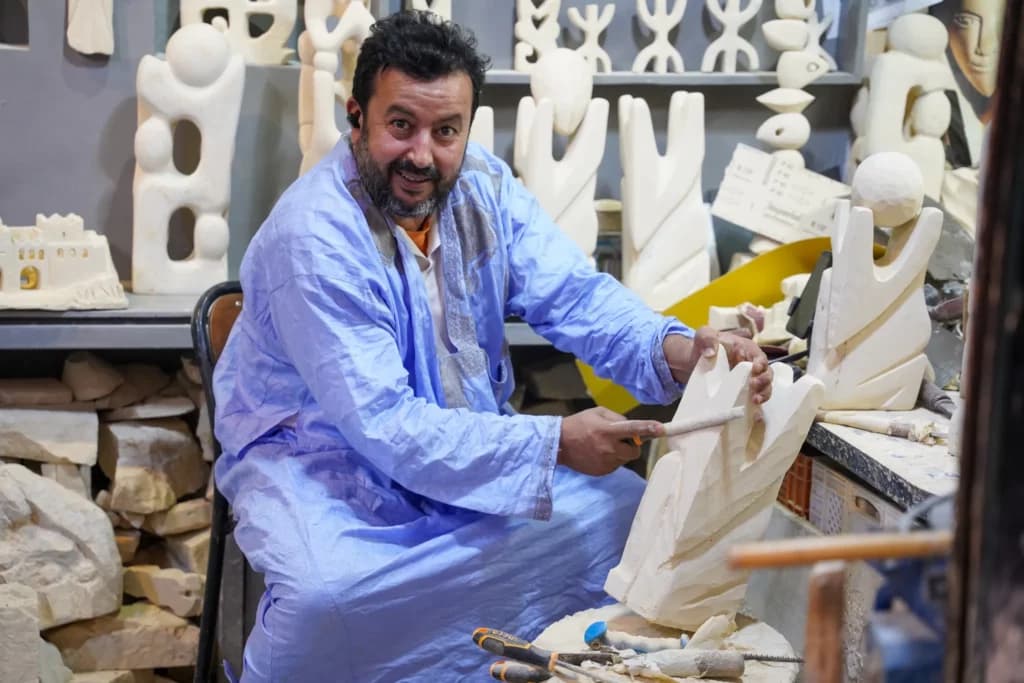
Moulay Ali Ifzi, master sculptor
President of the Kasbah Souss artisans' association
A few meters further on, you’ll find Hassan, a silversmith who creates custom pieces in just a few days. Mohammed, meanwhile, is one of the few artisans in Morocco who works with horn to make personalized jewelry. Lahoussine carries on the tradition of Amazigh jewelry-making: brooches, necklaces with amber plaques, and bracelets engraved with Berber symbols.
When it comes to weaving, Khalid uses a traditional Moroccan loom to create wool blankets and cushions. The Berber Rug Cooperative brings together several weavers who ship their products worldwide. For babouches, there are two go-to sources: Jamal for custom-made styles, and Abdelali (Chrysanthème Art workshop) for vegetable-tanned models.
The Kasbat Souss is also home to a new generation of socially conscious artisans. Mohamed, known as UpcycleMo, has been transforming used tires into furniture and accessories for over ten years. Hasna crafts sturdy bags from tightly rolled magazines. Lhassan, at the Fane Bladi cooperative, sculpts wall decorations from reclaimed metal.
Experience the Kasbah of Souss Beyond a Simple Visit
Many artisan villages in Morocco focus solely on sales. At Kasbat Souss, you can go a step further. Several artisans are willing to take a few minutes to demonstrate a technique, explain a method, or even let you try your hand at it.
At Omar the potter’s workshop, ask him if you can try your hand at the wheel. The feel of the raw clay-both cool and rich-is a sensation you’ll never forget. At Khalid’s, sit down at the loom and thread the shuttle: within three minutes, you’ll understand why a Berber rug can take two months to make.
Mezziane and Shakir's herbal shop is worth a visit in its own right. There, you can learn about the uses of nigella, kohl, culinary argan oil, and white musk. Shakir, who is trained in foot reflexology and energy massage, offers short sessions upon request.
To explore further, several hands-on workshops are being held around the village: Moroccan cooking, henna painting, and an introduction to copperwork. If you’d like to continue this exploration, the craft activities we offer in Agadir often include a stop at the Kasbat Souss.
How much time should you plan for, and when should you visit the artisan village in Agadir?
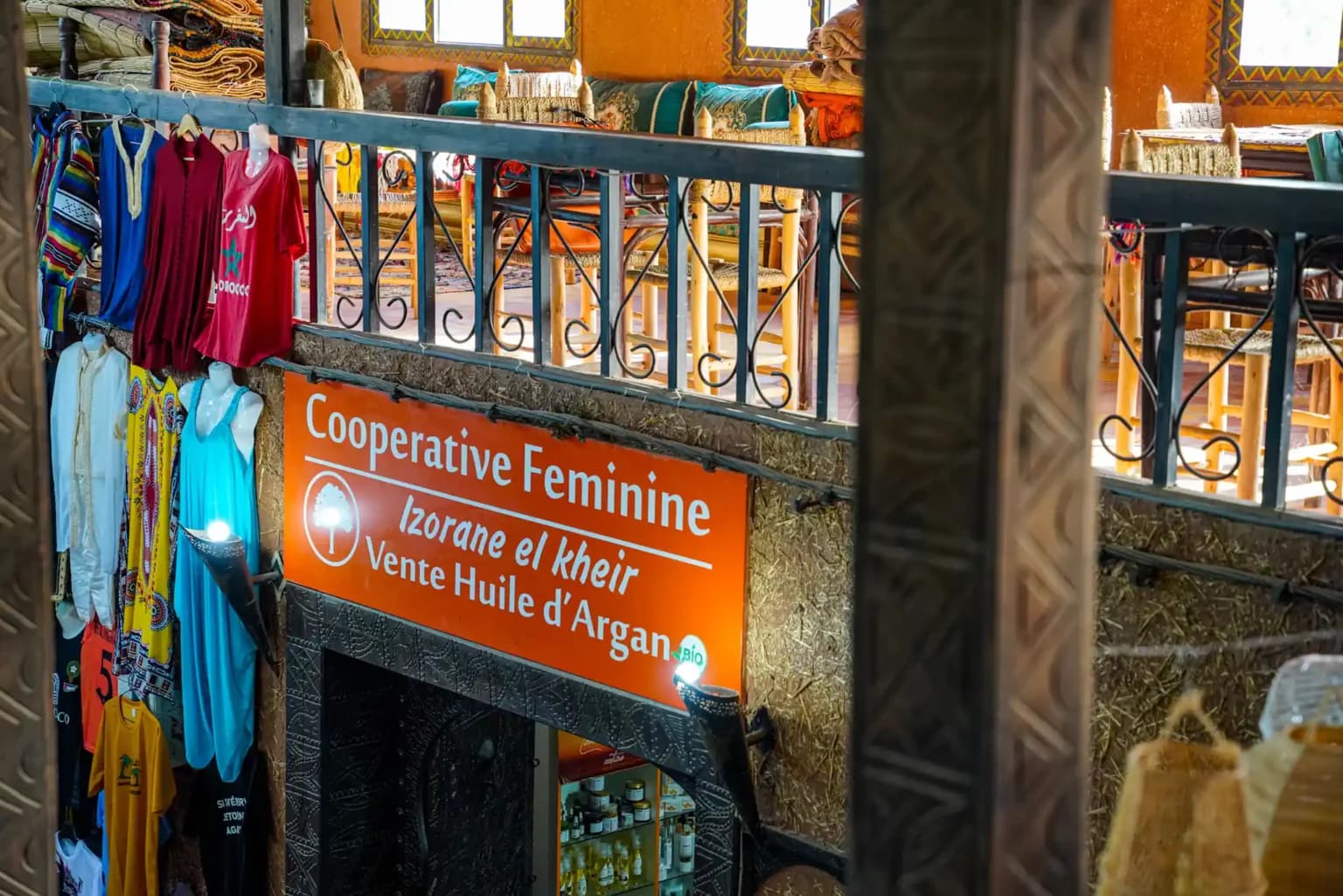
Kasbat Souss's Hours of Operation
The Kasbat Souss is open daily from 10am to 7pm, sometimes until 8pm in the summer. Not all workshops are open at the same time: the busiest times are mid-morning (10.30am-12pm) and late afternoon (4pm-6pm). During Ramadan, operating hours are shorter and the pace slows down in the afternoon.
How many hours should I plan to spend there?
For a leisurely visit, allow 1.5 to 2 hours. If you plan to attend a demonstration or have a meal at one of the two on-site restaurants, plan for half a day instead. Avoid the end of the weekend, when cruise ship groups arrive by bus, especially from October through April.
The best time of year to visit
The village is partially covered and largely shaded, making it pleasant even in the heat of the day. Our favorite season is still from October through May: the light is soft, the artisans have time to chat, and the temperatures allow you to linger longer in the outdoor patios.
How to Get to Kasbat Souss from Agadir
The Kasbat Souss is located about 5 km south of downtown Agadir, in the Bensergao neighborhood, on the road to Inezgane (km 5). The taxi ride takes about ten minutes from the waterfront.
Activity category
Things to do in Agadir
Discover our immersive experiences on this theme, designed with local artisans and guides.

Agadir Raffia Workshop: Hand Weaving with Bouchra
From 30 €
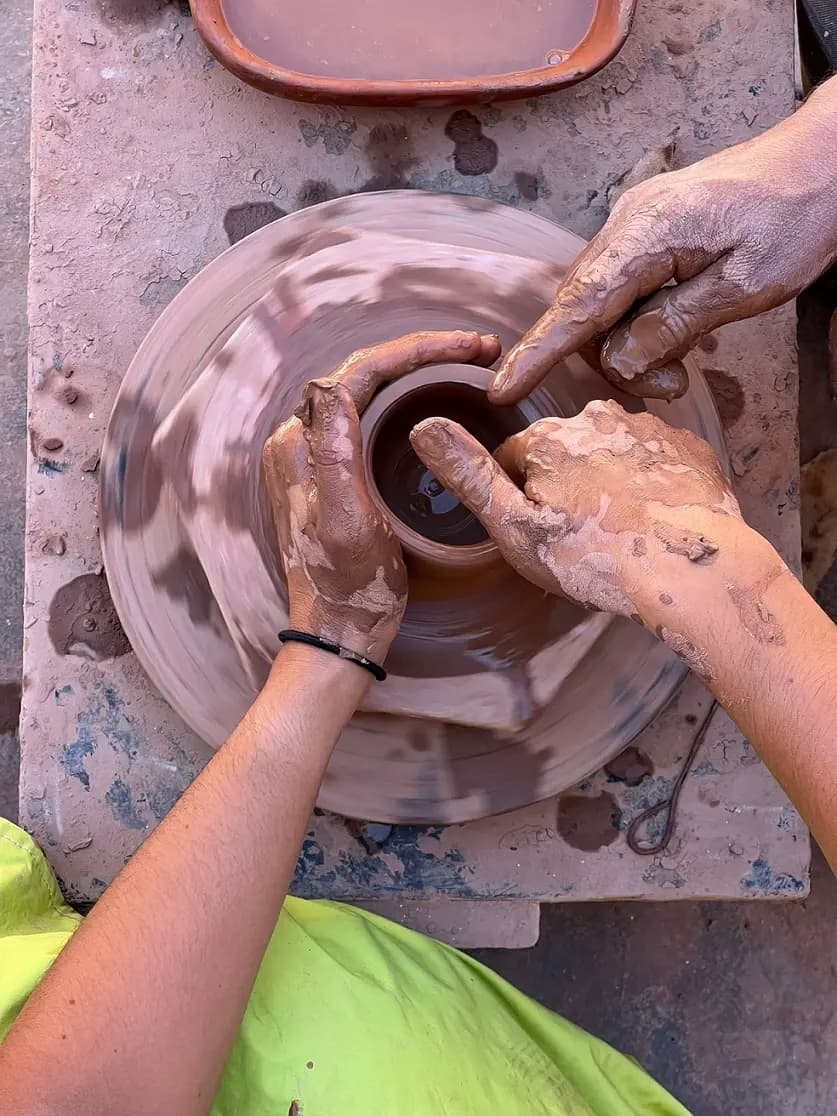
Pottery Workshop in Agadir: Make 3 Pieces with an Artisan
From 35 €
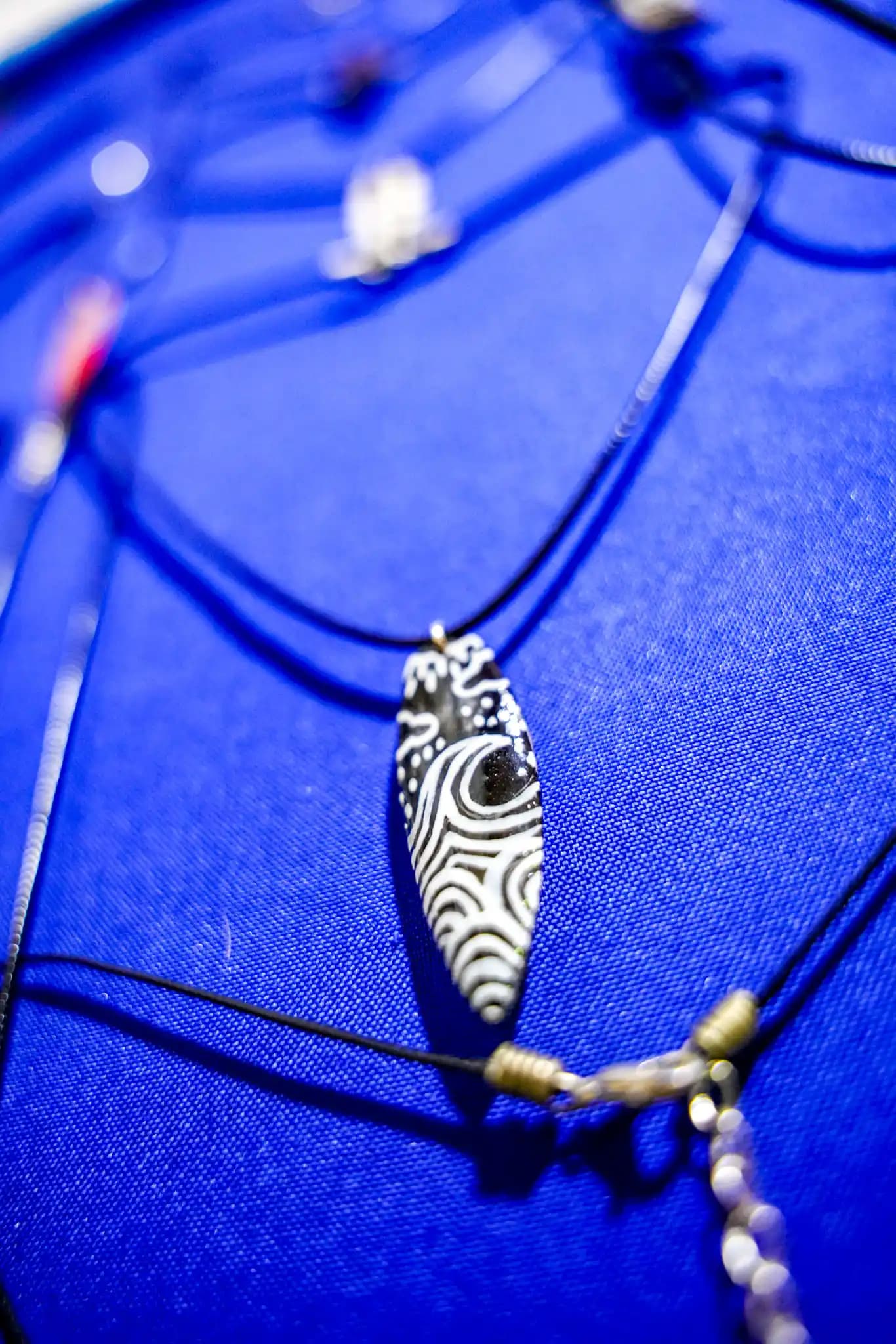
Jewellery Making Workshop in Agadir: Horn Carving with Mohamed Salhi
From 39 €
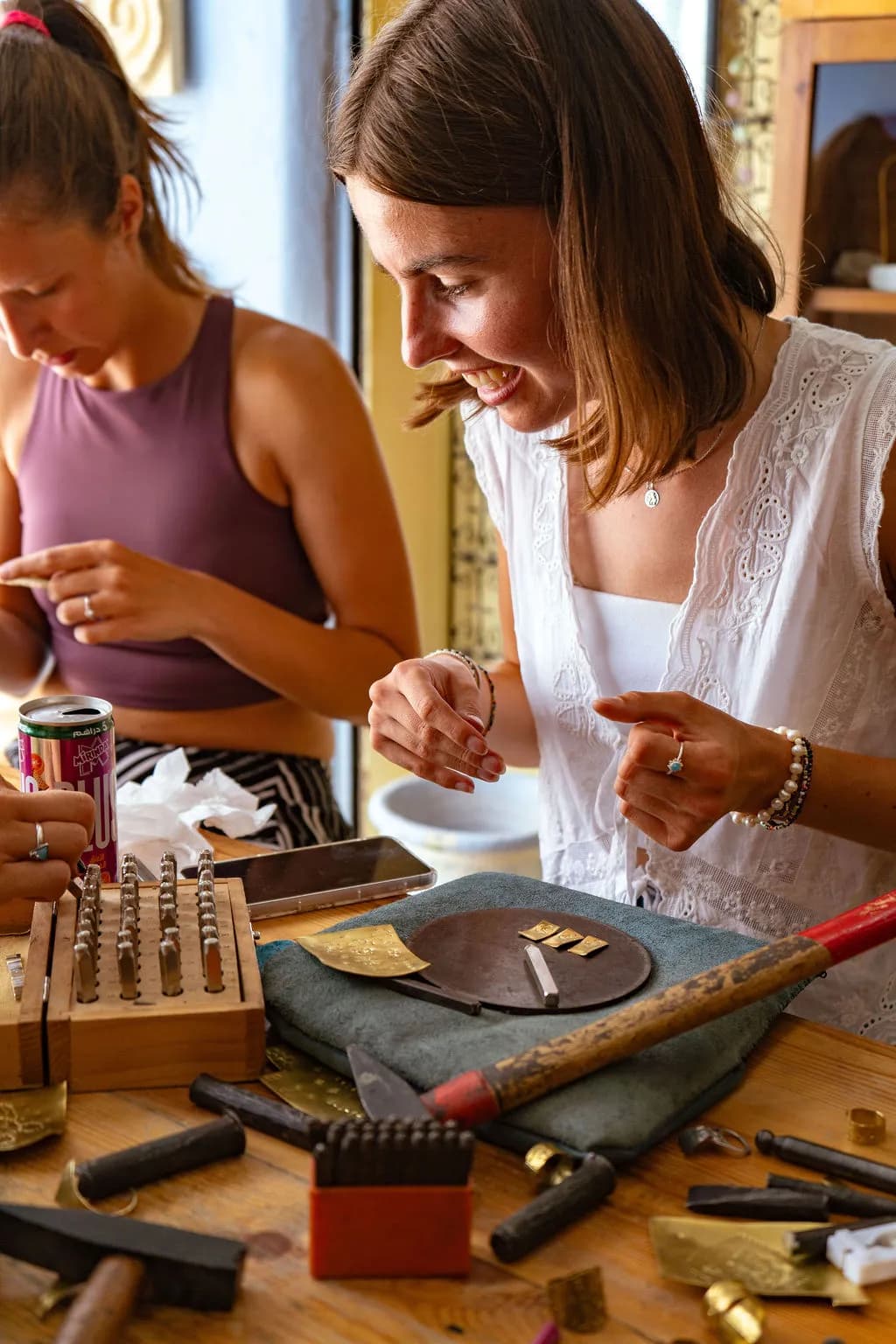
Metal Jewellery Workshop in Agadir: Brass and Copper
From 40 €
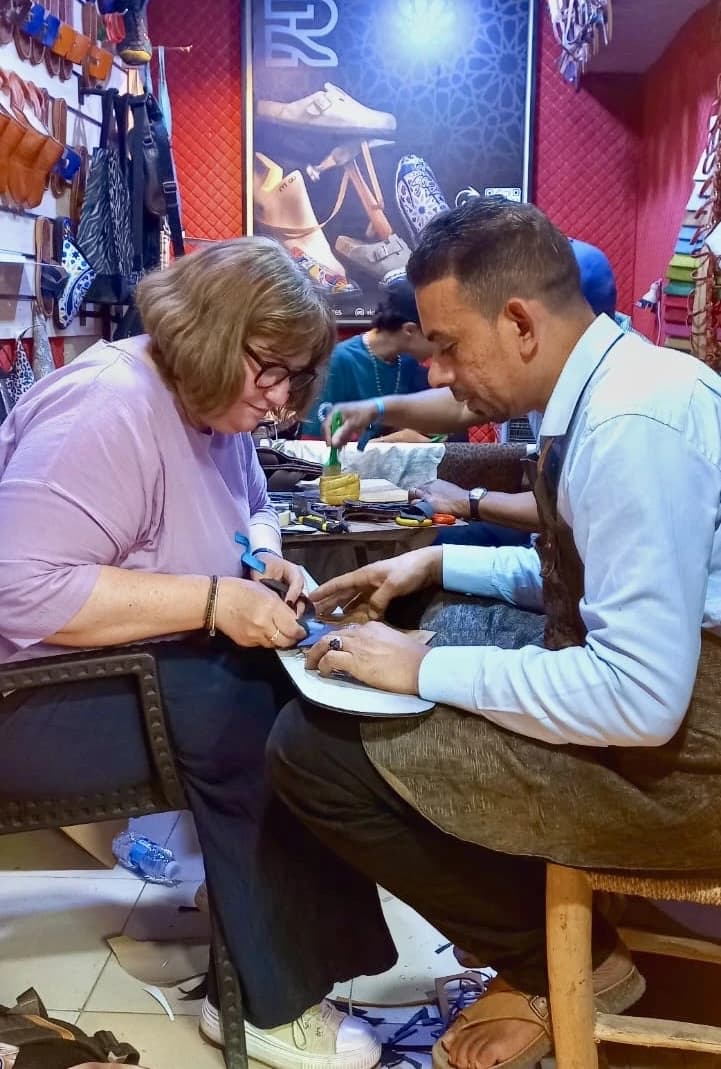
Agadir Sandal Workshop: Custom Leather Sandals with Redouane
From 45 €
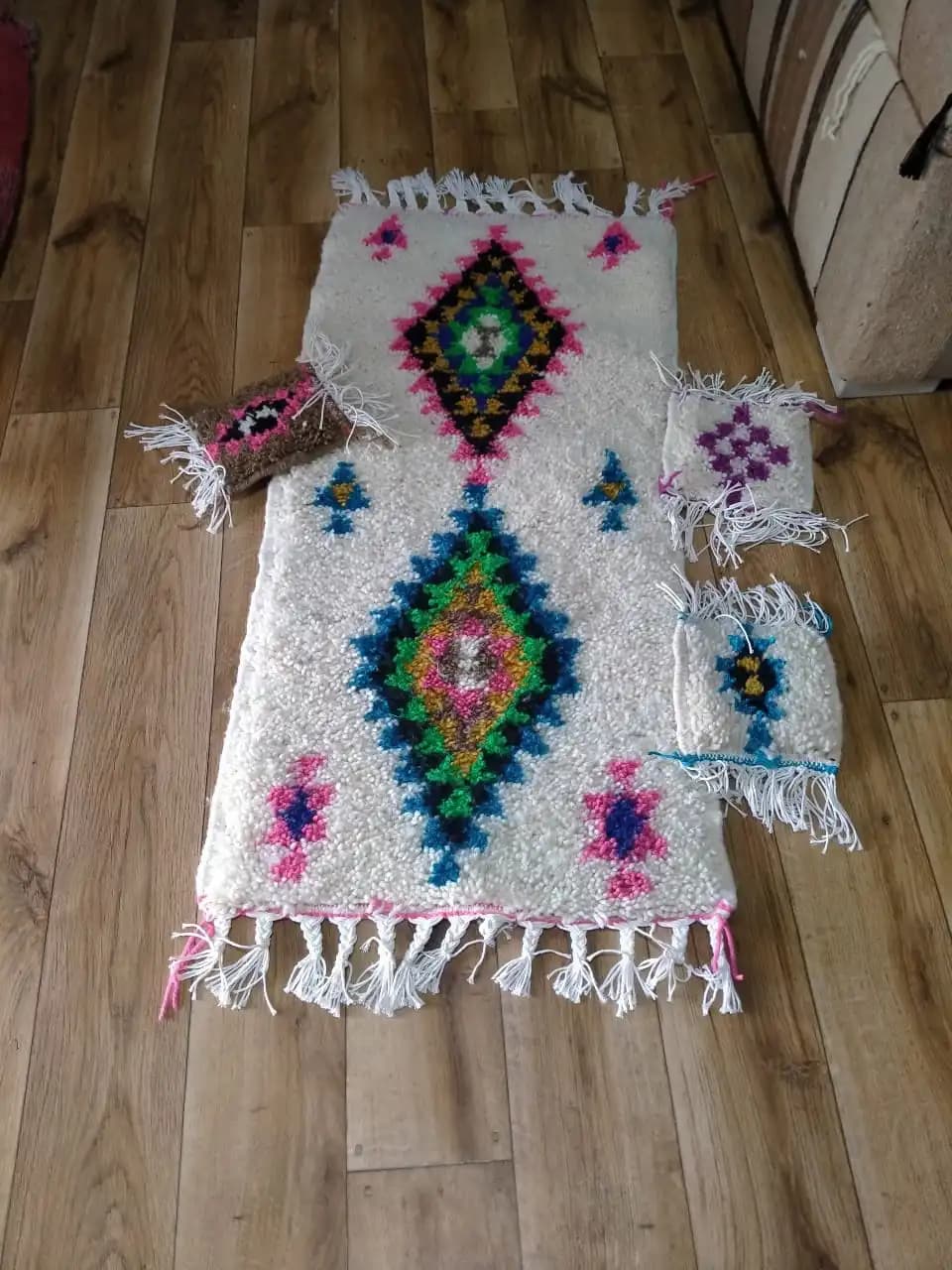
Carpet Weaving Workshop in Agadir with Fatima
From 45 €
By small taxi
The easiest way: take a small orange taxi from anywhere in Agadir. Ask to go directly to “Bensergao, Village des artisans” or “Kasbat Souss.” Expect to pay between 30 and 50 dirhams, depending on your starting point. Make sure the meter is running or agree on a price before getting in.
By car
A large free parking lot is available at the entrance to the village. From the Agadir waterfront, follow the N1 toward Inezgane. The site is clearly marked on the brown signs that read "Village des artisans."
To go home
Taxis are always parked at the entrance. Ask any vendor to hail one for you if needed. Avoid leaving between 6pm and 7pm, when the line can be long.
Practical Tips for Enjoying Agadir's Artisan Village
Should you haggle at the Kasbat Souss?
Unlike traditional souks, the Kasbat Souss has fixed prices or prices that are hardly negotiable. The artisans don’t engage in aggressive haggling. You can negotiate a 10 to 20 percent discount on a significant purchase-that’s all. This price stability is a relief when you’re discovering Moroccan crafts for the first time.
How can you tell if an item is truly handmade?
Ask to see the workshop or the artisan’s signature. An authentic Berber rug has an irregular backing, visible hand-knots, and a label indicating its origin. A genuine thuja wood item has a distinctive balsamic scent when taken out of the box. For silver, check for the 925 hallmark.
Can we eat here?
Yes, two restaurants serve Moroccan cuisine (tajine, couscous, harira, kebabs) for lunch and dinner. Expect to pay 90 to 180 dirhams per person. The menu also offers vegetarian dishes.
Do I need to make a reservation to visit?
No. Admission is free and open to the public. There is no ticket office. If you'd like to organize a participatory workshop in advance (pottery, cooking, henna), please contact a local provider to handle the logistics.
Is this place accessible to families with children?
Yes. The alleys are flat, the workshops are open, and the artisans are welcoming to children. It’s one of the few places in Agadir where a child can touch the materials, watch the process, and understand how an object is made.
Extend the artisanal experience around Agadir
The Kasbat Souss is a stop along the way, not a destination in itself. If you feel the urge to extend your stay, there are several options available to you.
In Agadir itself, you can follow that up with a Moroccan cooking class in a local’s home, a henna workshop, or an introduction to Arabic calligraphy. Our page dedicated to Agadir brings together the experiences we selected while we were there. The craft activities in Agadir often include a guided tour of the Kasbat Souss.
Just a one-hour drive away, the Berber village of Tafraout offers a chance to discover stone carving and copperwork in a rural setting in the Anti-Atlas Mountains. Two hours away, Essaouira showcases another artisanal tradition, characterized by thuja wood and Atlantic marquetry. To combine the two, check out our article on The Best Day Trips from Agadir.
If you’d like to visit the Kasbat Souss with a guide who can translate, introduce you to the artisans, and facilitate conversations, we partner with several French-speaking guides. A guided tour transforms a pleasant stroll into a meaningful experience.
In summary
The Kasbat Souss is not a souk created just for cruise ship passengers. It is a crafts village in Agadir where nearly 70 artisans keep traditional crafts alive every day-crafts that have been passed down through generations. Omar at the potter’s wheel, Khalid at his loom, Lahoussine standing before his Amazigh jewelry: they are the ones who give this place its value, not the items sitting on the shelves.
If your stay in Agadir has already given you your fill of sand and the ocean, make sure to spend your two most worthwhile hours at the Kasbat Souss. You’ll leave with a piece of art that has a face, the scent of thuja in your bag, and a clearer understanding of what “Moroccan craftsmanship” really means.
Activity · Agadir
Pottery Workshop in Agadir: Make 3 Pieces with an Artisan
Pottery workshop at Kasbat Souss, Agadir, 1.5 hours with Moustapha, a potter with 20 years of experience: create 3 pieces on the wheel using local clay, starting at €35. Small group, ages 8 and up.
Keep reading
- Things to do in Agadir
- Agadir Cable Car: 2026 Prices, Opening Hours and Is It Worth It?
- Agadir Kasbah: the Oufella Fortress, Living Memory of the City
- Souk El Had Agadir: one of southern Morocco's biggest markets
- Agadir Seaside Promenade: What to Do, Swimming and Sunset
- The 1960 Agadir Earthquake: History and Rebirth of a City