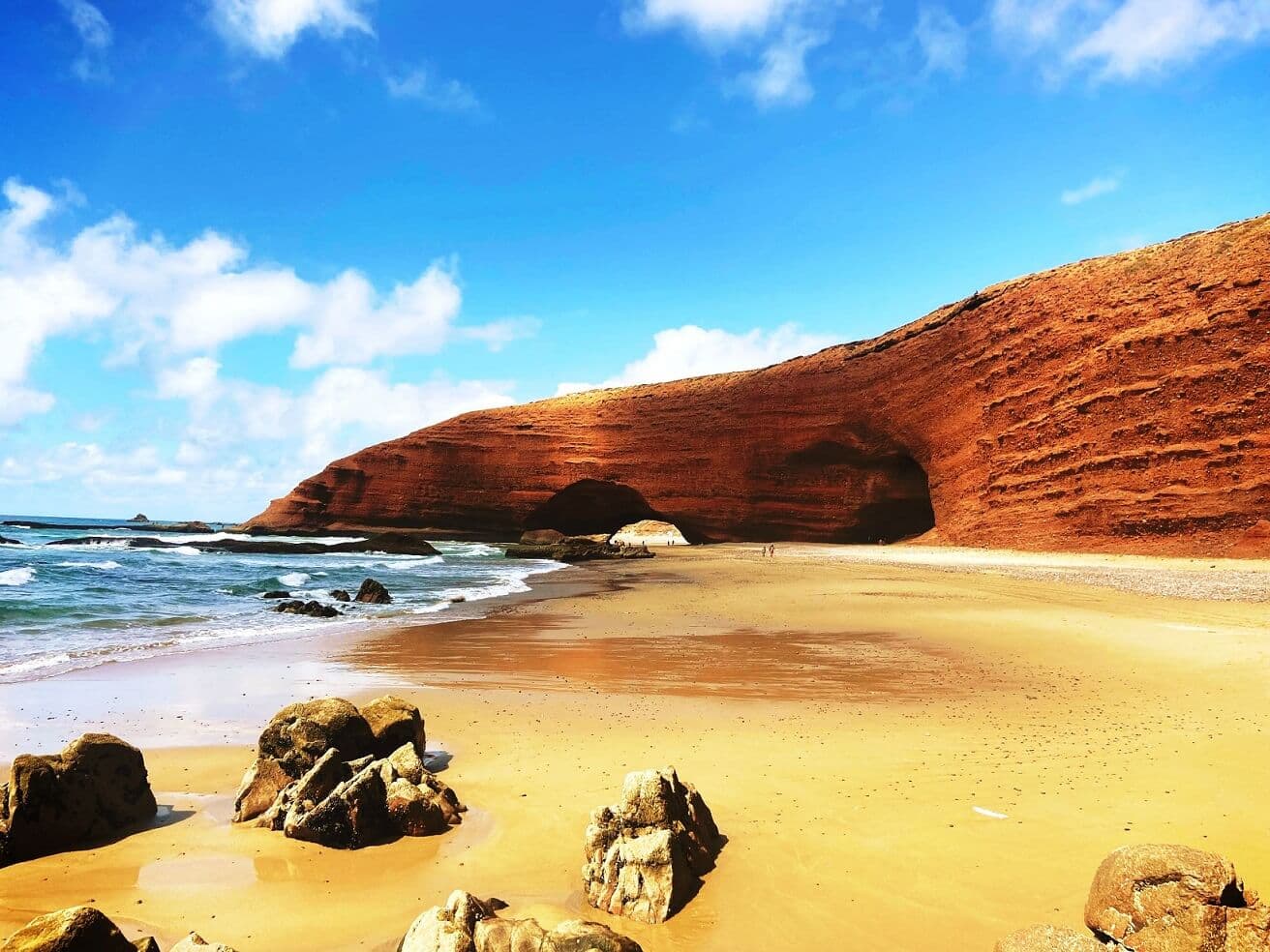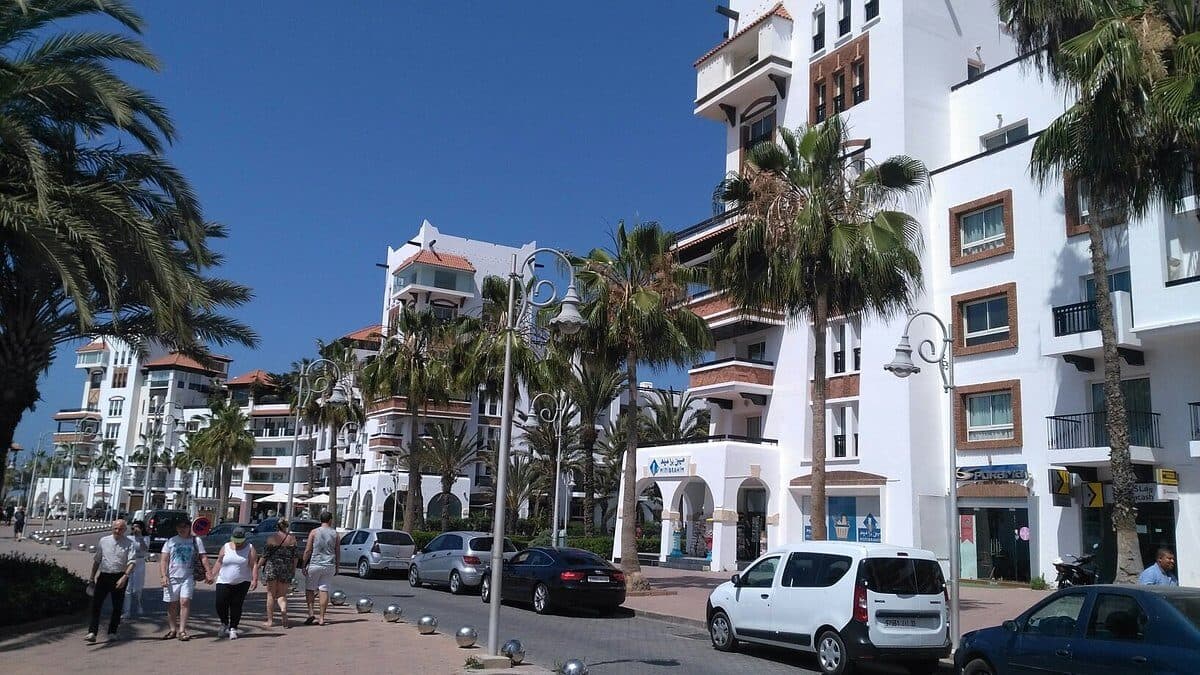
Taroudant, nicknamed “Little Marrakech,” has to be earned. You leave Agadir early in the morning. The Souss Plain rolls by, lined with orange groves, banana plantations, and argan trees where the famous goats climb.
After an hour’s drive, a long wall of ochre adobe appears in the distance, standing in the middle of the fields like an abandoned castle. These aren’t the ramparts of Marrakech, nor those of Fez. They’re the ramparts of Taroudant, and they’re just as impressive - without the crowds. You’ve just arrived in the “Little Marrakech” of the south.
Practical info
Why Taroudant Is Worth a Stop, Not Just a Pass-Through
There are two ways to explore Taroudant. The first: take a photo of the ramparts from the car, go on a 30-minute horse-drawn carriage ride, and head back. The second: head down into the medina, sit in Assarag Square, listen, watch, haggle in the souk, and eat a tagine for 60 dirhams at a local restaurant. Only the second option reveals the true essence of this city.
Located in the Souss Plain, about 90 kilometers east of Agadir, Taroudant has long been one of Morocco's major capitals. In the 16th century, Mohammed ech-Cheikh, founder of the Saadian dynasty, made it his base from which to unify the country and repel the Portuguese.
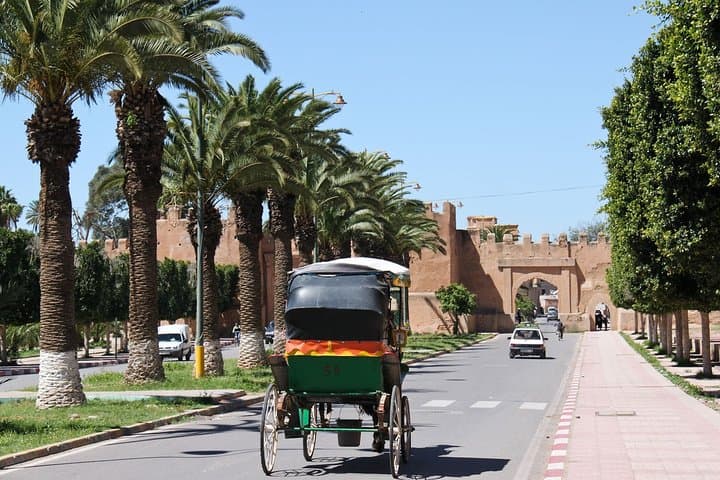
During this period, the city was as prominent as Fez or Marrakesh. Its ramparts, built during that era, still stretch for 7.5 kilometers today, made of reddish-orange rammed earth and punctuated by 130 towers and five gates with Moorish arches.
The nickname “Little Marrakech” is misleading. Taroudant has the same adobe architecture, the same bustling souks, and the same medina surrounded by ramparts. But the pace is completely different: no scooters weaving through the narrow streets, no groups of tourists shuffling between riads, no touts at the shop doors.
A city on a human scale, with about 100,000 residents, where artisans still work using techniques passed down from father to son.
And above all, right next to Taroudant, another marvel awaits: the Tiout oasis, with its palm grove and perched kasbah. It’s this combination that makes for a memorable day, and that’s exactly what we offer on our Immersi tour (more on that below).
Activity category
Excursions from Agadir
Discover our immersive experiences on this theme, designed with local artisans and guides.
Paradise Valley Agadir Tour: Half-Day Trip to the Atlas Mountains
From 20 €
Taroudant and Tiout Day Trip from Agadir
From 35 €
Day Trip to Essaouira from Agadir - A Day in the Medina, Skala, and Argan
From 39 €

Boat trip in Agadir: fishing, swimming, and a barbecue on board
From 40 €
Sahara Desert Tour from Agadir: Mini Sahara Day Trip
From 40 €
Day Trip to Marrakech from Agadir - An unforgettable day
From 49 €
Places to See in the Medina
The ochre adobe ramparts of Taroudant
Seven and a half kilometers of red-earth walls - one of Morocco’s best-preserved fortifications. The perfect time to explore them: by horse-drawn carriage at sunset, when the adobe turns a coppery red in the low-angled light. Expect to pay 100-150 dirhams for a full tour of the medina by horse-drawn carriage (30-40 minutes); be sure to haggle. Alternatively, walk along the southern section between Bab El Kasba and Bab Targounte - it’s the most photogenic part.
The ramparts feature five main gates with Moorish arches, built by the Saadians: Bab El Kasba, Bab Sedra, Bab Zorgane, Bab Targounte, and Bab El Khemis. Each has its own history and atmosphere.
The Two Souks of Taroudant (and Why They're Different)
That's what makes Taroudant unique: its medina is home to two parallel souks, distinguished by their traditional customer bases.
The Arab Souk (or Souk Slatni) is home to traditional vendors selling everyday items: spices, textiles, clothing, household goods, and groceries. It has the most authentic local atmosphere, where residents come to do their shopping. No tourists, no staged scenes - just everyday life.
The Berber Souk (Amazigh) is more focused on handicrafts: engraved silver, Berber rugs, jewelry, pottery, and tanned leather. This is where you’ll find beautiful pieces, especially silver fibulae (Berber brooches) and rugs woven in the Anti-Atlas Mountains. Haggle: the initial prices quoted are often double or triple the fair price.
Tip: Thursday is market day. People from the surrounding villages come into town, and the whole place spills out onto Assarag Square.
Assarag Square (Al-Alaouine Square)
It’s the social heart of the city. A large, shaded square lined with cafés featuring outdoor seating, where men come to drink tea and chat for hours. Sit down, order a mint tea for 10 dirhams, and watch the world go by. In the late afternoon, the square fills with young people returning from work, families, and street vendors. It’s Taroudant in miniature.
The Al Aâdham Grand Mosque
Built by the Saadians in the 16th century, the Great Mosque is not open to non-Muslims, but its rectangular adobe minaret can be admired from the outside. It is one of the few direct architectural remnants of the Saadian golden age in Taroudant.
Tanneries and Artisan Workshops
Away from the main souks, several traditional tanneries still process leather using medieval techniques. The smell is strong, but the experience is unique. Ask a local guide to take you there: a 30-minute tour will show you the different stages of the tanning process, right through to the finished products.
The Tiout Oasis: a hidden gem just a 40-minute drive away
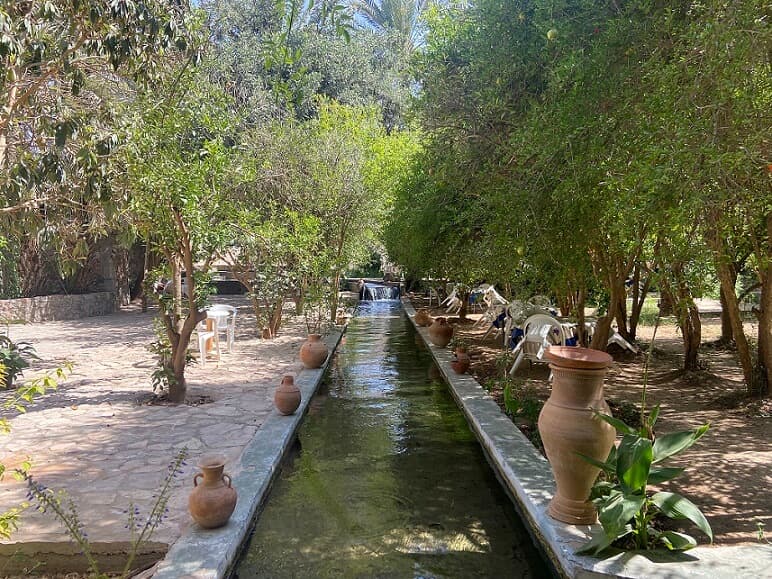
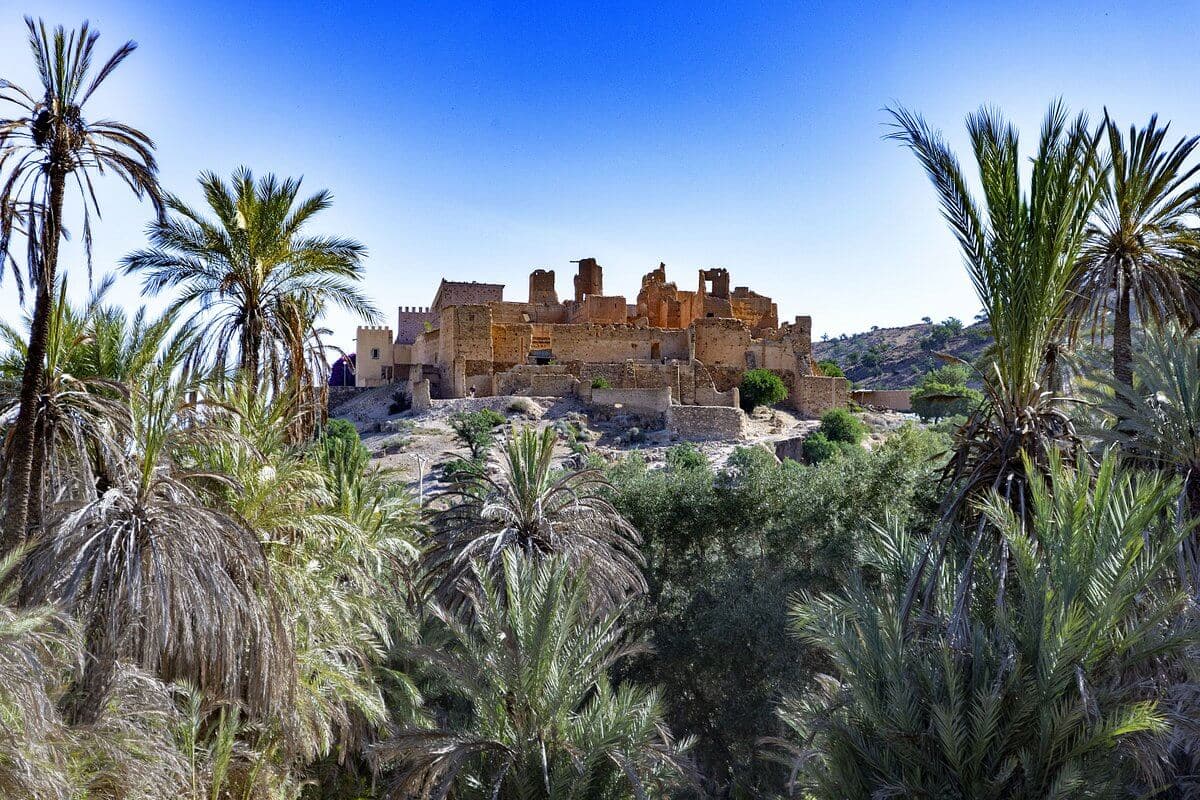
Located 30 kilometers southeast of Taroudant, the Tiout oasis is another reason to visit the region. A lush palm grove lies at the foot of a kasbah perched on a rocky promontory, which served as the setting for Jacques Becker’s 1954 film “Ali Baba and the Forty Thieves.” The view from the kasbah overlooks a sea of palm trees, with the snow-capped peaks of the High Atlas in the background on clear days.
In this oasis, there are still several Berber families who live there year-round, tending their gardens just as their grandparents did. You can explore the palm grove on foot (1-2 hours), take a mule ride or a boat trip along the traditional irrigation canals, and have lunch with a local family.
To learn more, check out our dedicated article on Tiout, a Hidden Gem of Morocco, which provides details about the trails, the history of the kasbah, and the people you might meet in the palm grove.
Our Taroudant + Tiout Tour from Agadir
It is precisely this combination of the medina and the oasis that we have turned into a day trip from Agadir or Taghazout. The itinerary: departure around 8.30am by minibus with a French-speaking driver-guide, on Tuesdays, Thursdays, and Saturdays; return around 5pm; hotel pickup included. Price: €35 per person, €29 for groups of 5 or more.
Activity · Agadir
Taroudant and Tiout Day Trip from Agadir
One-day minibus tour to Taroudant from Agadir: adobe ramparts, the Tiout oasis, and lunch in the palm grove. €35 per person, €29 for groups of 5 or more.
The day, step by step:
- Morning: Drive from Agadir, photo stop to see the goats in the argan grove, arrival in Taroudant. Walk along the ramparts (horse-drawn carriage not included), stroll through the medina, visit the jewelry souk and Assarag Square.
- Midday and afternoon: drive to Tiout (30 km), tour of the palm grove and the kasbah, lunch at a restaurant in the palm grove.
- Late afternoon: Return to Agadir through the Souss Plain, with the sunset over the argan trees.
Groups of up to 15 people in a minibus, with transportation and lunch included. If this sounds like something you'd like to do, check out the full details of the Taroudant and Tiout tour from Agadir with a detailed itinerary, what's included, and direct booking.
When to Visit Taroudant to Make the Most of Your Trip
The Best Seasons
From October to April: ideal weather, 18 to 28 degrees during the day, often clear skies, and cool nights. March and April are particularly beautiful: almond and citrus trees are in bloom around the city, and the air is filled with fragrance.
Avoid July and August: temperatures in the Souss Plain can reach 40 degrees, the medina retains the heat, and some shops close in the afternoon. If you visit in the summer, head out early in the morning and plan your visits before 11am.
What time should I come?
Ideally: spend the morning exploring the souks, the middle of the afternoon at Assarag Square and the cafés, and the end of the day taking a horse-drawn carriage ride along the ramparts. If you’re only staying for half a day, focus on the morning: the light is softer then, and the atmosphere is calmer.
Thursday, market day
If your schedule allows, plan to visit Taroudant on a Thursday. The large weekly market transforms the town: villagers come down from the mountains, Assarag Square is packed, and the souks are bustling. It’s a chance to see Taroudant in its original role as the commercial hub of the Souss region.
How to Get to Taroudant from Agadir
By car
Allow 1 hour and 15 minutes via the N10, which runs through the villages of the Souss Plain. The road is fully paved and in good condition. Parking is free around the city walls, but there is a fee inside the medina (10-20 dirhams).
By CTM or Supratours bus
Several departures a day from Agadir; the trip takes 1 hour and 30 minutes; 35-50 dirhams per person. The bus station is a 10-minute walk from Bab El Khemis.
By shared taxi
From the Inezgane taxi stand, expect to pay 40 dirhams per person when the car is full. It's faster (1 hour) but less comfortable.
On an organized tour
The simplest option, especially if you want to combine it with Tiout on the same day. Our Immersi Tour of Taroudant and Tiout from Agadir includes the minibus, a French-speaking driver-guide, a tour of the medina, the oasis, and lunch at a restaurant in the palm grove. €35 per person, €29 for groups of 5 or more; maximum group size of 15. This is the option chosen by those who don’t want to worry about the logistics.
Where to Stay and What to Eat in Taroudant
Accommodations
Several options for different budgets:
- Hostels and riads in the medina: 200-500 dirhams per night. A charming option, with interior patios and terraces overlooking the ramparts.
- Modern hotels on the outskirts: 400-800 dirhams, depending on the standard of accommodation.
- Iconic address: Palais Salam, the former home of the pasha that has been converted into a garden hotel, starting at 900 dirhams. It's worth a visit for dinner even if you're not staying there.
Souss Cuisine
The local cuisine is rich, aromatic, and more rustic than that of major tourist cities:
- Goat Tagine with Almonds: the signature dish, which is especially good during almond season (August-November).
- Méchoui: lamb slow-roasted in a wood-fired oven, perfect for sharing on Fridays.
- Tafarnout Couscous: with seven vegetables and broth flavored with saffron from Taliouine.
- Amlou: almond paste, honey, and argan oil - perfect for spreading on fresh bread for breakfast.
Expect to pay 70-120 dirhams at a small eatery in the city center, 200-300 dirhams at a fancier restaurant, and much less (50-80 dirhams) if you eat at Assarag Square from street vendors after dark.
Practical Tips
Do we need a guide?
As for the medina and the souks, no - you’ll get around just fine on foot. But if you want to learn about the history of the Saadian ramparts, hear architectural anecdotes, or visit trusted tanneries and artisan workshops, then yes. Expect to pay 200-300 dirhams for a 2-3-hour guided tour.
How much time should I allow?
Half a day for the highlights (city walls + souks). A full day if you combine it with a visit to Tiout. Two days to truly experience the city and its pace.
What equipment should I bring?
Closed-toe shoes for uneven cobblestones, modest, covering clothing (the city is more traditional than Agadir), a hat, sunglasses, sunscreen, and cash (most merchants do not accept credit cards).
Is the city child-friendly?
Yes, absolutely. There’s no heavy traffic in the medina, plenty of space to stroll at a leisurely pace, and captivating scents and colors. A horse-drawn carriage ride along the ramparts delights the youngest visitors.
Should you haggle in the souks?
Yes, that's the rule. The asking price is often two to three times the fair price. Expect to make two or three rounds of bargaining before reaching an agreement. If the haggling gets too tense, walk away - another seller will be more accommodating.
Extend the experience in the Souss region
Taroudant is just one stop along the way. Several nearby stops make up a 2- to 4-day loop that takes you through a medina, an oasis, the mountains, and the desert.
30 km to the southeast, Tiout and Its Hidden Oasis: palm grove, hilltop kasbah, boat rides on the seguias. The natural complement to the medina of Taroudant and the heart of our Taroudant + Tiout Day Trip from Agadir if you want to do everything in a guided day trip.
60 km to the south, Tiznit, the City of Silver: another medina surrounded by ochre ramparts, 100 jewelers’ workshops, and a Thursday market. Tiznit and Taroudant make a classic pair: two medinas, two distinct atmospheres, and two complementary crafts (silver in Tiznit, leather and almonds in Taroudant).
Further east, in the Anti-Atlas, Tafraoute unfolds its landscape of pink granite and the Ameln Valley with its 26 Berber villages. A 3-day loop from Agadir to Taroudant to Tafraoute to Tiznit and back to Agadir is one of the most comprehensive road trips in southern Morocco.
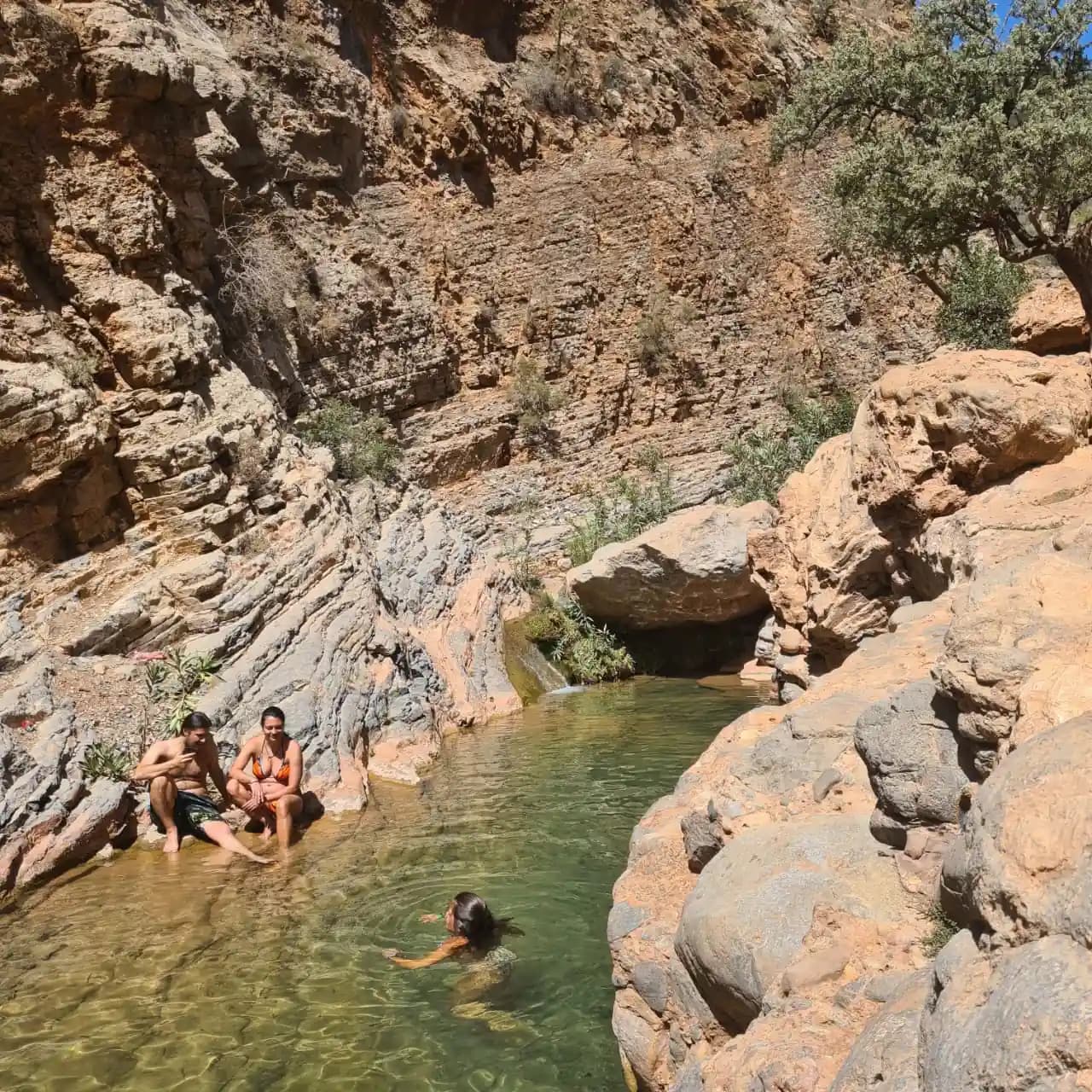
To the northwest, Paradise Valley offers a refreshing contrast with its natural pools and limestone gorges. It’s the perfect way to take a break between two city stops.
To understand the culture that defines the entire region, read our article on Amazigh culture: language, traditions, and social organization of the Berbers of Souss. Taroudant and Tiout are living examples of this.
And for those who want an organized trip that goes beyond a simple sightseeing tour, several of our immersive trips departing from Agadir include Taroudant in 3- to 5-day itineraries that combine medinas, oases, and homestays.
In summary
Taroudant has long lived in the shadow of Marrakech. This is both an injustice and a stroke of luck. An injustice because its Saadian ramparts, its two souks, and its artisans are well worth the detour. A blessing because that shadow has shielded it from mass tourism, and even today you can still sit in Assarag Square, drink tea for 10 dirhams, and watch the city come to life without feeling like you’re being watched yourself.
If you're taking a day trip from Agadir, make the most of it: combine Taroudant and Tiout into a single outing, with lunch in the Tiout palm grove to round out the day. That's the itinerary we've put together in our Taroudant + Tiout Day Trip from Agadir, and it's also what turns a visit into a memory.
Keep reading
- Things to do in Agadir
- Timlaline and Tamri: Dunes on the Atlantic Coast, 1 Hour from Agadir
- Tafraoute (Morocco): pink granite and the Anti-Atlas Mountains, 3 hours from Agadir
- Agadir Amazigh Heritage Museum
- Agadir 3-Day Itinerary: What to Do in 3 Days or a Weekend
- Mirleft Morocco: Beaches, Cliffs and the Anti-Atlas near Sidi Ifni