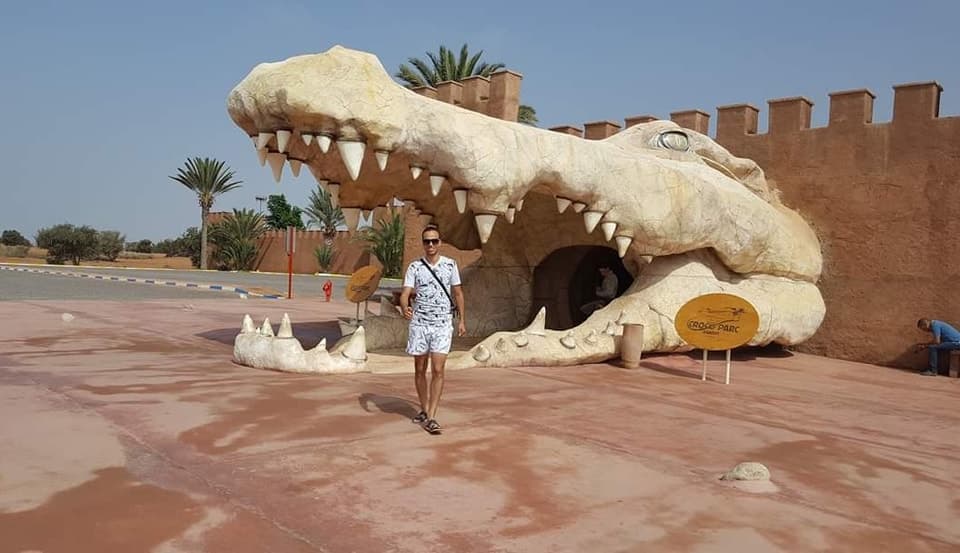
The Agadir Crocodile Park, better known as Crocoparc, is Morocco’s first park dedicated to crocodiles. Opened in 2015 in Drarga, 16 km from the city center on the road to Marrakech, it is home to approximately 325 Nile crocodiles in a 4-hectare botanical garden (featuring 300 plant species, cacti, giant water lilies, and argan trees).
Adult admission is 95 dirhams; the visit takes 2 to 3 hours, and the park is open daily from 10am to 6pm. Here’s our guide to making the most of your visit: whether it’s worth it, if you’ll actually see the crocodiles moving, admission prices, how to get there, and the best time to go.
Practical Information
Is Agadir’s Crocoparc worth the trip?
That’s the real question, and most guidebooks dodge it. Honest answer: yes, Crocoparc is worth a visit if you’re traveling with your family and kids and looking for a peaceful half-day in nature, just 20 minutes from Agadir.
On the other hand, don’t come just to see the crocodiles “in action”: they spend most of their time motionless in the sun, and feeding - the only time they really move - is seasonal: frequent in the summer, almost nonexistent in the winter, when they can go more than three months without eating.
To avoid disappointment:
- Come in the summer if you want to see the feeding, preferably around midday when it’s hottest.
- Check the feeding schedule at the entrance on the day of your visit: it’s never guaranteed, especially during the off-season.
- Think of it as much a botanical stroll as a zoo: the 4-hectare garden accounts for half the appeal, and it isn’t affected by the weather.
Note: Crocoparc charges an admission fee (95 dirhams for an adult) and is located outside the city. Its only free equivalent in the city center, the Valley of the Birds, has been closed for renovation since 2021 and has not reopened as of 2026: Crocoparc is therefore, for now, the only true wildlife park open near Agadir.
It offers a refreshing half-day outing, complete with a well-maintained botanical garden that no free park in the city can match, and for a family looking for a memorable outing, the cost is well worth it.
What You’ll Actually See: Crocodiles, Feeding Times, and Stillness
Right from the entrance, the atmosphere is serene: to the left, the first pools are visible through the vegetation; to the right, the garden offers a view of the Atlas Mountains in the background. You won’t come across any crocodiles right away - you’ll need to walk down a few shaded paths and along a water lily pond before the first snouts appear just above the water’s surface.
The sound is always surprising: crocodiles are silent 99% of the time, but when one moves, the water makes a sharp, brief splash, and during feeding time, dozens of jaws snap shut all at once. As for odors, there’s nothing overpowering: the ponds are constantly circulated, and it’s mainly the vegetation you smell, with the woody aroma of the argan tree dominating in the middle of the day.
The park is home to approximately 325 Nile crocodiles (the species Crocodylus niloticus), all of which came from the Djerba Park breeding farm in Tunisia, which was also established by Luc Fougeirol. At the grand opening in 2015, 300 crocodiles were released into the pools at the same time; today, some are over 3 meters long and weigh more than 200 kg, and are among the largest specimens on display in Morocco.
The pools are organized by age and size. You start with the juveniles - small gray-green “dragons” huddled at the water’s edge - then move up toward the adults: these are no longer just reptiles; they are a force to be reckoned with. An adult crocodile that stares at you without blinking for thirty seconds is an experience you’ll never forget.
The wooden walkways glide over the pools without disturbing the animals; the most popular viewing platform overlooks the large central pool, where the largest specimens bask motionless in the sun for hours. Be warned: most of the time, they don’t move. This is normal - it’s just what crocodiles do - but it’s what surprises visitors who’ve come expecting a show.
Feeding time: the only time they move
Feeding time is the highlight of the visit, and it varies greatly depending on the season. In summer, the crocodiles’ metabolism speeds up and they can be fed up to five times a day; in winter, they can go more than three months without eating.
So there’s no “show” guaranteed year-round, contrary to what some guidebooks might lead you to believe. The park posts the daily feeding times at the entrance and on its official website: be sure to check them when you arrive.
When it happens, it’s spectacular - dozens of jaws snapping shut at once, a sharp crack followed by the sound of water sloshing. To enjoy it without the crowds, arrive when the park opens, visit the botanical garden first, then head back to the pools about twenty minutes before the scheduled time to get a front-row seat.
Activity category
Adventure & outdoors
Discover our immersive experiences on this theme, designed with local artisans and guides.

Quad Biking in Taghazout: 2-Hour Ride through Argan Groves
From 25 €
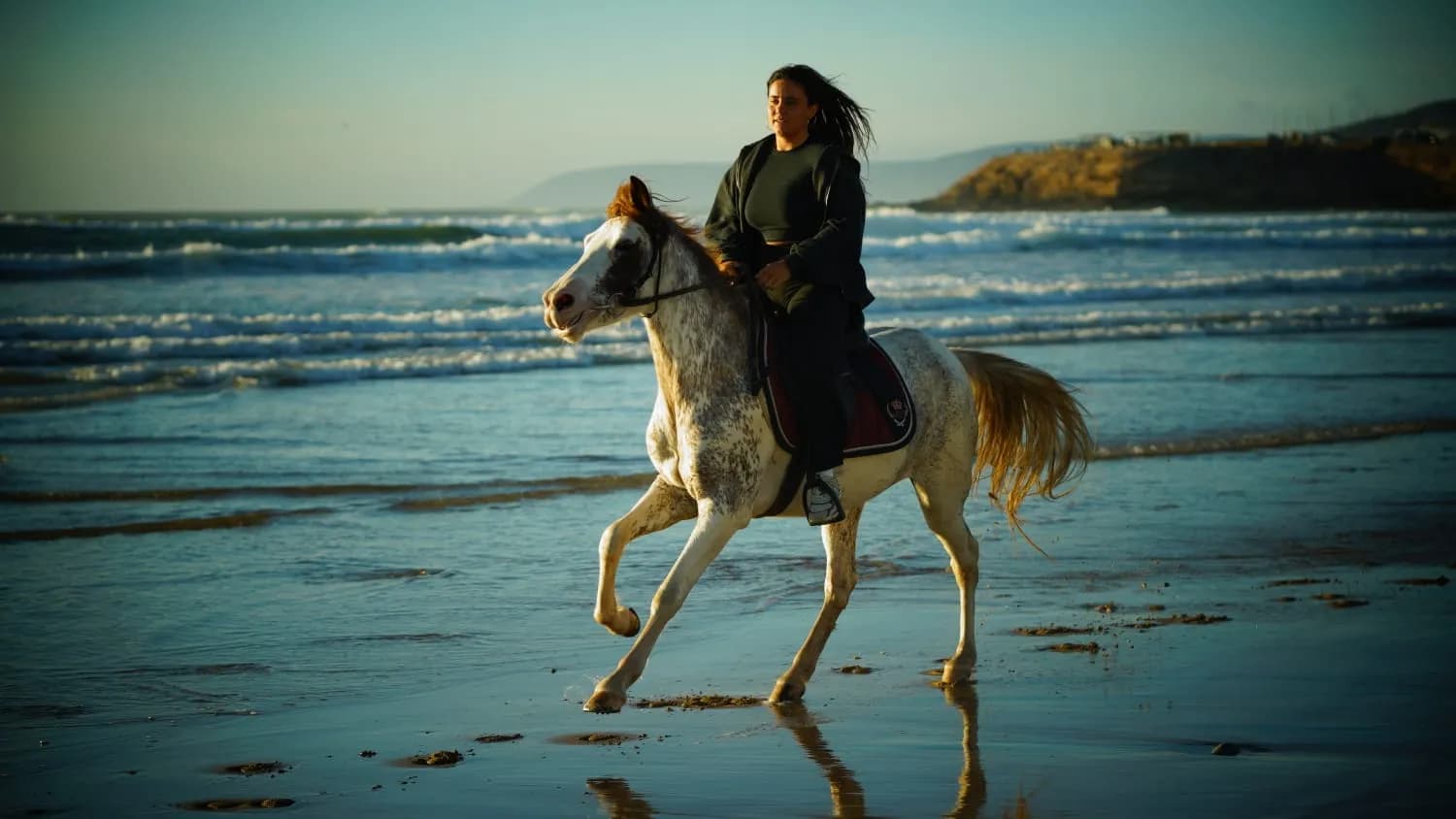
Horse Riding in Agadir: Beach and Hinterland Trails
From 25 €
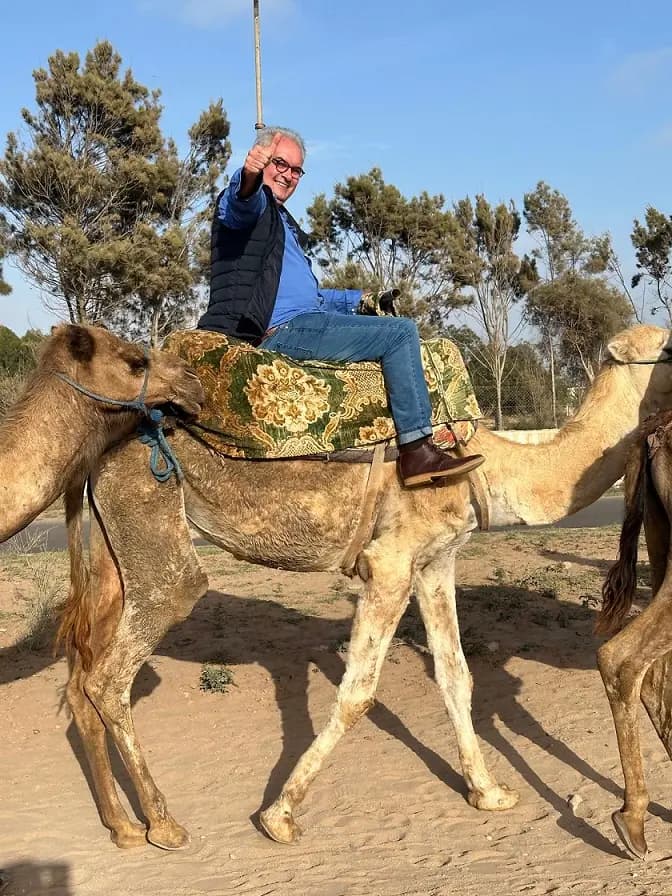
Camel Ride in Agadir at Sunset with Dinner
From 30 €

Surf lessons in Taghazout: beginner and intermediate classes for all skill levels
From 35 €
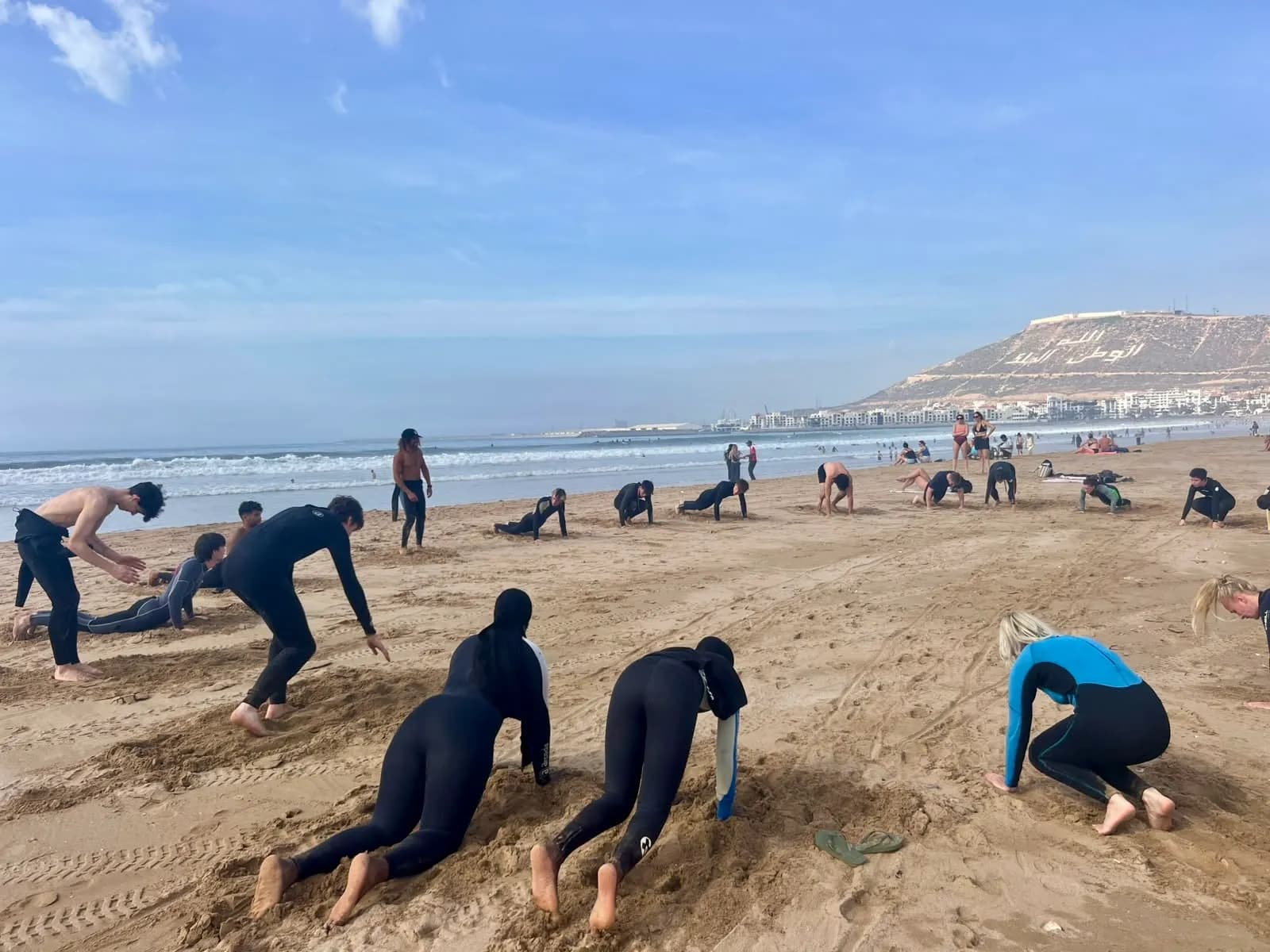
Surf lessons in Agadir: 2 hours on the main beach, all levels
From 35 €
Quad Biking on the Agadir Dunes: 2-hour ride facing the Atlantic
From 35 €
Beyond the crocodiles: the botanical garden and other animals
This is the often-overlooked half of Crocoparc, and the most relaxing: a 4-hectare botanical garden featuring more than 300 plant species across five themed areas.
- The Blue Garden features bluish succulents arranged like mineral sculptures.
- The Exotic Square showcases ficus trees with spectacular aerial roots.
- The Tropical Area is home to giant bamboo, palm trees, and fragrant flowers.
- The Water Garden, the most photographed, is home to giant Victoria water lilies whose floating leaves reach 1.5 meters in diameter.
- The Cactus Garden, undoubtedly the most surprising, features cacti over 50 years old that have been gradually acclimated to the climate of the Souss region, which shares with Mexico moderate drought and abundant sunshine; it is also the quietest spot in the park, ideal for taking a breather after crossing the Great Crocodiles Footbridge.
All around, a grove of argan trees has been preserved: this tree, endemic to Morocco and designated a UNESCO Biosphere Reserve, gives the park its local roots.
As for wildlife, Crocoparc isn’t limited to its star reptiles. A terrarium houses snakes, iguanas, anacondas, and giant tortoises, sheltered from the light, where visitors can take the time to observe species they’ll never encounter elsewhere in Morocco.
Further on, the Maison des Ouistitis always makes the kids laugh with its little South American monkeys scampering around in a plant-filled aviary - much more active than the crocodiles. Allow an extra 20 to 30 minutes for this section, which provides a pleasant break between the two pools.
Crocoparc with Kids
Children are the park’s ideal audience, and it’s designed with them in mind. Crocoparc welcomes children of all ages: it’s fully accessible by stroller, has two playgrounds, and a baby area where you can warm up a bottle.
The animals really capture children’s attention starting at ages 3-4, when they realize they’re looking at real crocodiles just a few meters away, while the educational workshops are geared more toward children ages 6-12. A zip line over the vegetation and a park-themed escape game round out the family experience, turning a simple visit into a little adventure for older kids.
The park is also one of the few attractions in Agadir that is fully accessible to people with limited mobility: wide walkways, compliant footbridges, accessible restrooms, and parking. However, pets are not allowed due to health concerns related to the reptiles and monkeys: plan ahead if you’re traveling with a dog.
As for amenities, the restaurant La Table du Croco offers a simple menu of Moroccan and international dishes, the Grotte aux Trésors serves snacks and cold drinks, and the gift shop sells local crafts and crocodile-themed souvenirs of a higher quality than the typical tourist fare. It’s the perfect spot to take a break midway through your visit without leaving the park.
Crocoparc Prices and Hours in 2026
The park is open 7 days a week, from 10am to 6pm year-round (10am - 5pm during Ramadan), and is closed only one day a year: the first day of Eid al-Adha. The ticket office closes 30 minutes before the park closes. 2026 Prices:
- Adult admission: 95 dirhams (about 9 euros)
- Child admission (ages 3-12): 65 dirhams (approximately 6 euros)
- Children under 3: free
- Complete Package (shuttle + admission + guided tour + tea): 235 dirhams for adults, 145 dirhams for children
- Escape Game + tour: 200 dirhams for adults, 140 dirhams for children
- Annual VIP Card (residents): 199 dirhams for adults, 149 dirhams for children
Credit cards are accepted at the ticket office; be sure to keep some cash on hand for the gift shop and restaurant.
As for the best time to visit, aim for the first hour (10am - 11am), when the light is low, the crocodiles are basking on the banks after the cool of the night, and the park is nearly empty; start with the botanical garden, then head back to the large central pond around 11.45am if a feeding is scheduled so you can get a front-row spot on the footbridge.
Late afternoon (4-5.30pm) is another good time, quieter and bathed in golden light, when the midday tour groups have left and the marmosets are most active. However, avoid late mornings on weekends from April through June, when local families and hotel groups flock to the park and the walkways get crowded.
How to Get to Crocoparc in Agadir
Crocoparc is located in Drarga, along National Highway N8 (toward Marrakech), 16 km from downtown Agadir - a 20- to 30-minute drive.
By car or taxi to Crocoparc
If you’re driving a rental car, take the N8 toward Marrakech and follow the signs for Drarga until kilometer 16; the parking lot is free, monitored, and accessible to people with limited mobility. By shared taxi from Agadir, expect to pay 80 to 150 dirhams depending on how well you haggle; agree on the price before getting in.
By official shuttle or bus
The official Crocoparc shuttle departs from the Uniprix in Agadir, right in the heart of the beach resort, at 9.30am and 2.45pm by reservation; it’s included in the Complete Package (235 dirhams for adults) and remains the easiest option if you’re staying in Agadir and don’t have a car.
For those on a tight budget, the ALSA 5 and 9 buses run to Drarga for 5 to 7 dirhams, with a ten-minute walk from the stop to the entrance. Finally, several tour operators include Crocoparc in a half-day tour combined with other sites; to plan your entire trip, check out our guide on things to do in Agadir.
Crocoparc or the Valley of the Birds: Which to Choose?
For a long time, families in Agadir were torn between Crocoparc and the Valley of the Birds, the small, free wildlife park in the city center. But the Valley of the Birds has been closed since 2021 for a complete renovation into an immersive zoo, and still hasn’t reopened as of 2026.
Until it reopens, Crocoparc is quite simply the only real wildlife park open near Agadir. There is an admission fee (95 dirhams for adults) and it’s 16 km from the city, but it offers much more than an urban park: 325 crocodiles, a 4-hectare botanical garden, and other animals.
For a family outing to see animals today, this is the top choice; the Valley of the Birds, once renovated, will become a free and centrally located alternative - stay tuned.
In summary
Agadir’s Crocodile Park combines, in just a few hours, a wildlife escape and a botanical stroll just 20 minutes from the city: 325 Nile crocodiles, 300 plant species under argan trees, and a well-maintained, accessible setting - ideal for families.
But be realistic about the experience: the crocodiles are mostly motionless, and the feeding that brings them to life only takes place during the warmer months. Coming prepared with this knowledge will spare you disappointment and allow you to enjoy the park for what it truly is.
Here’s a tip: come in the morning, explore the garden first, head back to the footbridge if a feeding is announced, and plan your visit for the summer if seeing the crocodiles move is important to you.
To extend your outing, the Kasbah of Souss and its artisans’ village make for a great way to round out the morning, and the Paradise Valley, further north, offers a natural contrast to the park. For the rest of your stay, you’ll find everything you need in our guide to things to do in Agadir and on the Agadir city page.
Keep reading
- Things to do in Agadir
- Kasbat Souss: 70 artisans at work 5 km from downtown Agadir
- Souk El Had Agadir: one of southern Morocco's biggest markets
- Agadir Seaside Promenade: What to Do, Swimming and Sunset
- The 1960 Agadir Earthquake: History and Rebirth of a City
- Agadir Medicine: Clinics, Emergencies and Care for Travellers