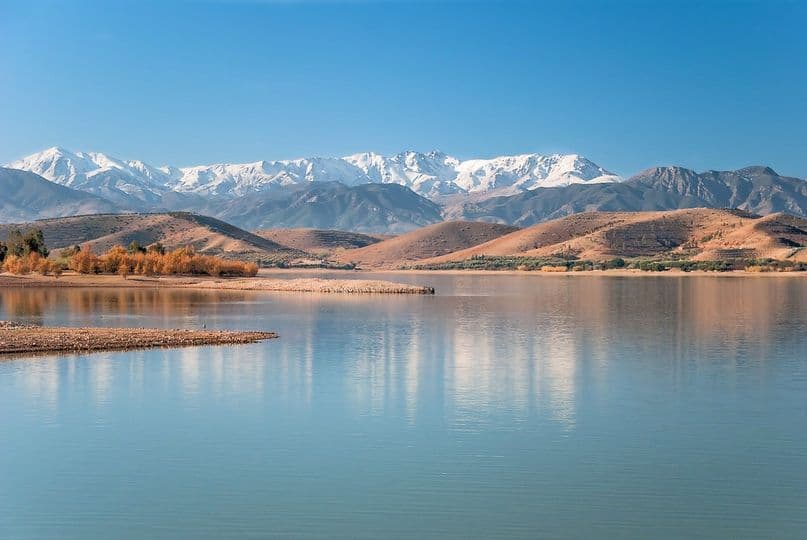
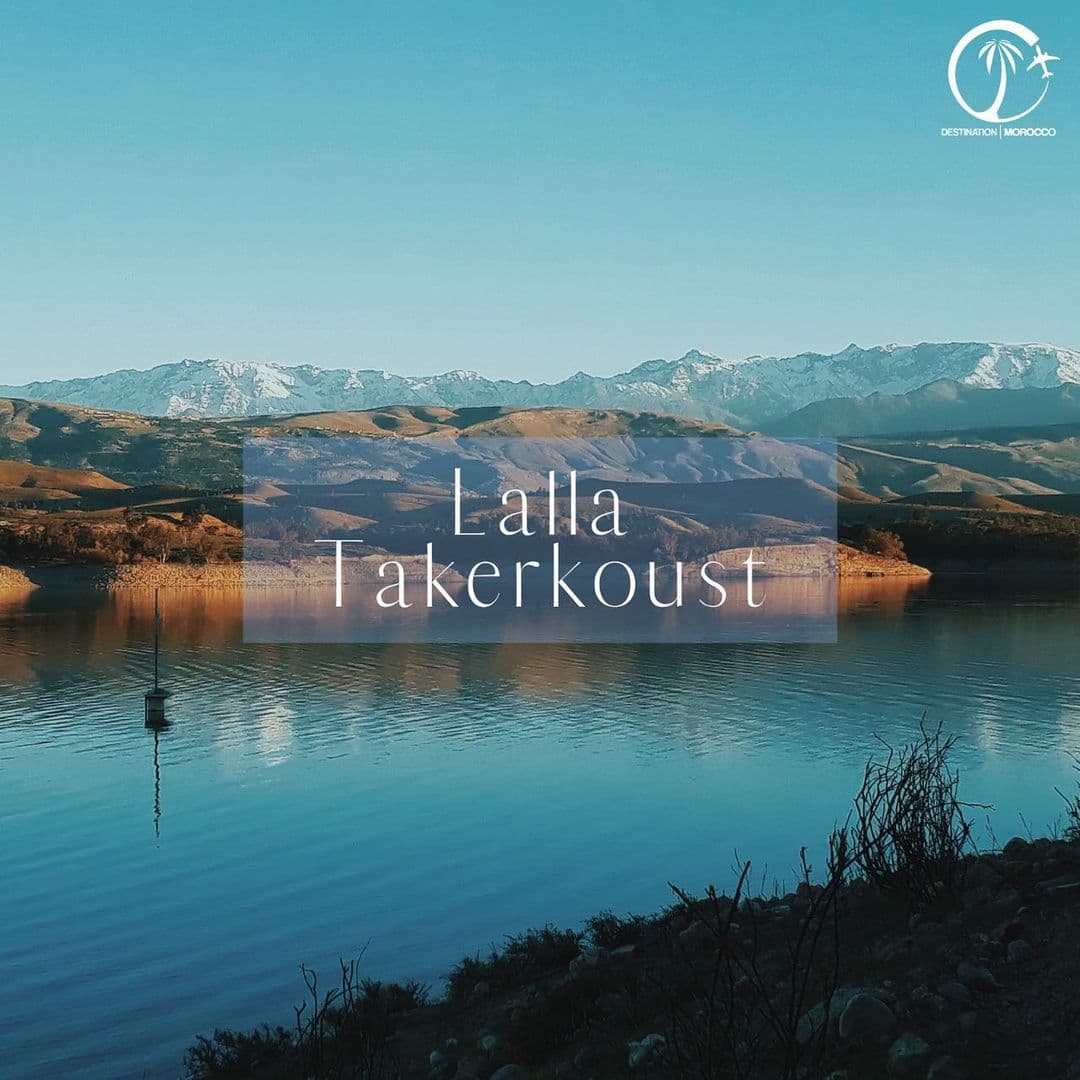
VisitLalla Takerkoustis Marrakech's closest lakeside getaway: a large dammed lake at the foot of the High Atlas mountains, some forty kilometers southwest of the city. People come here to breathe, practice water sports, go quad biking, have lunch by the water and enjoy the sunset over the snow-capped peaks. But with the years of drought, one question keeps coming up: is there really any water left, and is the lake worth the detour? Here's our honest guide to deciding when and how to visit Lalla Takerkoust.
Infos pratiques
Is Lalla Takerkoust worth the detour, and is there any water left?
Lalla Takerkoust is well worth a visit if you're looking for a half-day of nature and sport near Marrakech, more than just a heritage site. It's a man-made reservoir, popular for its activities (jet-skiing, paddle-boarding, kayaking, quad biking) and terraced restaurants facing the Atlas Mountains, in a relaxed atmosphere that's a welcome change from the medina. A point of honesty that the excursion pages fail to mention: with the drought affecting Morocco, the level of the lake has fallen sharply in recent years, dropping to around 20% of its capacity by summer 2025, and the shoreline has receded in places. Nautical activities continue, but the lake doesn't always look as full as the photos you see online. Our advice: come especially for the activities and the view of the Atlas Mountains, ask about the recent level if the "big lake" setting is your priority, and give preference to spring or autumn.
In short, it's a pleasant and easy leisure outing, not a major cultural site. If you hesitate with the Ourika valley, keep in mind that Ourika offers greenery, mountains and waterfalls, whereas the lake offers water, water sports and sunsets. We compare the two below.
In concrete terms, people come to Lalla Takerkoust for a half-day or a day of relaxation, often as a complement to a stay in Marrakech rather than as a visit in its own right. Families will find space and activities for their children, sports enthusiasts will find a lake and trails, and landscape lovers will find a mountainous horizon far from the hustle and bustle of the medina. It's this versatility, more than the lake itself, that makes it such a popular outing.
Originally, the site was not designed for tourism: it's a hydraulic structure that gradually attracted leisure activities. This is still evident today in the layout, which is more spontaneous than organized, with service providers set up along the banks and no ticket office or timetables. This informality is part of the charm of the place, but it also means that you have to use common sense: compare service providers, agree on prices, and don't expect the standards of a supervised leisure park. Lalla Takerkoust offers one of the best pleasure/proximity ratios in the Marrakech area.
What can you do at Lalla Takerkoust lake?
Above all, it's an open-air playground. The lake and its surroundings are home to many of the leisure activities available in the Marrakech area, from the more sporty to the more leisurely. You can spend an hour or a whole day here, depending on your mood and budget. Here's what's most popular.
Water sports at Lalla Takerkoust
Water levels permitting, the lake offers a wide range of activities:
- Jet-ski and motorboat, supervised, for the thrills.
- Paddle (stand-up paddle) and kayak, to explore the calm shores.
- Pedal boat, simple and perfect for families.
- Depending on the wind and service providers, you can try towed boardsports or wakeboarding.
- Boat trips or more leisurely fishing on certain parts of the lake.
Several water sports centers rent out equipment by the hour or by the session, including motorized equipment. Swimming is possible in equipped areas, but the water in a reservoir can be cool and murky, and there's no supervision like on a beach: be careful, especially with children, and take into account the water level and the sometimes muddy banks.
Quad bikes, buggies and rides
On land, the shores and surrounding trails lend themselves to quad biking and buggy riding, which are in great demand, as well as camel and horse riding. Service providers are based around the lake and offer one- to two-hour tours through the surrounding tracks, fields and hamlets, often with a panoramic stopover on the heights above the lake. As with all tours, you should agree on the price and duration in advance, and check that your equipment is in good condition and that you wear a helmet when riding motorized vehicles.
The advantage of Lalla Takerkoust is that you can combine several of these activities in a single outing: an hour's quad biking in the morning, lunch on the terrace, then paddleboarding or swimming in the afternoon before sunset. This makes it an ideal destination for a day out with family or friends, without the "cultural visit" aspect that can bore children. Remember to book motorized activities at weekends and in high season, when demand is strong.
How to get there from Marrakech
The lake can be reached in 40 to 50 minutes by car from the center of Marrakech, via the Amizmiz road, some 40 kilometers to the southwest. There are several ways to get there:
- With a rental car: the freest way to manage your time and move on to a village or another viewpoint.
- Large cab: economical, negotiable from Marrakech, ideally for a round trip with waiting on site.
- Organized excursions: often combined with an activity (quad biking, lunch, camel ride), this is the easiest option if you don't drive.
The road is easy and entirely paved, with no passes to cross, making the lake more accessible than other Atlas escapades such as the Ourika Valley or Oukaïmeden. It's an ideal outing at the end of the day for the sunset, provided you plan to return at night, as the road is not lit.
The dam and lake level
There's nothing natural about the lake: it's the reservoir of a dam built on the Oued Nfis during the French protectorate, in the 1920s-1930s (it was then called the Cavagnac dam, after the engineer). Its primary function was to irrigate the Haouz plain, Marrakech's agricultural breadbasket, and generate hydroelectricity; tourism only came much later, when Marrakchis got into the habit of using it to escape the heat of the city. Today, the dam remains a strategic structure for the region's water supply, which explains why leisure activities are still subordinate to its original purpose. That's why its water level fluctuates greatly according to rainfall and agricultural needs: very high after a good winter, much lower in times of drought.
In recent years, the lack of rainfall throughout Morocco has caused the waters to recede, and it's not uncommon to see old banks dry up and pontoons moved away from the shore. By the summer of 2025, the filling rate had fallen to around 20% of the dam's capacity. This reality, rarely shown by operators who broadcast photos of a full lake, is part of what you need to know before coming: the show is still beautiful, with the mountains in the background, but it's now that of a mountain lake with fluctuating levels, not a guaranteed expanse of water. If the "big lake" setting is your priority, check the most recent level before hitting the road.
Where to eat and when to come
The other great attraction of the lake is its tables facing the water and mountains: for many visitors, lunch by the lake is even the main reason for coming, ahead of sporting activities.
Lakeside restaurants
Several restaurants and "guinguettes" line the lake, from simple grills to more elegant addresses with terraces, deckchairs and sometimes swimming pools. Here, you can dine on freshwater fish, grilled meats and tajines, often with your feet almost in the water when the water level is high, or facing the lake on the terraces when it's low. Prices range from the very affordable to the very chic, depending on the establishment. This is the most popular activity for Marrakchis at weekends: come and have lunch with the family, swim or paddle, then linger for the sunset. Make reservations or arrive early on weekends, as the best terraces are quickly snapped up, especially in spring and summer. A number of addresses also offer bed and breakfast accommodation, for those who want to extend their stay by a quiet night.
The best season to visit Lalla Takerkoust
Spring (March to May) and autumn (September to October) are the ideal times: mild temperatures, clear light over the Atlas Mountains and, in spring, a still-green landscape before the heat scorches the plain. Summer is hot, but the lake offers a little coolness and it's high season for water sports, with a lively, family atmosphere; leave early to avoid the hottest hours. Winter is calm and cool, with the snow-capped peaks of the High Atlas as a backdrop, perfect for a late afternoon in the sun and a leisurely lunch. Whatever the season, the end of the day is the best time, when the light gilds the mountains and the lake turns pink: this is when the site is at its best, and it's easy to see why Marrakchis come here to unwind at weekends.
Lalla Takerkoust or Ourika Valley: which to choose?
That's the question on the minds of many travelers who only have a day for nature around Marrakech. These are the two easiest getaways from the city, at comparable distances, but they don't offer the same experience at all:
- Lalla Takerkoust is all about water, water sports, quad biking and sunsets over a wide open horizon. Flat, easy to access, perfect for a half-day's leisure or lunch.
- The Ourika valley is all mountains, greenery, Berber villages and the Setti Fatma waterfalls, with a bit of walking thrown in for good measure. Cooler, more exotic scenery.
If you want to move on the water and relax, choose Lalla Takerkoust; if you want to walk and see waterfalls, choose Ourika. With two days, do both: they complement each other well and are both less than an hour from Marrakech. A practical point in favor of the lake: the route is easier and quicker, without the winding climb of the Ourika, making it a better option with young children or for a last-minute outing at the end of the day.
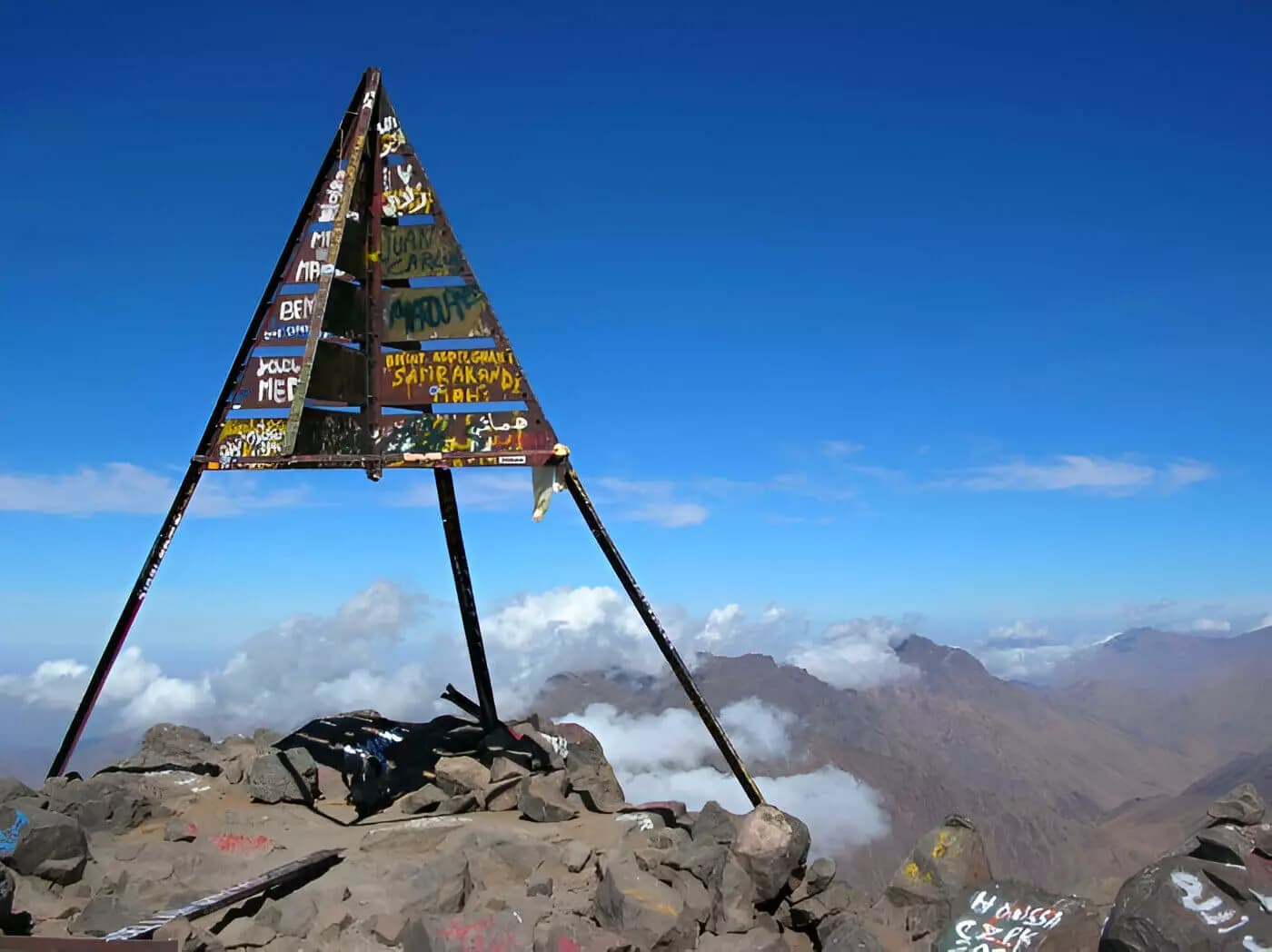
To organize the rest of your stay, see our guidewhat to do in Marrakechand theMarrakech city page. In terms of nature, compareOurika valleyand its waterfalls, or push further up to theOukaïmedenand theMount Toubkal. And before leaving town, ahalf-day in the souksor apottery workshopcomplete your discovery of the region. Combine a morning in town with an afternoon at the lake, and you've got one of the most varied and relaxing days of your Marrakech holiday.