
Agadir
From Agadir's Atlantic Shore to the Dunes of Merzouga - 5 Days with Artisans and Nomads
- Free cancellation up to 72h before
- 100% secure payment on the site
- French-speaking guide (FR, EN, ES)
- WhatsApp reply within hours
- Small group: 6 travelers max
What you will live
- Meeting a rose water distillation cooperative in the Valley of Roses
- Evening with a nomadic family: tea, fire, Berber music under the stars
- Weaving workshop in Taznakht with local women weavers
- Todra and Dadès Gorges: red stone landscapes and limestone cliffs
- Night in a nomadic bivouac in the Erg Chebbi dunes
- A French-speaking road companion for all 5 days, not an anonymous driver
- Agadir's Souk El Had with an herbalist: Berber names and medicinal uses
About this stay
Your travel notebook
Day by day
Your road companion is waiting at the airport exit or your hotel lobby. No laminated sign, no group to join: a handshake, a few words to get a feel for the journey ahead, and the road begins. This first day is deliberately short - it is for setting down luggage, breathing Agadir's sea air, and not arriving exhausted at the four days that follow.
Agadir is a seaside city built after the 1960 disaster: modern, lively, sometimes surprising for those expecting a medina. This evening, over dinner, your companion traces the coming days on a map - the Anti-Atlas passes, the red-earth Kasbahs, the horizon line that becomes desert. A way to start seeing the country before crossing it.
Meals included
- Dinner
Accommodation
Night in a hotel in Agadir - comfortable room overlooking the city, a short walk from the Atlantic seafront.
Departure comes early, before the heat sets in. The road leaves the coast and climbs into the Anti-Atlas through tight switchbacks. The villages change colour as the altitude rises - ochre pisé, whitewashed walls, house terraces that seem pinned to the mountainside. Your companion knows the name of every pass, the stories that unfolded there.
Kasbah Taourirt in Ouarzazate is worth a stop - not as an obligatory tourist stage, but to understand how entire families once lived in these raw-earth structures, how the architecture responded to the climate before concrete arrived. The Atlas film studios are just nearby: a reminder that the Moroccan desert has served as backdrop to dozens of international productions, often to the benefit of the local economy.
The most anticipated stop of the day is in the Valley of Roses, before reaching the Dadès Gorges. A women's cooperative opens its doors: the copper alembic heats gently, steam laden with rosa damascena petals condenses into pure rose water. The manager explains the harvest calendar - ten days in April, at dawn, by hand - and what this plant means for the valley's economy. You leave with a scent in your clothes and a different understanding of what goes into a moisturiser.
In the evening, the Dadès Gorges reveal their raking light: the red sandstone cliffs take on orange hues at sunset. Dinner and a night in a simple, honest local hotel.
Meals included
- Breakfast
- Dinner
Accommodation
Night in a hotel in the Dadès Gorges area - local establishment facing the red sandstone cliffs.
This is the longest and most contrasted day of the journey. It begins in the Todra Gorges, where two limestone walls 300 metres high close around a corridor barely ten metres wide. The shade is cold in the morning, the stream at your feet is translucent. You walk between the cliffs without needing to look for the perfect angle: it is everywhere.
The road then descends towards Tinghir and its palm groves irrigated by a network of khettaras - those underground galleries that Berber engineers dug to bring mountain water down to the crops. A system centuries old, still partially active. Your companion explains how it works as you walk among the palms.
After Erfoud and its marine fossil quarries - proof that all this desert was once a sea - the dunes of Erg Chebbi appear in the late afternoon. A dromedary carries you to the bivouac at its swaying pace, while the light on the sand shifts every ten minutes.
That evening, a nomadic family welcomes you. Not a tourist re-enactment: people who spend part of the year in the desert and share their fire with you. Tea is served in three rounds according to tradition - the first bitter as life, the second strong as love, the third sweet as death. You learn to light a fire with argan wood. Berber music on the bendir spreads into the darkness. The sky, with no light pollution for dozens of kilometres in any direction, is a star map learned by heart.
Meals included
- Breakfast
- Dinner
Accommodation
Night in a nomadic bivouac in the Erg Chebbi dunes - traditional Berber tents, warm blankets provided, starlit sky free of light pollution.
Waking in the desert has its own light: a pink and golden tint on the sand before the sun gains height. Coffee or tea served at the bivouac before getting back on the road is as much part of the journey as the gorges or the kasbahs.
The return road is long - it would be dishonest not to say so. Almost a full day of driving to cross southern Morocco in reverse. But Taznakht justifies the detour and the time. This small town in the western Anti-Atlas is the heart of traditional Berber weaving. No tourist shop with prices in euros: a family workshop where women have worked wooden looms since daybreak.
Your companion introduces you to the family. You are shown how an Amazigh pattern is built row by row, how wool yarn dyed with pomegranate, henna or indigo holds its colour for decades without fading. Each motif has a name, a meaning in Amazigh cosmology - protection, fertility, memory of a place. This is not souvenir craft: it is a language that the women of this region have passed from mother to daughter for generations.
You leave Taznakht with a different understanding of what a rug is. The rest of the drive to Agadir unfolds in the fading light of the Anti-Atlas, mountains giving way to coast, and the air regaining its taste of salt.
Meals included
- Breakfast
- Dinner
Accommodation
Night in a hotel in Agadir - back in the city, a comfortable room for a last night before departure.
The last day belongs to Agadir, a city too often passed through without being read. The ruined Kasbah on the hill is the starting point - not for its views of the bay (beautiful, admittedly), but for the history it carries. In 1960, a magnitude 5.7 earthquake levelled the city in fifteen seconds, killing between 12,000 and 15,000 people. Agadir was rebuilt in less than two years at its current location. The Kasbah ruins are a memorial as much as a historic site: your companion offers a cultural reading of the place, far from standard guide commentary.
Then, Souk El Had. This is the largest covered market in Morocco - several thousand traders across more than 6,000 stalls. The idea is not to see everything but to go to the essential: the herbalist who arranges medicinal plants by family, able to name in Berber, Arabic and Latin each root, each dried flower, each resin. The mint that smells different depending on whether it comes from the mountains or the plain. Saffron, argan, ambergris.
One last hour of freedom before heading back to the airport. Five days, landscapes that change every two hours, and faces not easily forgotten.
Meals included
- Breakfast
Accommodation
Airport transfer at end of day according to flight schedule.
What is included
- Pick-up and drop-off at your hotel or Agadir airport
- French-speaking road companion (driver-guide) for all 5 days
- Transport in air-conditioned vehicle
- 3 nights in hotels (Agadir, Dadès, return Agadir) and 1 night in nomadic bivouac
- 4 breakfasts and 4 dinners
- Camel ride at sunset in the Erg Chebbi dunes
- Visits to cooperatives and craft workshops included in the journey
- Berber music and nomadic evening at the bivouac
Not included
- Lunches and beverages (outside included meals)
- Entrance fees to paid monuments and sites
- Personal expenses and purchases at cooperatives
Good to know
Starting point
Aéroport d'Agadir Al Massira (AGA) ou hôtel d'Agadir centre. RDV avec votre compagnon de route le matin du Jour 1.
Extend the experience
Workshops and artisan encounters to enjoy around your stay
 Things to do in Agadir
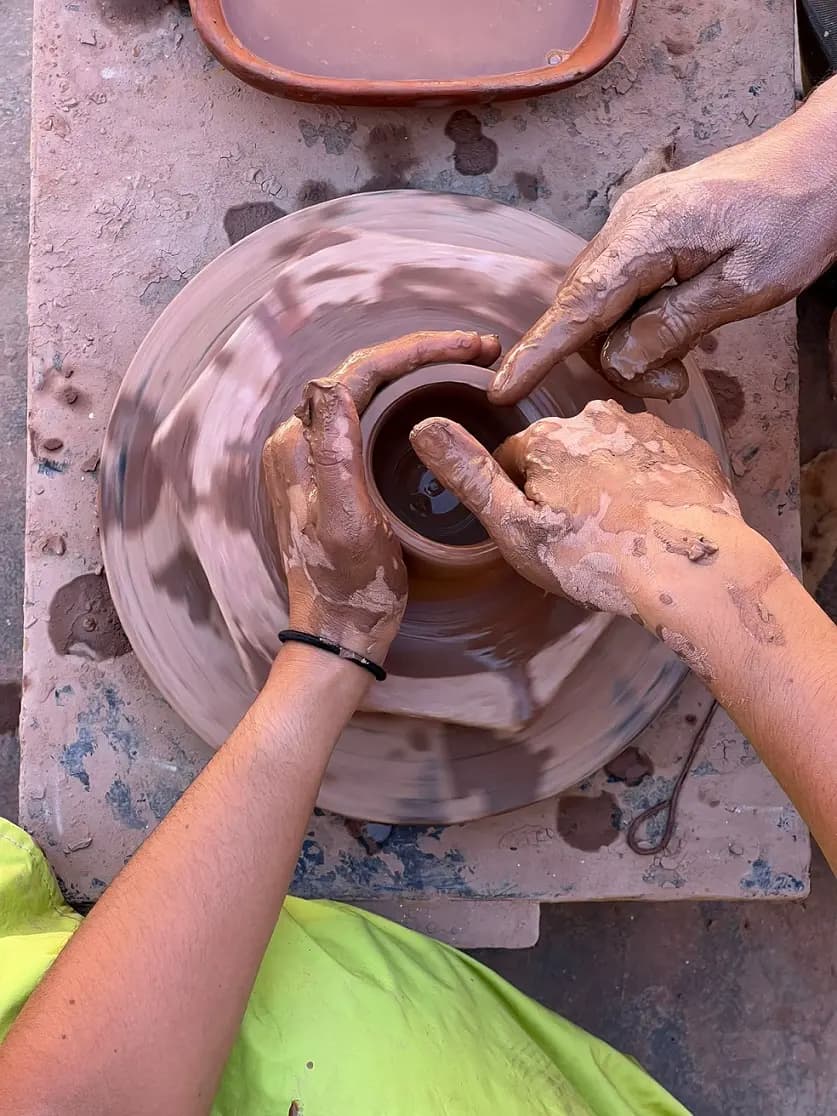
Agadir Pottery: Workshop with an artisan, 3 pieces to create
Pottery workshop in Agadir, 1.5 hours with Moustapha, a potter with 20 years of experience: create 3 pieces on the wheel using local clay, starting at €35. Small group, ages 8 and up.
Discover Things to do in Agadir
Agadir Raffia Workshop: Hand Weaving with Bouchra
A 2-hour raffia workshop in Agadir with Bouchra, a craftswoman with 24 years of experience: hand-weave a key chain or a magnet shaped like a babouche, available in about ten colors.
Discover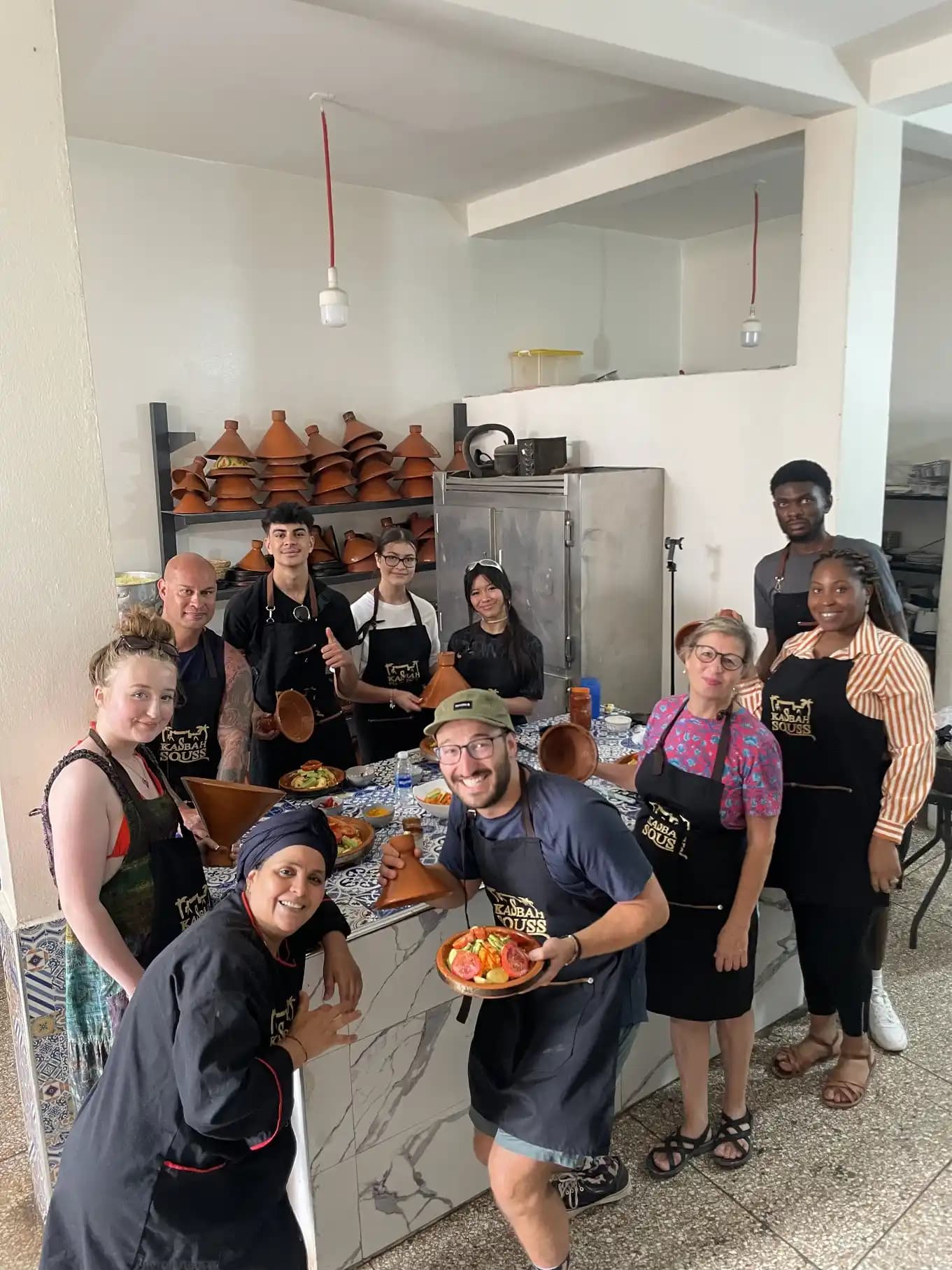 Cooking classes in Agadir
Agadir Kasbah Cooking Class with Chef Salma
Agadir Kasbah Cooking Class with Chef Salma: visit to the local market, choice of tagine, and lunch at a traditional restaurant. Transportation included. €35 per person.
Discover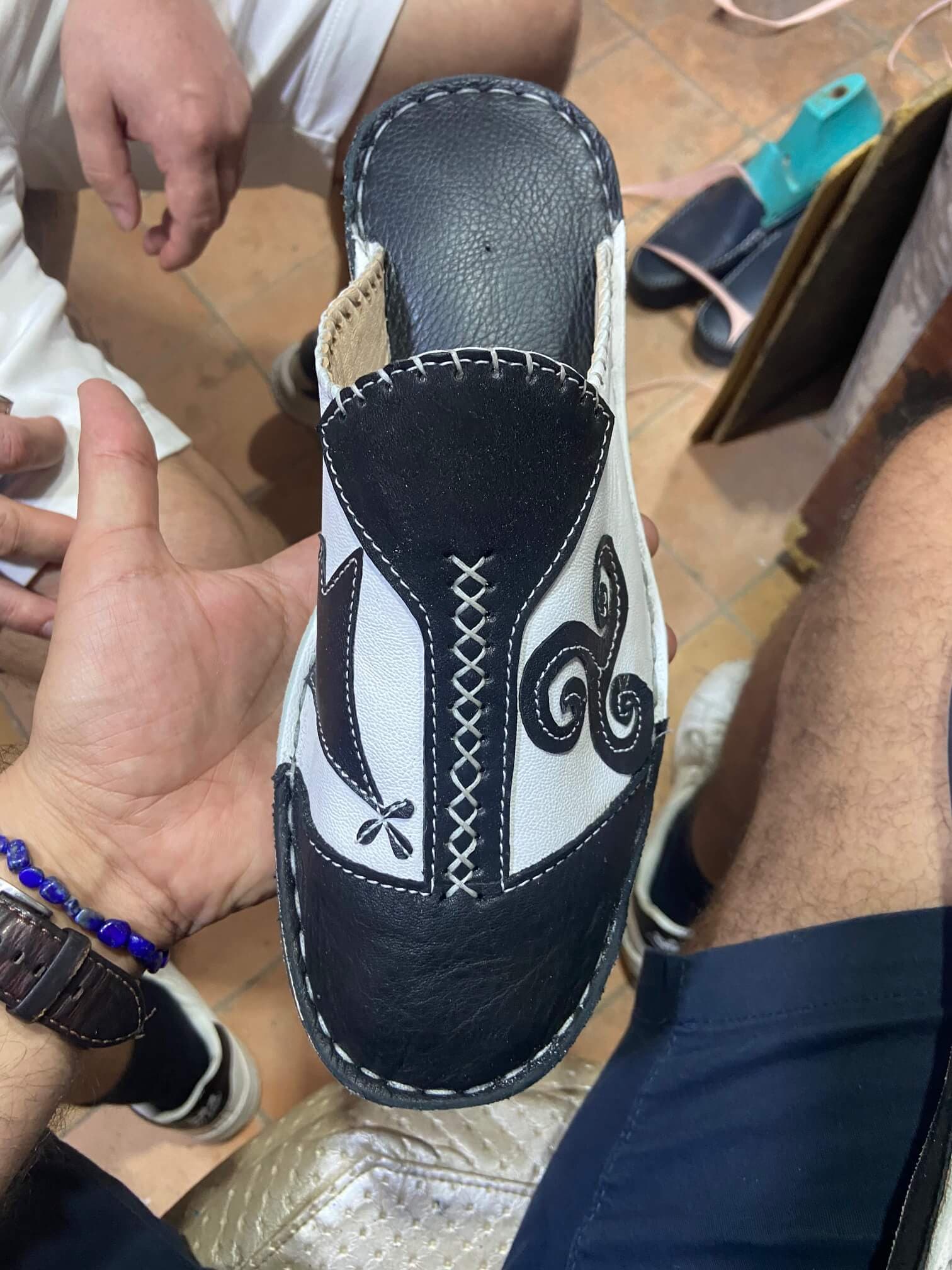 Things to do in Agadir
Babouche-making workshop in Agadir: make your own custom pair
Babouche-making workshop in Agadir with Hossein, a leather craftsman from Agadir. Spend two hours crafting your own custom pair, and if they aren’t finished, we’ll deliver them to your hotel.
Discover
An itinerary to adjust? A question?
Every stay can be tailored to your pace, your dates or your wishes. Write to us, we reply personally.