The Agadir Oufella Kasbah is a Saadian fortress dating from 1540, perched 236 meters above the bay; it is the only remnant of the city of Agadir destroyed by the earthquake of February 29, 1960.
Transformed into a memorial and reopened to the public in February 2024 following restoration, it can be reached by cable car (6 minutes) or on foot (free of charge). Visitors go up there for the panoramic view of the bay and to honor the memory of those lost. Here’s our complete guide: whether the visit is worth it, its history, what to see there, how to get there, admission prices, and the best time of day for the view.
Practical Information
Is the Oufella Kasbah worth the trip? Cable car or free hike
That’s the question everyone asks, and no guidebook really settles it. Honest answer: yes, for the view of Agadir Bay and as a tribute to history; less so for the ruins themselves, 95% of which were destroyed in 1960.
The cost needs to be clearly explained, as two separate tickets are often confused:
- the panoramic esplanade and the view are free, with no ticket required
- admission to the restored historic enclosure costs 90 dirhams per foreign adult (20 dirhams for a resident)
- the cable car requires a separate ticket: approximately 130 dirhams round-trip per adult tourist
That comes to about 220 dirhams per adult if you visit the historic site and take the cable car, or 0 dirhams if you walk up and just enjoy the esplanade and the view.
Our recommendation based on your profile:
- Tight budget or keen walker: walk up (a trail of about 2 km, 30 to 45 minutes); the esplanade and the view are still free
- Families, those seeking comfort, or sunset lovers: the cable car (6 minutes) is worth the cost
- History buff: Pay the entrance fee to the fortress for the audio guide, the memorial trail, and the original south wall
If you’re worried about paying “for a bunch of rocks,” know that since the 2024 restoration, the site is no longer just a field of bare ruins: footbridges, commemorative panels, an audio guide in five languages, and marked trails give meaning to the visit.
Why the Agadir Oufella Kasbah Is More Than Just a Scenic Viewpoint
Agadir is a city with two histories separated by 15 seconds: before and after February 29, 1960. Before that, there was a fortified citadel perched on the hill, old neighborhoods below, and a port that had been exporting goods to Europe since the 16th century. Afterward, there was nothing left.
This is what makes the Agadir Oufella Kasbah unique: it’s not just a tourist site; it’s the symbolic ground zero of a city rebuilt 2 kilometers further south.
The word “Agadir” comes from Tachelhit, the Berber language of southern Morocco. It refers to a fortified communal granary - those earthen structures where villages stored their harvests safe from looters. “Oufella” means “from above” or “at the summit”: literally, the place name translates to “the fortress from above.”
Today, the site embodies several identities: a Saadian relic, a memorial to the earthquake, a panoramic viewpoint, and, since 2024, a restored historic monument open to the public. The tour takes between 1.5 and 2 hours. The impression it leaves lasts much longer.
1540-1960: Four Centuries of Life on Agadir Oufella Hill
The story begins with the Portuguese. In 1505, they established a coastal trading post at the foot of the hill, named Santa Cruz do Cabo do Gué. The port served as a base for controlling the Sahelian trade route and exporting gold brought up from the Sahara. This presence would spark the birth of the kasbah.
In 1540, the Saadian sultan Mohammed ech-Cheikh had a rammed-earth fortress built at the summit of the hill, bristling with some fifty cannons. The objective: to bombard the Portuguese position from above. A year later, after several weeks of siege, Santa Cruz fell. This marked the end of Portuguese occupation on Morocco’s southern coast. His successor, Abdallah al-Ghalib, reinforced the stronghold in the decades that followed.
Inside the walls, it was more than just a garrison. A small, organized town took shape: a grand mosque, a hospital, a hammam, a treasury, narrow streets, and residences. A mellah, the Jewish quarter, had its own synagogue. At the foot of the hill, the port of Agadir became the leading export port for Moroccan sugar: for two centuries, English, French, and Dutch merchants loaded Saadian sugar there bound for Europe.
The decline began with the Alawites in the 18th century. For fiscal and strategic reasons, Sultan Sidi Mohammed ben Abdallah had the port of Essaouira (Mogador) built in 1764 and moved the trade there. The port of Agadir was closed, and the kasbah lost its influence while remaining inhabited.
In 1932, the site was officially designated a historic monument by Morocco. On the eve of February 29, 1960, approximately 4,000 people still lived within the city walls. The kasbah was then a lively, working-class neighborhood, with its shops and families.
Activity category
Adventure & outdoors
Discover our immersive experiences on this theme, designed with local artisans and guides.

Quad Biking in Taghazout: 2-Hour Ride through Argan Groves
From 25 €
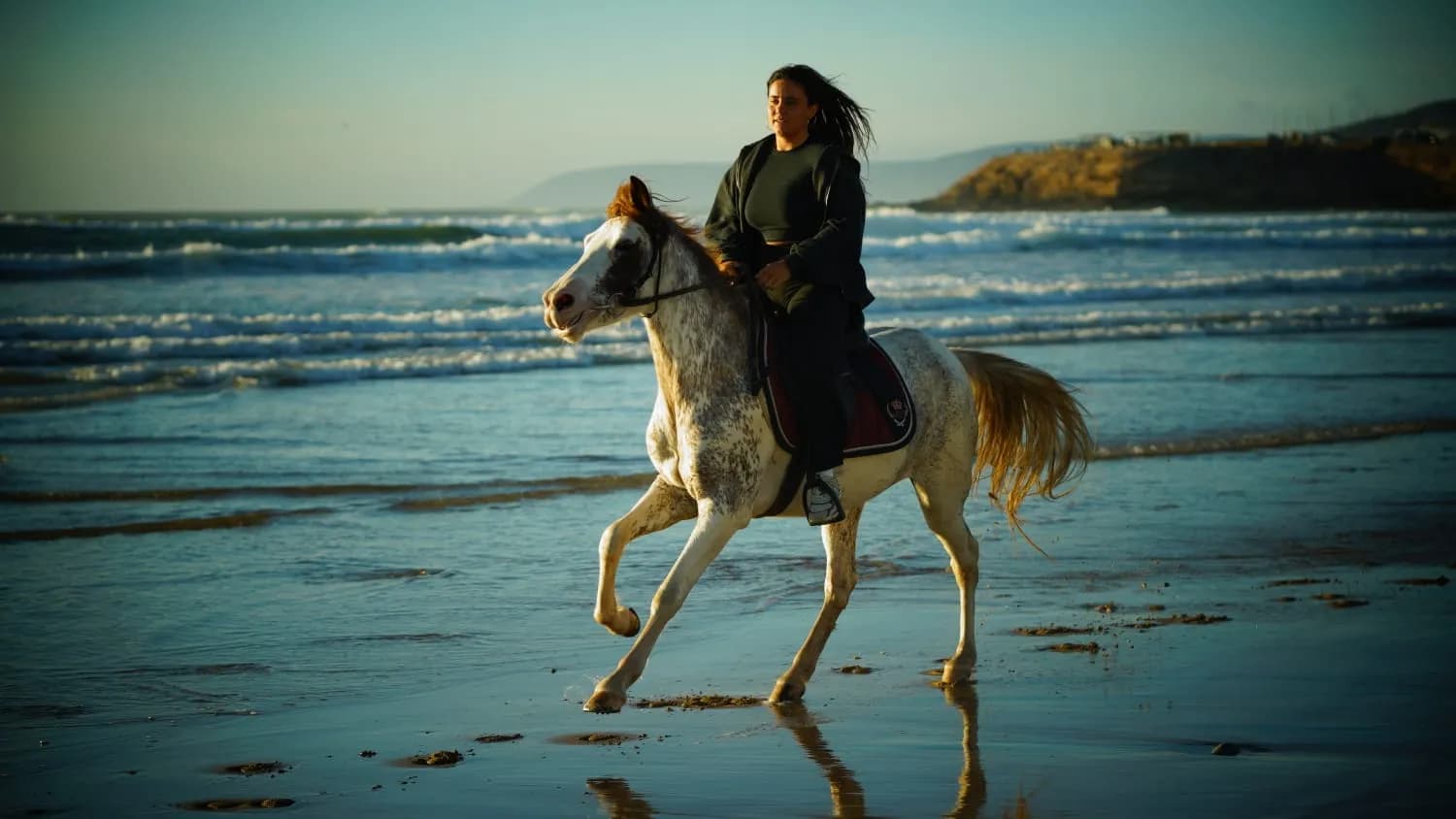
Horse Riding in Agadir: Beach and Hinterland Trails
From 25 €
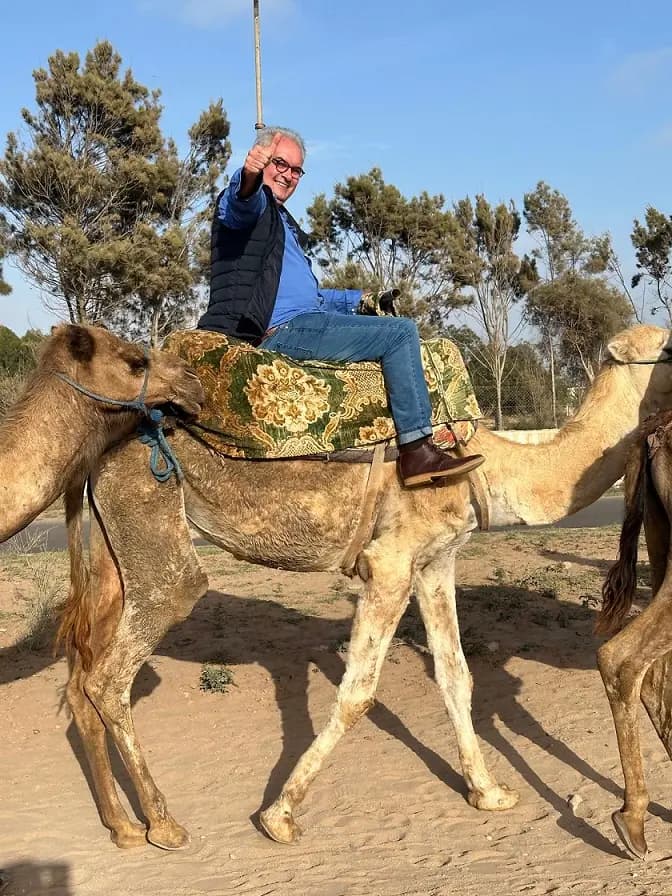
Camel Ride in Agadir at Sunset with Dinner
From 30 €

Surf lessons in Taghazout: beginner and intermediate classes for all skill levels
From 35 €
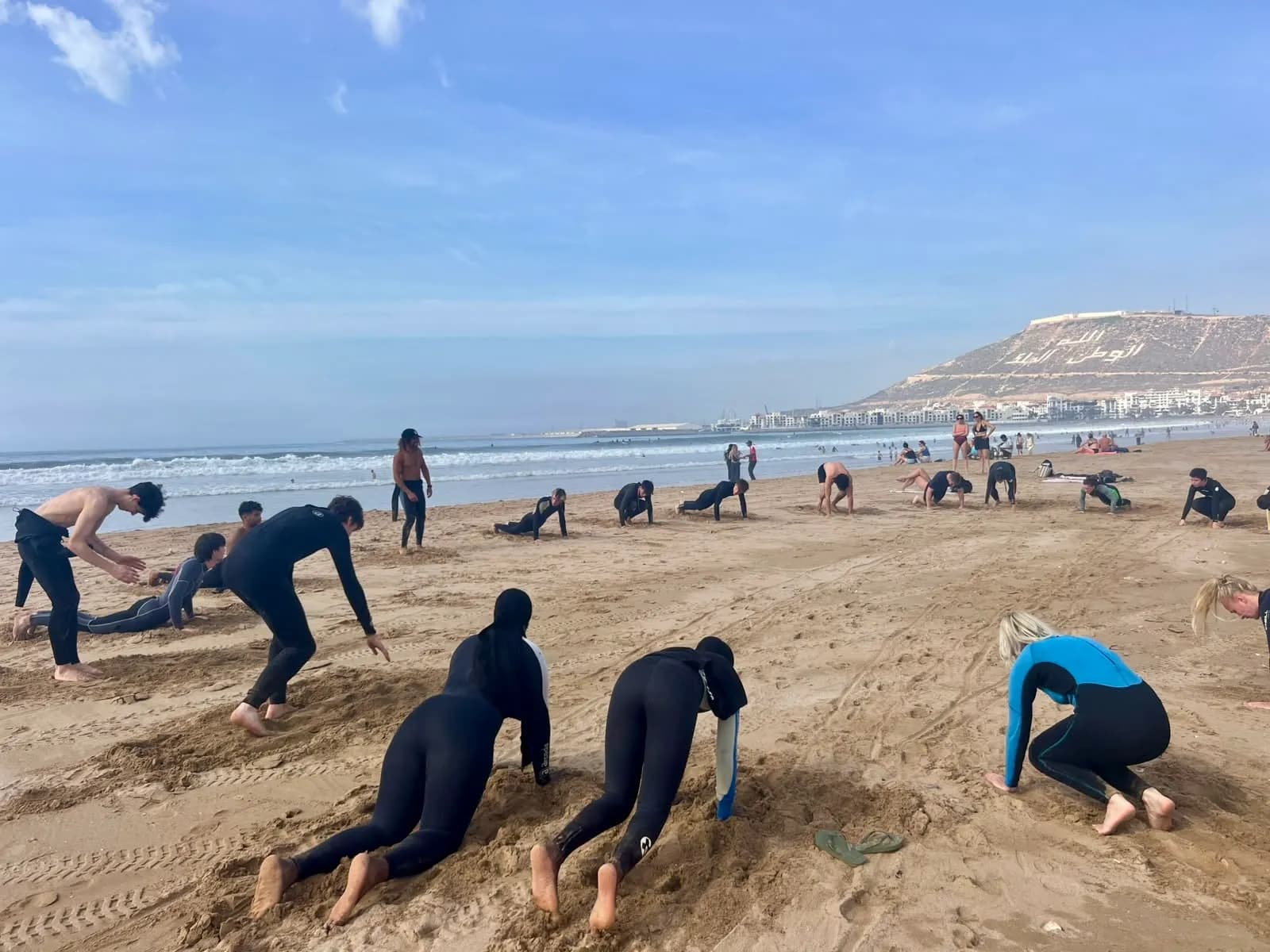
Surf lessons in Agadir: 2 hours on the main beach, all levels
From 35 €
Quad Biking on the Agadir Dunes: 2-hour ride facing the Atlantic
From 35 €
The Earthquake of February 29, 1960, and What Remains Today
Monday, February 29, 1960. It was 11.40pm local time. An earthquake measuring 5.7 on the Richter scale struck, with its epicenter almost directly beneath the city, at a depth of about 15 kilometers. The tremor lasted about fifteen seconds. On the Mercalli intensity scale, it reached X, the “extreme” level.
In 15 seconds, Agadir lost between 12,000 and 15,000 residents - nearly one-third of its population. There were 25,000 injured and at least 35,000 left homeless. The neighborhoods of Founti, Yachech, and the Kasbah were 95% destroyed. Talborjt was 60-90% razed. The hill was torn apart.
Why was the site never rebuilt? For three reasons. The first is commemorative: not all of the victims’ bodies could be recovered from the ruins, and the site officially became a memorial cemetery. You don’t build on a cemetery.
The second is urban planning: the new Agadir was designed as a modern, earthquake-resistant city - low-rise and sprawling - and Mohammed V laid its cornerstone on June 30, 1960, two kilometers further south. The third reason is symbolic: leaving the kasbah as it is preserves visible evidence of what took place.
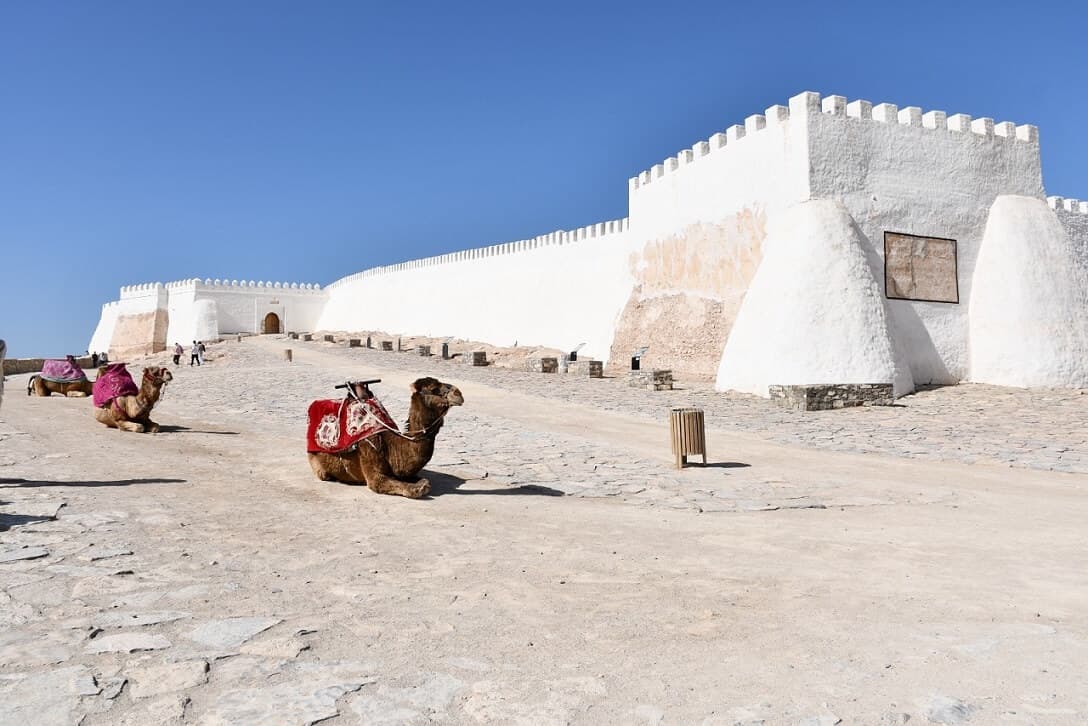
Today, what can be seen at the top is therefore necessarily modest: a Saadian entrance gate, the original south wall partially still standing, fragments of ramparts, and a few traces of the mosque and the mellah.
A major restoration project was launched in 2020 as part of Agadir’s urban development program, with more than 10 million dirhams allocated to the rear base and access trails. The site officially reopened to the public on February 1, 2024. The work involved securing the site, marking trails, and providing context through an esplanade, educational botanical trails, and commemorative signage.
What You’ll See and Experience at the Top
The arrival is always a bit solemn. Whether you take the cable car or walk up, you’ll emerge onto a plateau swept by Atlantic winds, 236 meters above sea level. The noise of the city fades away. You can hear the seagulls, the wind whistling, and sometimes the foghorns from the harbor below.
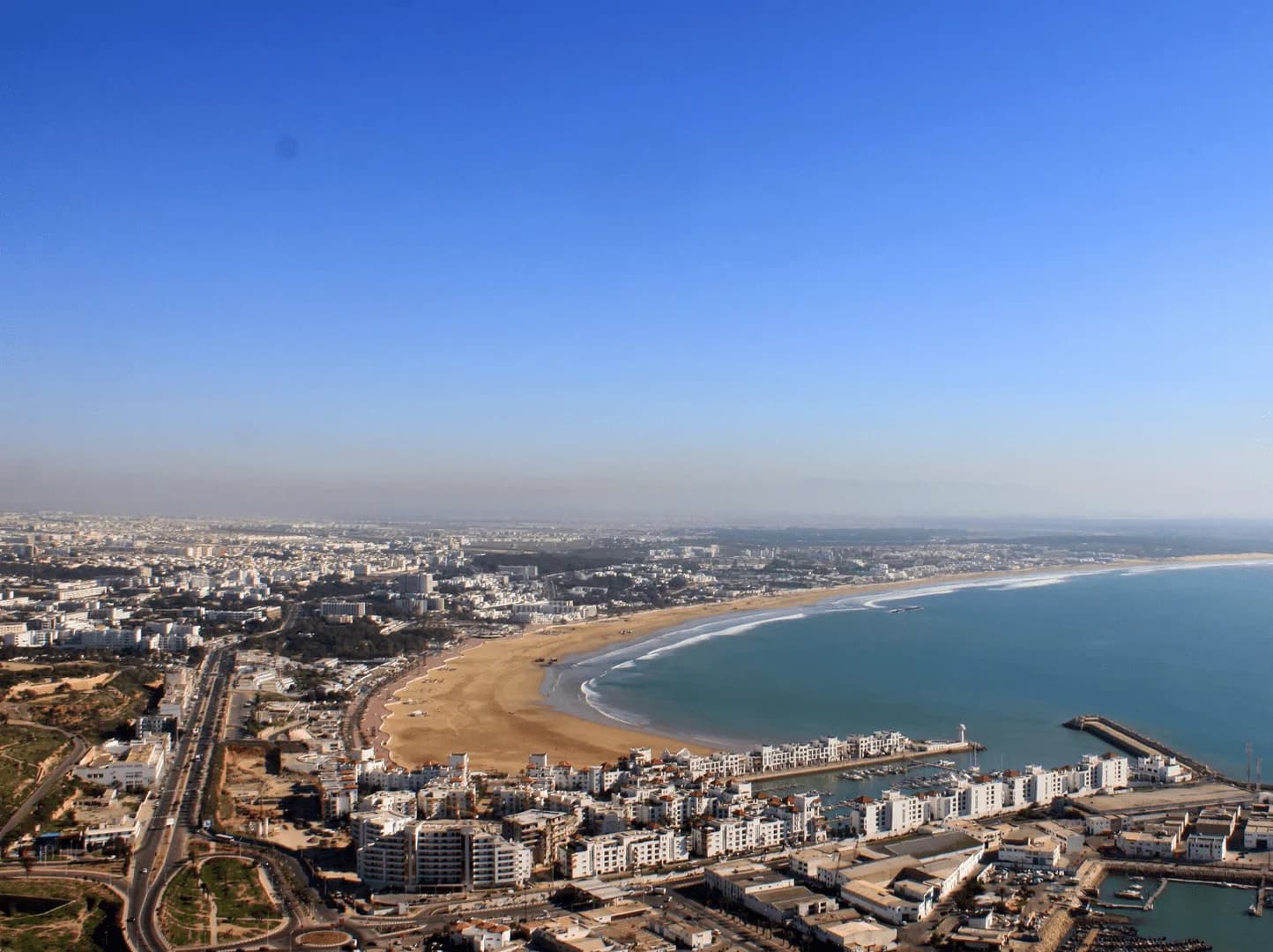
The panoramic view is 360 degrees. Due west, Agadir Bay stretches along 10 kilometers of beach. Below lies the fishing port - the world’s third-largest sardine port - where hundreds of blue fishing boats set out at dawn.
To the south, the modern city unfolds with its low-rise buildings and palm trees. To the east, the first hills of the Anti-Atlas, and on a clear day, the snow-capped peaks of the High Atlas in the background.
On the northern slope of the hill stands the monumental inscription in white stone: Allah, Al-Watan, Al-Malik - “God, the Fatherland, the King.” This is Morocco’s national motto, enshrined in Article 4 of the Constitution.
The letters, installed in the 1970s, are several meters high and visible to the naked eye from anywhere on the beach. At night, they light up and serve as a landmark for sailors returning to port.
In practice, despite the destruction of 1960, there is still plenty to see: the Saadian gate, the original south wall, sections of restored ramparts, the layout of the old alleyways, the footbridges and commemorative plaques installed in 2024, and the audio guide that brings the past to life. The highlight remains the 360-degree panorama, one of the most beautiful in southern Morocco.
The wind blows constantly here, the stones glow red at day’s end, and the light changes from minute to minute. Many visitors come for the view and leave moved by something else: the silence, and the idea of a vanished city of which only the outline remains.
How to get to the Agadir Oufella Kasbah: cable car, car, or on foot
There are four options for reaching the summit. None is a bad choice; each has its own appeal.
By cable car
This is the simplest and most spectacular option. The Agadir cable car, Morocco’s first, was inaugurated on July 16, 2022. It departs from the Tildi Bridge, south of the port, and climbs to the Agadir Oufella esplanade in about 6 minutes. Length: 1,700 meters. Elevation gain: 164 meters. Manufactured by the Austrian company Doppelmayr.
Fare: 130 dirhams round-trip for an adult non-resident (100 dirhams at the resident rate), approximately 13 euros. Hours: 10am to 10pm, daily. The gondola ride already offers an impressive view of the harbor and the beach. It’s also the best option if you’re traveling with children or people with limited mobility.
By Car
A paved road leads up to a midway parking lot halfway up the slope. From there, it’s a 10- to 15-minute walk to the esplanade. Allow 15 to 20 minutes for the drive from downtown Agadir, depending on traffic. Parking is free and monitored during the day.
On foot (free)
For walkers, a paved trail leads up from the bottom of the hill. Allow 30 to 45 minutes for the climb, depending on your pace. The slope is steady but steep: be sure to bring water and a hat, and avoid the 1-3pm time slot in the summer. The descent is quick (20 minutes) and much more pleasant than the climb. This is the zero-budget option: access on foot and the panoramic esplanade are free.
By taxi or bus
Small taxis go up to the midway parking lot for 30 to 50 dirhams from downtown Agadir; agree on the price before getting in. City buses don’t go all the way to the top: they drop passengers off at the base of the cable car or at the bottom of the trail.
Hours, prices, and the best time to visit the Oufella Kasbah
Since its reopening in 2024, the site has been officially managed, with set hours and a ticket office.
Oufella Kasbah Hours
The site is open daily from 10am to 7pm, with hours extended until 8pm in the summer. During Ramadan, hours are reduced to 10am - 4.30pm. Last admission is 30 minutes before closing. The outdoor panoramic esplanade remains freely accessible: the admission fee applies only to the restored historic enclosure, where the ruins and the memorial trail are located.
Oufella Kasbah Admission Fees
- Foreign adults: 90 dirhams (approximately 9 euros)
- Foreign child (ages 7-17): 65 dirhams
- Moroccan adult or resident: 20 dirhams
- Moroccan or resident child (ages 7-17): 10 dirhams
- Children under 7: free
- Survivors of the February 29, 1960, earthquake, caregivers for people with disabilities, and members of ICOM/ICOMOS/UNESCO: free
An audio guide in 5 languages is available for 30 dirhams. Guided tours are also available at the ticket office. The cable car requires a separate ticket (130 dirhams round-trip).
The best time for the view
Our tip: Aim for late morning, between 10am and 11.30am. The site has just opened, the midday groups aren’t there yet, the light is still soft, and it’s cooler on the exposed ridge.
The other, more atmospheric time is the golden hour before sunset. Plan for 5.30pm to 7pm, depending on the season.
The rocks turn red, the bay below lights up, and the inscription “Allah, Al-Watan, Al-Malik” begins to glow as the sky fades. This is photographers’ favorite time, but also the busiest. Avoid the middle of the day in summer (1-3pm): the summit is very exposed, with no shade, and the heat can become unbearable.
Practical Tips for Your Visit
Allow 1.5 to 2 hours on site to enjoy the area at a leisurely pace, plus 30 minutes if you take the cable car round trip. Wear clothing that covers your shoulders and knees out of respect for the memorial site, closed-toe shoes (the ground is uneven and rocky), and a windbreaker even in summer, as the wind is constant at the summit.
On the outdoor esplanade, you’ll encounter street vendors and itinerant photographers (camel herders, snake charmers, and fake guides). Remain polite but firm: a clear “no, thank you” is enough. If you want a photo with a camel, negotiate the price beforehand and pay only at the end. The visit is suitable for families with children ages 6-7 and older, especially when taking the cable car; inside the enclosure, some rocky sections are not well-suited for strollers or wheelchairs.
Extend your visit around the hill
The kasbah only makes sense when viewed in connection with the rest of the bay. Several easy extensions can be combined into the same half-day itinerary.
As you descend by cable car, you’ll arrive near the fishing port, one of Agadir’s most authentic sights between 8am and 11am, when the blue fishing boats return and the fish markets come alive. About ten fresh-seafood restaurants line the area, serving grilled dishes (80 to 150 dirhams per plate).
Less than 5 kilometers away, downtown Agadir offers other must-see spots: the Agadir Corniche for a seaside stroll, the Souk El Had for its bustling market, the Olhão Garden and its “Mémoire d’Agadir” museum to learn more about the 1960 earthquake, and the Agadir medina, reconstructed by Coco Polizzi.
Five kilometers to the south, the Kasbat Souss brings together some sixty artisans in a reconstructed village that nicely extends the visit: the memorial kasbah is complemented by the living kasbah. For lovers of natural landscapes, the Paradise Valley, 30 kilometers to the north, offers a striking contrast: a mountain oasis, turquoise pools, and limestone gorges.
If you’d like to incorporate the kasbah into a broader itinerary, our “Things to Do in Agadir” guide lists the city’s sites and experiences, and the “City of Agadir” page compiles our recommendations.
In summary
The Agadir Oufella Kasbah is unlike any other attraction. It’s a vantage point that encapsulates four centuries of history and 15 seconds of tragedy. You climb up for the view; you leave with a new perspective on the city below. The 2020-2024 renovation and the 2022 cable car have made the site accessible to everyone, but the spirit of the place remains intact: a lookout point steeped in memory.
The best way to visit depends on your preferences: on foot and for free to enjoy the panorama; by cable car for comfort and the sunset; or with a paid admission ticket to the enclosure for the history and the memorial tour.
Aim for late morning to enjoy the cool air or late afternoon for a more emotional experience, and once you’re at the top, take the time to look at the inscription carved into the white stones: it says a lot about the identity of this city that has risen again.
Keep reading
- Things to do in Agadir
- Kasbat Souss: 70 artisans at work 5 km from downtown Agadir
- Souk El Had Agadir: one of southern Morocco's biggest markets
- Agadir Seaside Promenade: What to Do, Swimming and Sunset
- The 1960 Agadir Earthquake: History and Rebirth of a City
- Agadir Medicine: Clinics, Emergencies and Care for Travellers