The Medina of Essaouira stands out from all of Morocco's medinas because of one surprising detail: its streets are straight. Laid out in a grid pattern in 1764, it is one of the few Moroccan cities designed in a single phase by an architect-Théodore Cornut, a disciple of Vauban-at the behest of Sultan Mohammed III.
The result: a medina where you can’t get lost, where the Atlantic breeze sweeps through the straight, narrow alleys, and where the ramparts have overlooked the ocean for more than two centuries. Designated a UNESCO World Heritage Site in 2001, it attracts visitors from around the world every year. It has retained its artisan workshops and the scent of thuja wood that permeates its souks.
Practical information
A medina designed by a French architect in 1764
Before becoming Essaouira, the city was called Mogador-a name derived from the Phoenician word Migdol, meaning “small fortress”-and before that, Tassourt or Amogdul in Berber, which means “the well-guarded one.” These names convey better than any description what the site has always been: a defensive stronghold, an anchor on a coast exposed to all the winds.
It was Sultan Mohammed III who, around 1764, decided to build a port city capable of channeling trade from southern Morocco to Europe. He called upon Théodore Cornut, a French military architect trained in the tradition of Vauban.
Cornut drew up a grid-like plan-rare in Moroccan urban planning at the time-with perpendicular streets that allowed for air circulation and facilitated defense. His original plan is now preserved at the National Library of France.
The port and its fortifications were built in several phases. Ahmed El Inglizi, an architect of Andalusian origin, constructed the port entrance and Bab el-Marsa between 1769 and 1770. A Genoese architect oversaw the construction of the kasbah’s sqala.
The city quickly became a bustling commercial hub: in 1844, it had a population of about 10,000. By 1886, that number had grown to 18,000. The Jewish community constituted a significant portion of the population at that time and played a central role in trade with Europe.
Activity · Essaouira
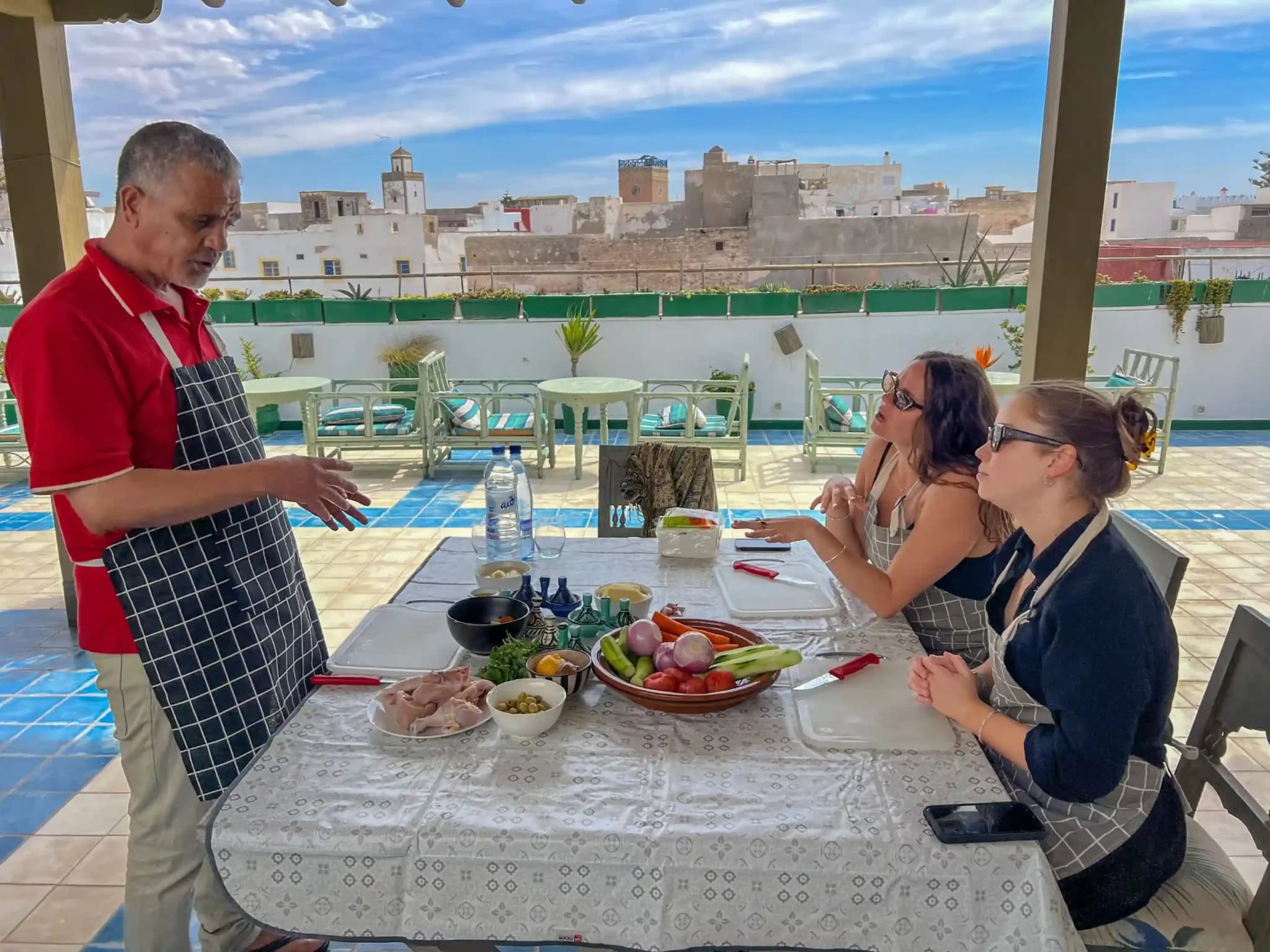
Cooking classes in Essaouira: professional photos and videos included
3-hour cooking class in Essaouira with Youssef, a local chef from the medina: choose between tagine, couscous, or pastilla; professional photos and videos included. Starting at €40.
The ramparts of the Essaouira medina: cannons and the ocean
The ramparts on the Atlantic side stretch over 200 meters in length. Their Vauban-style design is immediately recognizable: projecting bastions, angles calculated to eliminate blind spots, and embrasures facing the sea. On the Skala platform at the harbor, about twenty old 18th-century bronze cannons are lined up facing the ocean. They were never fired in battle. Their presence on these merlons, battered by the trade winds, remains striking.
From La Skala, the view stretches far: to the right, Mogador Island and its northern gannets in the summer; straight ahead, the Atlantic horizon; below, the fishing port where the trawlers return in the late morning.
The sound of the waves crashing against the base of the ramparts mingles with the cries of the seagulls. It is probably the most photographed spot in Essaouira. The light here is unique-white and diffused-even on overcast days.
The Skala of the Kasbah, ramparts of the medina of Essaouira
The ramparts form two distinct sections. The Skala of the kasbah, to the northwest, is the large platform visible from the beach: it is home to the bronze cannons. The smaller Skala of the harbor frames the entrance to the harbor basin.
Between the two, a parapet walk runs along the top of the rocks. At low tide, you can walk along the ramparts from the outside, with your feet in the damp sand and the sound of the surf in the background.
Strolling through the medina: souks, narrow streets, and artisans
Entering the medina through the Bab Doukkala or Bab Sbaa gate means moving from the hustle and bustle to a different pace. The streets are narrow but well-organized: you don’t end up going in circles like in Fez or Marrakesh. The logic of the grid layout remains clear even without a map.
The main avenue, Mohammed Zerktouni Street, is lined with shops and small eateries. The perpendicular alleys lead deeper into the residential neighborhoods. Quieter, these are the streets where laundry hangs to dry between the white and blue walls.
The artisans' souk in the medina of Essaouira: thuja wood and marquetry
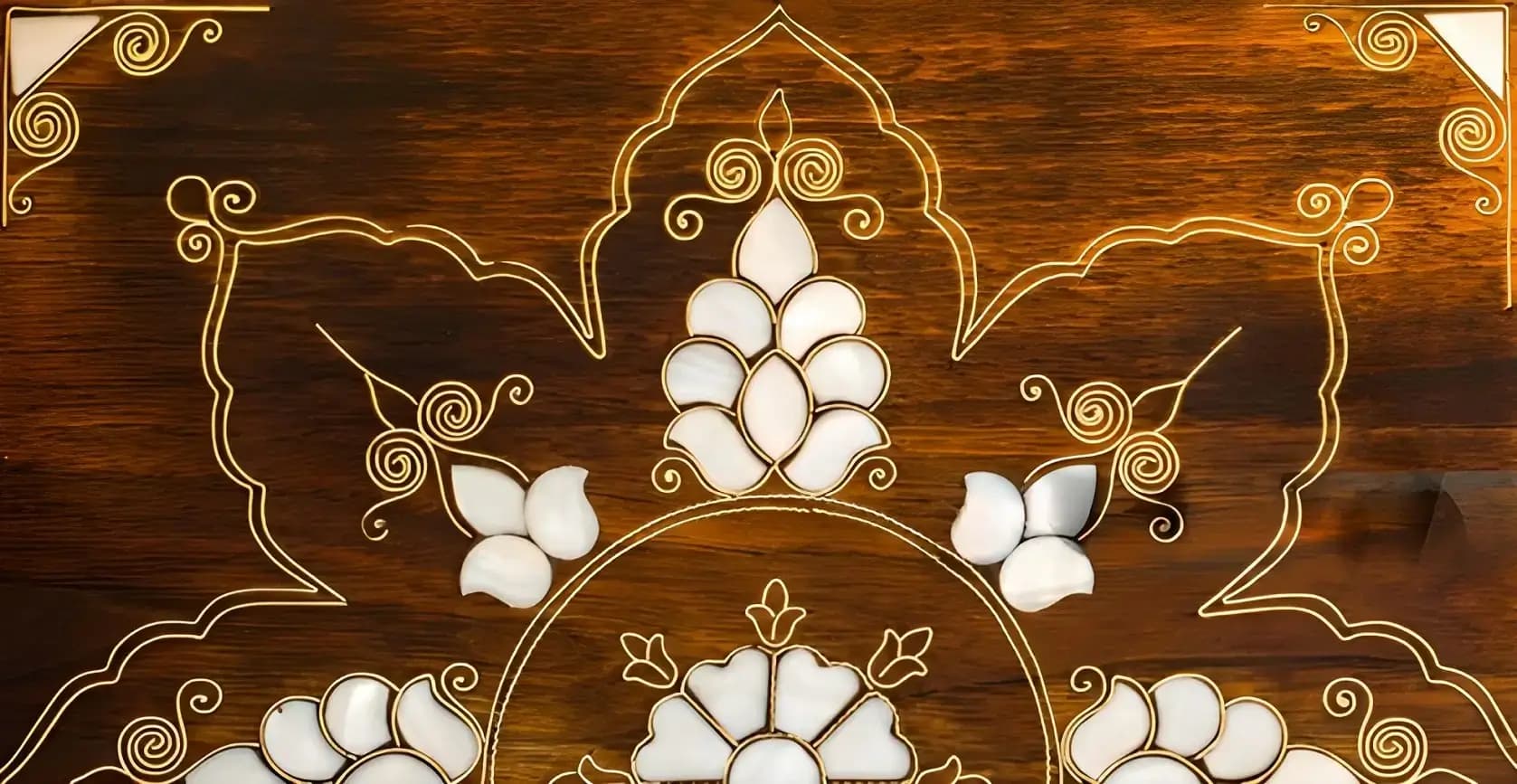
The thuja is the region’s iconic tree. Its dense wood, with tight grain and an almost resinous scent, is used in marquetry to create coffee tables, trays, jewelry boxes, and picture frames. The workshops are visible from the street. You can hear the sharp clacking of wood chisels and the whir of the lathe even before you spot the sign. Artisans often work in the same workshop for several generations, passing down geometric patterns and inlay techniques.
If you'd like to go beyond just making a purchase and understand the gesture behind it, our Thuja marquetry workshop in Essaouira puts you directly in the role of the artisan: carving, assembling, and finishing. A two-hour session in a workshop in the medina.
Gnaoua Music: The Sound of Essaouira
In June, the medina takes on a whole new look. The Gnaoua and World Music Festival transforms the squares and rooftops into open-air stages. Gnaoua music-a blend of sub-Saharan African rhythms, Sufi chants, and percussion featuring metallic rattles-echoes through the narrow streets until late at night. The festival attracts tens of thousands of spectators every year. Most of the concerts on Moulay Hassan Square are free and held outdoors.
Outside the festival, musicians play in the cafés and galleries of the medina. The sound of the guembri-the iconic three-stringed bass of the Gnaoua-is instantly recognizable: deep, repetitive, almost hypnotic. It’s a sound that stays with you long after your visit.
When to Visit Essaouira and How to Get There from Agadir
Essaouira enjoys an Atlantic microclimate: summers there are cool-rarely exceeding 25°C in July-and winters are mild. The downside is the wind, which is constant and sometimes strong. It is this very wind that has made Essaouira one of the world’s capitals of windsurfing and kitesurfing, with consistent conditions stretching from the esplanade to the south beach.
Activity · Essaouira
Essaouira Crafts: Thuja Wood Inlay Workshop
Essaouira Crafts: Join a 4-hour workshop on thuja wood marquetry alongside artisans in the medina. Take your finished piece home with you.
The best time to visit the medina without any hassles is from March through May and from September through November: the wind is milder, the light is beautiful, and there are fewer tour groups than in the summer.
From Agadir, the road runs north along the Atlantic coast for about 175 km. By car, the trip takes about 2 hours and 30 minutes. CTM and SUPRATOURS buses run daily between the two cities from the Agadir bus station. For those who prefer not to drive, our Transportation Guide from Agadir provides details on bus and shared taxi options.
What to Plan for When Visiting the Medina of Essaouira
Here are a few practical tips for planning your day in the medina:
- Bring a jacket: The Atlantic breeze picks up as soon as the sun goes down, even in July. A light layer is enough, but it’s essential on the ramparts.
- Cash in dirhams: Artisan shops and small restaurants don't always accept credit cards. There is an ATM near Bab Doukkala.
- Arrive early in the morning: Before 9am, the medina belongs to its residents. The workshops are already open for business, the cafés are open, and the alleys are almost empty.
- Visit the harbor in the late morning: The trawlers come in between 10am and noon. This is the best time to watch the informal fish auction on the pier and buy fresh fish.
- Eating grilled fish at the harbor: The fishmongers' and grill vendors' stalls right at the entrance to the harbor offer sardines, sea bream, and squid grilled to order. Prices vary depending on the day's market.
- Book Your Return Trip: If you're coming by bus, the last departures for Agadir are in the late afternoon. Check the CTM schedule before you leave.
Essaouira from Agadir: A Full Day with Immersi
For those leaving from Agadir who want to spend a whole day in the medina without having to worry about the logistics, our day trip to Essaouira from Agadir includes round-trip transportation, a guided tour of the medina and the city walls, and free time to explore the souks and the harbor. The tour departs in the morning from Agadir and returns in the late afternoon.
If you’re already in Essaouira and would like to extend your exploration with a hands-on experience, the thuja wood marquetry workshop can be combined with a tour of the medina on the same day. The two activities complement each other naturally: you’ll gain a better appreciation for the artisans’ work in their shops after spending two hours working with a wood chisel.
Essaouira is also located along the Atlantic coastline between Agadir to the south and Safi to the north. If you're planning an itinerary that includes several stops along the coast, check out our Guide to Things to Do in Agadir to set up your starting point.
Key Facts About the Medina of Essaouira
What sets Essaouira apart from other cities in Morocco is its character as a port city built for trade. Cornut’s grid-like layout, the Vauban-style ramparts, and the diversity of the communities that have lived there have produced a unique architectural style on the Atlantic coast.
UNESCO recognized it in 2001 not for a single monument, but for the coherent whole that the medina still forms: 30 hectares of designated historic area, a 15-hectare buffer zone, and a vibrant neighborhood life that has not been overshadowed by tourist shops.
Plan on a full day to explore the city at a leisurely pace: the ramparts in the morning, the artisans’ souk around midday, the port for lunch, and a walking tour of the medina in the afternoon. If you’re coming from Agadir, leave early to enjoy the morning light on the ramparts.