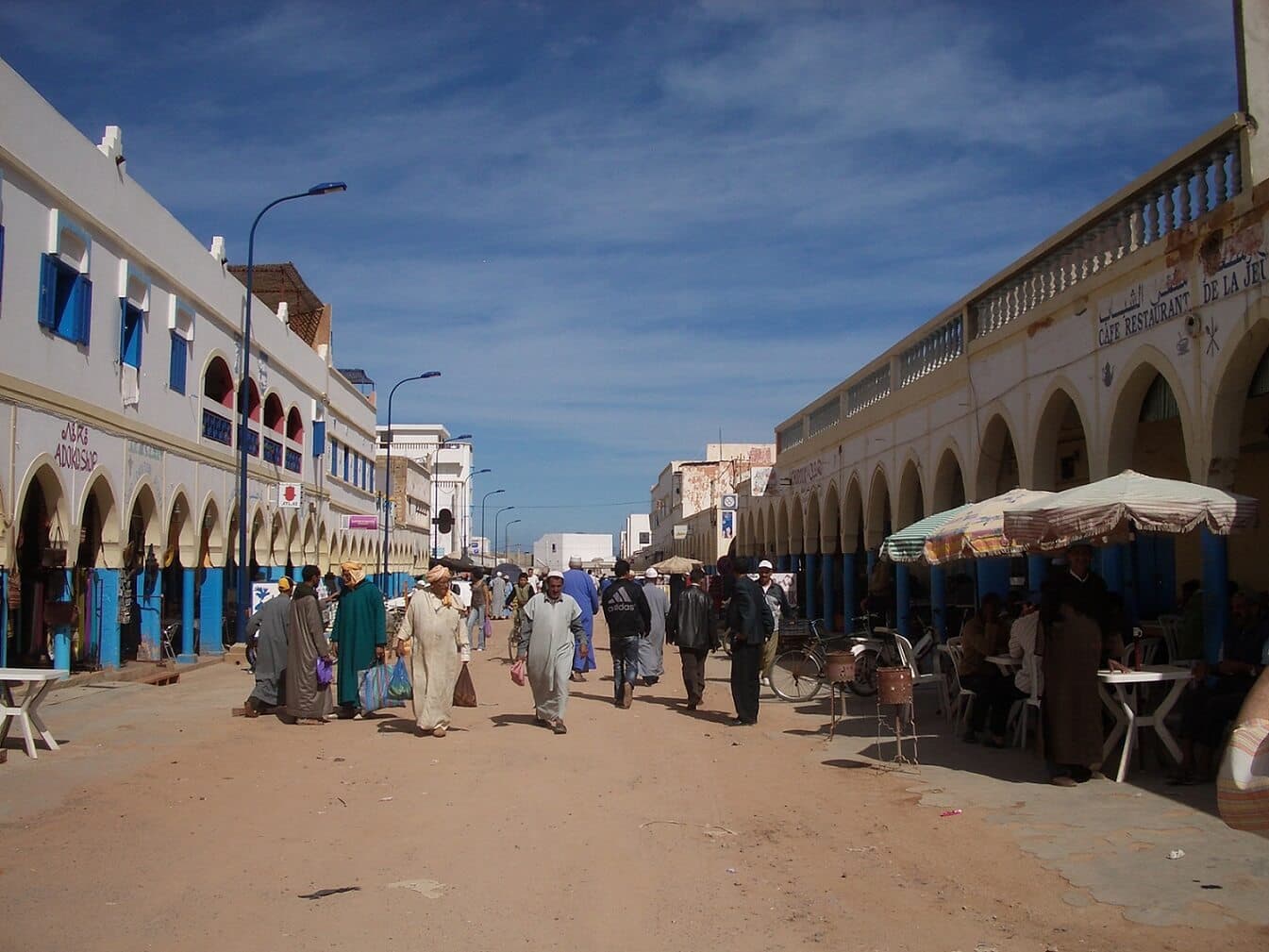
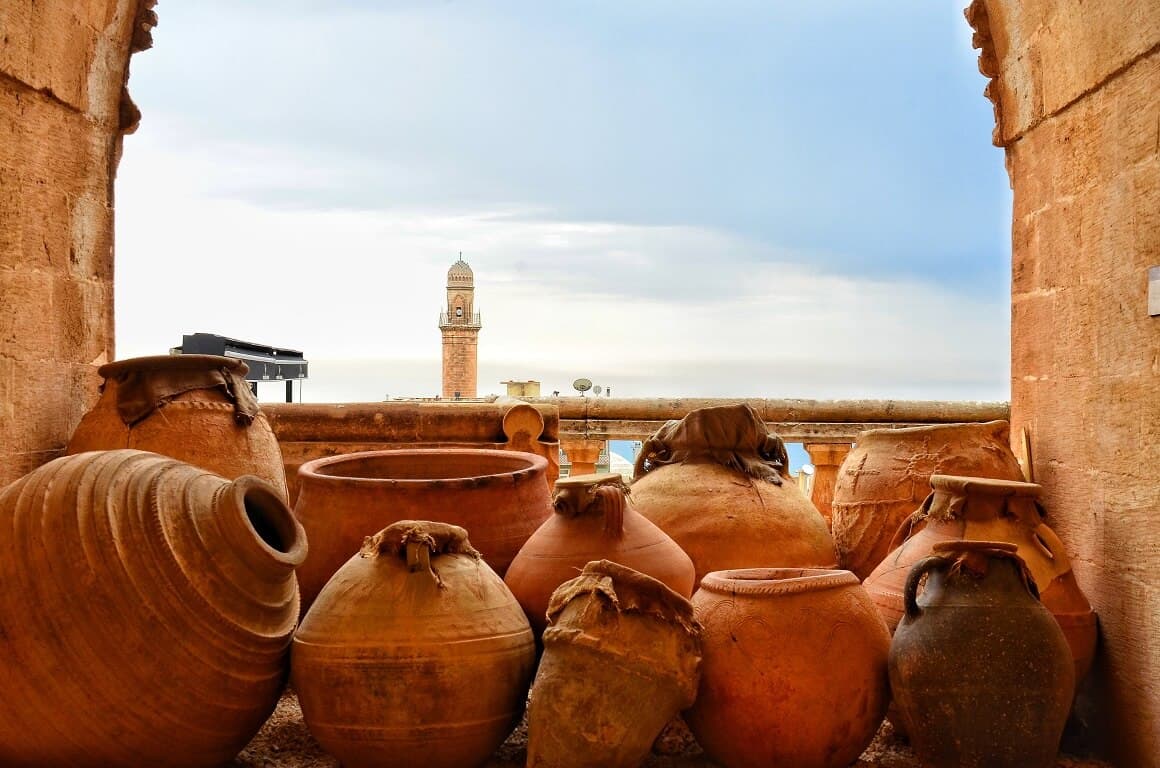
A craft rooted in the earth and woven into everyday life
Moroccan pottery can be found on every table, in every home, and at every market. The tagine simmering over hot coals, the jar that keeps water cool in the summer, the Sunday bowl of harira: behind these everyday objects lie a potter, clay, a kiln, and a craft passed down from generation to generation.
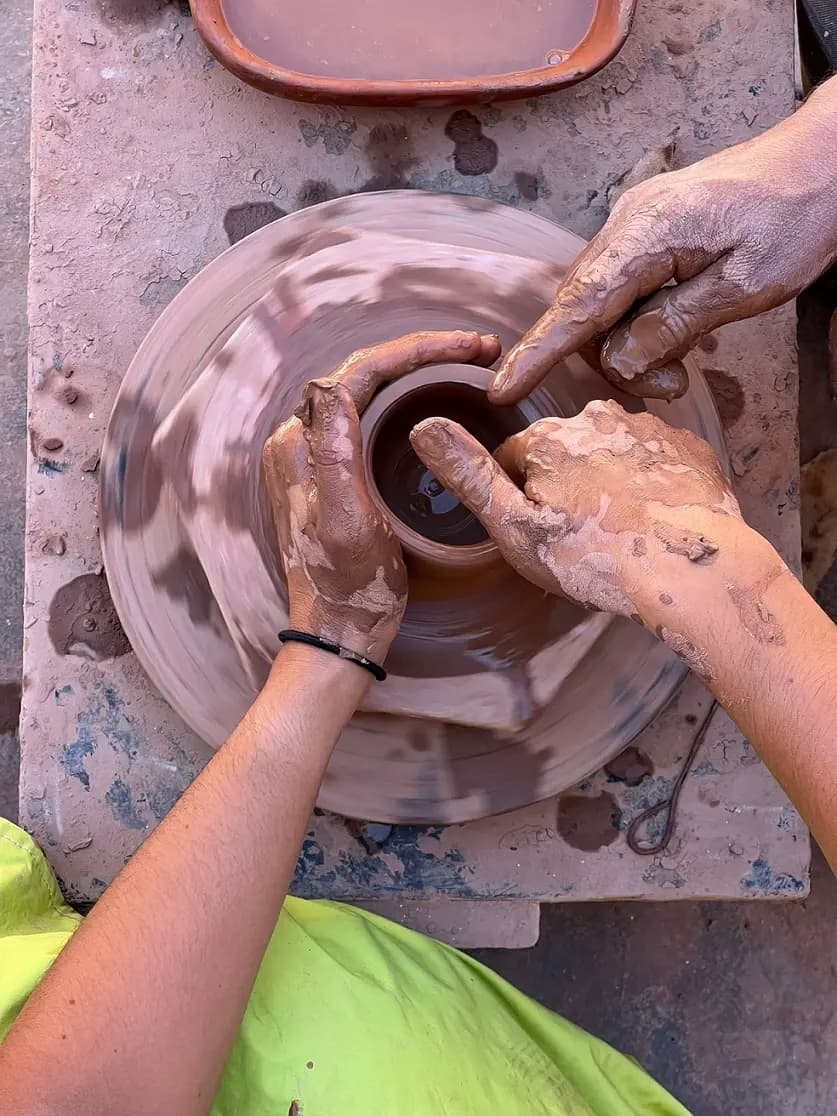
Activity · Agadir
Pottery Workshop in Agadir: Make 3 Pieces with an Artisan
Pottery workshop at Kasbat Souss, Agadir, 1.5 hours with Moustapha, a potter with 20 years of experience: create 3 pieces on the wheel using local clay, starting at €35. Small group, ages 8 and up.
In Morocco, terracotta is more than just a souvenir for tourists. It is functional, vibrant, and highly sought after in the souks by savvy shoppers. The earliest traces of pottery on Moroccan soil date back to the Neolithic era: archaeological excavations attest to a practice that has continued for millennia, long before the great dynasties turned certain cities into capitals of this art form.
This guide provides an overview of the major production centers, the techniques that set them apart, and ways to experience this craft firsthand during your stay.
The Four Major Centers of Moroccan Ceramics
Each region of Morocco has developed its own relationship with clay. However, four cities account for the bulk of production and have forged a ceramic identity that is recognized far beyond the country's borders.
Safi: The Potters' Quarter, Designated a Historic Landmark
Safi is often called the capital of Moroccan ceramics, and it has earned that title. The city has had pottery workshops dating back to the 12th century. Its pottery district-also known as the “Pottery Hill”-has been designated a historic monument since 1920. It was here, in the early 20th century, that a ceramics school was established, training artisans capable of combining traditional techniques with innovations in glazes.
Safi pottery is recognizable by its geometric and floral patterns on a cream or off-white background, with blue, brown, and green as the dominant colors. Firing in traditional wood-fired kilns gives the surfaces a warmth not found in industrially produced pieces.
Fez and Zellige: When Ceramics Become Architecture
In Fez, clay adorns the walls. Zellige-those hand-cut, glazed ceramic tiles arranged in geometric patterns-is one of the medina’s most closely guarded crafts. Fez blue, that deep hue derived from mineral oxides, has become a visual hallmark of Islamic architecture throughout the country.
Fez artisans have been passing down this knowledge from father to son for generations. Each piece of zellige requires hours of cutting and assembly before it finds its place in a panel or on a fountain basin. For visitors who wish to learn about this art of glazed earthenware, the zellige workshop in Marrakech offered by Immersi Travel provides an introduction led by a master artisan.
Tamegroute: The Green Pottery of the Drâa
In the Drâa Valley, in the far south of Morocco, the village of Tamegroute produces pottery that is instantly recognizable: its green color, achieved through a copper-based glaze, is the result of a firing process unique to the region’s artisan families. No blue, no complex patterns: just this deep, slightly uneven green hue that immediately reveals the piece’s origin.
The pottery from Tamegroute-tajines, bowls, plates-is simple and functional. These are objects made to be used, not just displayed. The glaze recipe is a family secret that has been passed down orally for centuries.
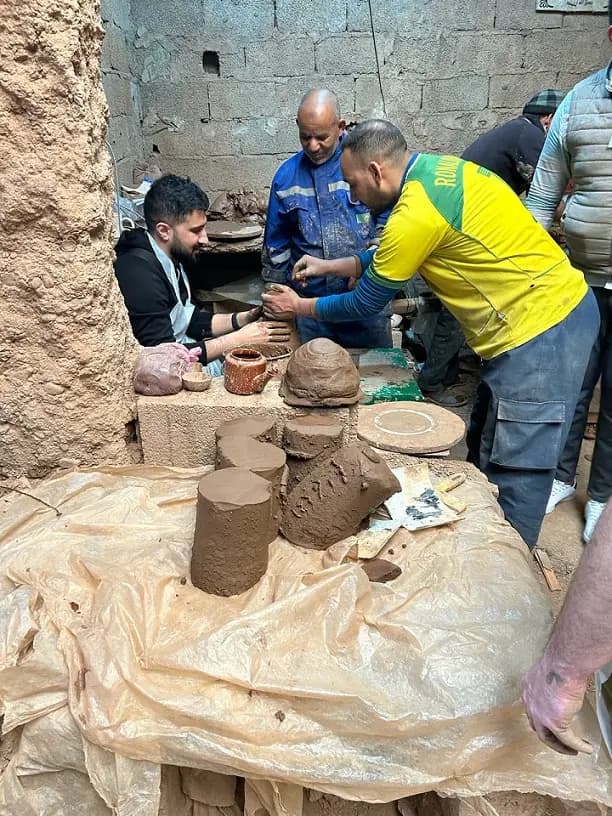
Activity · Marrakech
Pottery Workshop in Marrakech: Wheel-Throwing and Modelling at Artekech
A 1.5-hour pottery workshop in Marrakech, held in Fekhara, the historic pottery district. Shape your piece on the wheel with guidance from our artisans; glazing and firing are included.
How is a traditional pottery piece made?
Understanding the stages of production changes the way you look at a bowl you buy at the market. Here are the main stages in the production of a ceramic piece in Morocco:
- Selecting and preparing the clay: Each region uses local clays with different properties (color, plasticity, firing temperature).
- Shaping or throwing: whether by hand or on a potter's wheel, the form takes shape. Throwing requires years of practice to master the pressure of the fingers.
- Drying: The piece is left to air-dry for several days before firing. If it dries too quickly, the clay will crack.
- The first firing (bisque firing): It strengthens the piece and prepares the surface for glazing.
- Glazing and decoration: The potter paints the designs by hand using metal oxides that develop their colors when fired.
- The second firing: the piece is placed in the kiln to set the glaze. The firing temperature and duration vary according to regional traditions.
It is this final step that makes all the difference between an ordinary piece and one that will last for generations. The scent of terracotta fresh out of the kiln-with its slightly mineral note-is one of the signature scents of Morocco’s artisanal neighborhoods.
Moroccan Pottery: Its Role in Culture and Cooking
Moroccan ceramics are not merely decorative. They are, first and foremost, utilitarian. The terracotta tagine-the one you buy at the souk, not the glazed version in the store window-cooks differently from other cookware: the clay retains heat evenly, the conical lid concentrates steam over the food, and the aromas of the spices infuse into the clay with each successive use.
Unglazed ceramic jars, called “barrad” or “guella” depending on the region, keep water at a temperature lower than that of the surrounding air thanks to the microporosity of the clay. This is a simple physical principle that has been used in Morocco for centuries, long before the invention of the refrigerator.
At ceremonies and family celebrations, pottery also marks special occasions: the large couscous dishes on Fridays, the bowls of harira during Ramadan, and the serving bowls passed around at weddings. The earthenware itself signals that this is a moment that matters.
Where can you buy pottery in Morocco and be sure you're getting a good deal?
Moroccan markets are full of ceramics, but not all of them are created equal. Here are a few tips to help you make the right choices:
Choose artisan souks over roadside shops
Artisan cooperatives and the potters' quarters in the medinas offer fairer prices and sell items made on site. In Agadir, the Kasbat Souss Artisan Market brings together artisans who work in their workshops that open onto the street. You can watch the potter at work, chat with him, and the price reflects the reality of local production.
In Marrakech, the pottery market in the medina brings together local and regional products. Items from Safi are displayed alongside ceramics from the north, and haggling is the norm: the initial asking price is always higher than the actual price.
How can you tell the difference between a handcrafted piece and a mass-produced one?
Handmade pieces bear the marks of their creation: slight irregularities along the rim, variations in the glaze, and wheel marks on the inside. These imperfections are the hallmarks of human craftsmanship, not flaws. A perfectly uniform piece, with overly crisp decoration and a surface that’s too smooth, often comes from semi-industrial production. It may be pretty, but it doesn’t tell the same story.
Try Your Hand at Moroccan Pottery: Workshops in Agadir and Marrakesh
Watching a potter at work is one thing. Getting your hands on the clay is quite another. Pottery workshops are the kind of experience that stays with you long after a trip: you leave with a piece you’ve shaped yourself, and with a real understanding of the work that goes into every object you buy in a souk.
Immersi Travel offers two pottery workshops led by local artisans in two cities:
In Agadir, the Agadir Pottery Workshop lets you create three terracotta pieces-including shaping, finishing, and firing tips. You’ll leave with your creations, packed for the trip. The workshop takes place in a real working environment, not in a set designed for tourists.
In Marrakech, the pottery workshop at Artekech takes place in a studio in the medina. It is led by artisans who work with Moroccan ceramics on a daily basis. Participants learn the basic techniques of wheel-throwing and hand-building, with a focus on the unique aspects of local techniques.
These workshops require no prior experience. They are suitable for adults and children of a certain age and older. Clay is forgiving for beginners: it tolerates mistakes, can be reshaped, and always ends up forming something.
What You Need to Know Before Buying or Practicing
Here are a few practical tips if you plan to bring back ceramics or take a workshop during your stay:
Glazed pieces hold up well during travel if they are packed properly, but unglazed clay is more fragile. If you buy a large dish or an unglazed tagine, make sure to leave enough space in your luggage and use sturdy packaging. Most artisans in the souk can wrap items in newspaper, but be sure to bring your own bubble wrap for larger purchases.
For the workshops, wear clothes that you don't mind getting stained: clay sticks easily to fabric and is hard to wash out. We recommend wearing comfortable clothes-you'll be working with your hands.
To discover other artisan workshops available in Agadir or explore the cultural activities offered in the region, visit our page Things to Do in Agadir.
Moroccan Ceramics: A Tradition That Lives On
Unlike other traditional crafts that are under pressure, Moroccan ceramics remains a profession practiced by active artisans who were trained in family workshops or at vocational training centers. There are young potters. The younger generations sometimes incorporate contemporary forms into their work without abandoning the glazing and firing techniques passed down from their elders.
Moroccan pottery is also exported: workshops in Safi and Salé supply home decor stores in Europe and beyond. However, local production for the domestic market still accounts for the majority, and that is where the most interesting pieces can be found-those not designed for a foreign clientele and that reflect the everyday needs of Moroccan families.
Before you leave your trip to Morocco, try your hand at pottery at least once-it will change the way you view this craft. The pottery workshop in Agadir and the workshop at Artekech in Marrakech are two concrete ways to understand what Moroccan potters have been doing for centuries-with their hands, local clay, and techniques that neither time nor globalization has managed to erase.
Keep reading
- Things to do in Agadir
- Immersi Travel at the 2025 Africa Cup of Nations: Workshops by Master Artisans in Agadir’s Fan Zones
- Solidarity with El Khomss: The Immersi and Kasbat Souss Mobilization
- The Olhão Garden in Agadir: Tour, History, and Practical Information
- Souss-Massa National Park: Bald Ibis, Gazelles, and Untouched Beaches South of Agadir
- Timlaline and Tamri: Dunes on the Atlantic Coast, 1 Hour from Agadir